
Sooner or later it happens to everyone. You’re three laps from a good finish, someone divebombs the hairpin, and your race is over in a cloud of gravel. Or — and this stings more — you misjudge a gap and you’re the one who put another driver in the wall. Either way, the next step in any properly-run league or community is the incident review: the process by which a human being watches the replay and decides what, if anything, happens next. After years of both submitting protests and sitting on the other side of them, here’s how the whole thing actually works, and how to come out of it with your reputation intact.
This is the accountability layer that makes organised racing worth doing — it’s why leagues and community servers race so much cleaner than public lobbies. If you understand the process and approach it the right way, it protects you. If you treat it like a courtroom drama, it’ll cost you more than the original incident ever did.
What an incident review actually is
An incident review (or protest) is the formal mechanism for resolving on-track contact. A driver submits a report about an incident, the stewards or admins review the replay from multiple angles, and they issue a verdict — and, if warranted, a penalty. It exists for one reason: to separate genuine racing accidents from careless or deliberate driving, and to apply consequences only to the latter. Automatic systems like iRacing’s incident points or ACC’s in-session penalties handle the blunt stuff, but they can’t judge intent or fault. That’s what the human review is for.
The key mental shift for a beginner is this: a review is not an attack on you, and being involved in one doesn’t make you a bad driver. Contact happens in close racing. The review is the system working as designed — and how you conduct yourself in it matters more to your standing than the verdict itself.
How the process typically runs
The details vary by league, but the shape is almost always the same. First, an incident is flagged — either a driver submits a protest, or a steward catches it live. Most communities give you a window (often a day or two after the race) and ask for specifics: the lap, the corner, the cars involved, and ideally a replay clip or a timestamp. Vague “someone wrecked me at some point” reports get nowhere; precise ones get acted on.
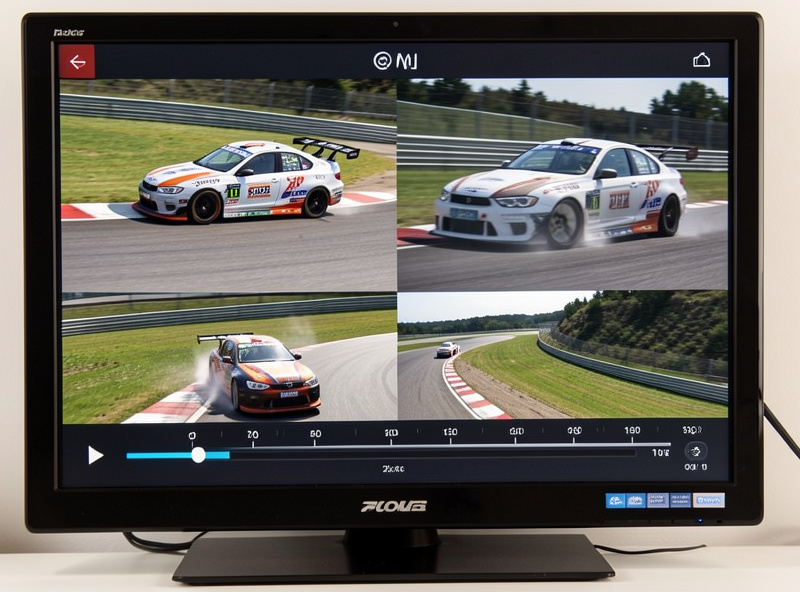
Next, the stewards pull the replay. This is the part newcomers underestimate — the replay shows everything, from every camera, from both drivers’ onboards, with telemetry like inputs and speed often available too. There is no hiding what actually happened. The stewards reconstruct the incident, judge it against the league’s rules, and deliberate. Finally, they issue a verdict and communicate it, usually with a brief explanation.
Understanding the verdicts
There are broadly three outcomes, and beginners misread all of them, so let’s be precise.
No fault / no further action. The stewards found nothing worth penalising — clean racing, or contact too trivial to matter. This is the most common outcome and the one you want.
Racing incident. The single most misunderstood verdict. It means both drivers contributed and neither was clearly at fault — the contact was an organic product of two cars racing hard. It is not a cop-out and not a loss for the person who protested. A huge proportion of contact genuinely is a racing incident, and mature drivers accept it as such rather than demanding someone be punished.
Penalty. One driver was judged at fault — a divebomb, an avoidable hit, erratic driving, ignoring blue flags. Penalties range from a warning to time penalties, grid drops, or, for repeat or egregious offenders, suspension from the league. The severity usually scales with how clear-cut the fault was and whether there’s a pattern.
How to submit a protest the right way
If you’re the one filing, do it well or don’t do it at all. The golden rules:
- Be factual, not emotional. “On lap 4 into turn 6, car 23 made contact with my left-rear and spun me” beats “car 23 is a wrecker who ruined my race.” Stewards respond to facts; emotion just makes you look like the problem.
- Be precise. Give the lap, the corner, and the cars involved. Attach a clip or a timestamp if your league wants one. The easier you make the steward’s job, the better your outcome.
- Be honest about your own role. If you contributed, say so. Stewards will see it in the replay anyway, and acknowledging it upfront builds enormous credibility. Trying to hide your part is the fastest way to lose the stewards’ trust.
- Protest sparingly. Filing on every bit of light contact marks you as someone who can’t accept hard racing. Save protests for genuine, avoidable incidents that cost you real positions.

What stewards are actually looking for
Once you understand how stewards think, both submitting and receiving protests get a lot less stressful. They’re not hunting for someone to punish — they’re trying to answer one question: was this avoidable, and if so, by whom? A few things weigh heavily in that judgement.
Overlap and positioning. The first thing a steward establishes is where the cars were at the moment of contact. Did the attacking car have a meaningful overlap when it committed to the move, or did it lunge from too far back? Was the defending car leaving the required room, or did it squeeze? The replay’s overhead and onboard angles make this unambiguous, which is why “he turned in on me” rarely survives contact with the footage if you didn’t actually have the overlap to begin with.
Avoidability. Even when one driver technically had the line, stewards ask whether the other could reasonably have avoided contact. Racing is a shared responsibility; a driver who sees a spinning car ahead and ploughs into it anyway carries some blame even if they didn’t cause the spin. This is why “I had nowhere to go” only works when the replay shows you genuinely had nowhere to go.
Pattern of behaviour. A single misjudged move is a racing incident or a minor penalty. The same driver showing up in three reviews a season is a different conversation. Stewards keep a memory, formal or informal, and repeat offenders get progressively less benefit of the doubt. This cuts the other way too: a driver with a long clean record gets latitude that a known wrecker doesn’t, because the stewards have reason to believe it was genuinely a mistake.
None of this is arbitrary. The better leagues publish their stewarding guidelines so you can read exactly how these factors are weighed, and reading them before you ever file a protest will make you both a better racer and a better protester. When you know what the stewards are looking at, you stop submitting losing protests and start driving in a way that keeps you out of the queue entirely.
Appeals and disputed verdicts
Some leagues allow an appeal if you genuinely believe a verdict was wrong. Use this almost never. An appeal should be reserved for a clear factual error — the stewards identified the wrong car, or missed a camera angle that changes everything — not for “I disagree with their judgement.” Stewards are human and occasionally get it wrong, but appealing every penalty you dislike marks you as a problem far faster than any single incident would. If your league has an appeals process, treat it as the emergency brake it’s meant to be: there for the rare genuine mistake, not for relitigating a fair call you happen to dislike.
When you’re the one being protested
Getting protested feels awful, but how you respond defines you. Watch the replay honestly before you say a word — actually look at it from the other driver’s angle, not just your own. If you were at fault, own it: “Yep, that was on me, I misjudged the gap, sorry” turns a potential enemy into someone who respects you and usually softens any penalty. If you genuinely believe it was a racing incident, say so calmly and let the replay back you up. What you must never do is get defensive, abusive, or start a flame war. The stewards are volunteers doing a thankless job; the driver who makes their life easy keeps their welcome, and the one who makes it hell gets remembered for all the wrong reasons.
The unwritten etiquette of the review system
Beyond the formal process, there’s a culture around incident reviews that every good racer absorbs. Accept verdicts gracefully, even ones you disagree with — relitigating a closed decision helps nobody. Don’t pile on a driver who’s already been penalised; the verdict is the consequence, not a license for the Discord to dogpile. And remember that today’s stewards were yesterday’s racers and may be tomorrow’s rivals — the community is small, reputations travel, and the way you handle a review against you is more visible than any podium.
The drivers who thrive in organised racing aren’t the ones who win every protest. They’re the ones who protest rarely, report cleanly, own their mistakes instantly, and accept verdicts without drama. Do that, and the review system becomes exactly what it’s meant to be: not a threat, but the reason the racing around you stays clean enough to be worth showing up for. If you’re still choosing which series to race in, my finding a sim racing series for beginners guide maps the cleanest series to start in. For the on-track habits that keep you out of the review queue in the first place, the clean racing etiquette guide is the companion to this one — and understanding how the automatic rating systems work explains why even a “not your fault” incident still shows up on your record.