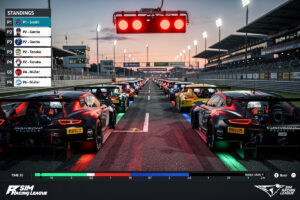
I spent my first year of online sim racing convinced the lonely part was the point. You buy the wheel, you weld the rig, you grind hotlaps alone at 11pm, and you tell yourself that’s the hobby. Then I joined my first proper league, lined up on a full grid of twenty cars where every driver actually wanted to be there, and realised I’d had it backwards the whole time. The rig is the instrument. The league is the music. Racing alone is practising scales forever and never playing a gig.
This is the guide I wish someone had handed me back then. Not a list of “best leagues” — I’ll point you at our roundup of the best sim racing leagues and series for that — but the actual mechanics of getting into community racing as a beginner: how leagues are structured, how the rating systems that gate them really work, how to not get banned in your first three races for driving like a maniac, and how to find a grid that fits a person who has a job and a family and can’t commit to a Tuesday-night championship for six months straight. If you’re brand new, start with what sim racing actually is and come back. Everyone else, let’s get you on a grid.
Why leagues are the part of sim racing nobody sells you
The marketing for this hobby is entirely about hardware. Direct drive torque numbers, load-cell pedals, triple monitors versus VR. I’ve bought all of it and I’ll happily argue gear all day — but here’s the uncomfortable truth I learned the slow way: the gear stops mattering far sooner than you think, and the people are what keep you in the seat for years instead of months.
Public lobbies will not do this for you. A random public session is a coin flip between a clean race and someone using your rear bumper as a braking aid into turn one. There’s no accountability, no relationships, no reason for anyone to behave. League racing — and its cousin, organised community-server racing — flips every one of those incentives. You race the same people week after week. Reputations form. Driving someone off the road has a social cost. And suddenly the racing gets close in a way public lobbies almost never deliver, because everyone around you is also trying to bring the car home in one piece. For ACC specifically — which has the most accessible free-to-race community servers through LFM — the ACC community server racing guide covers server filtering, how LFM lobbies work, and what to expect on your first rated race.
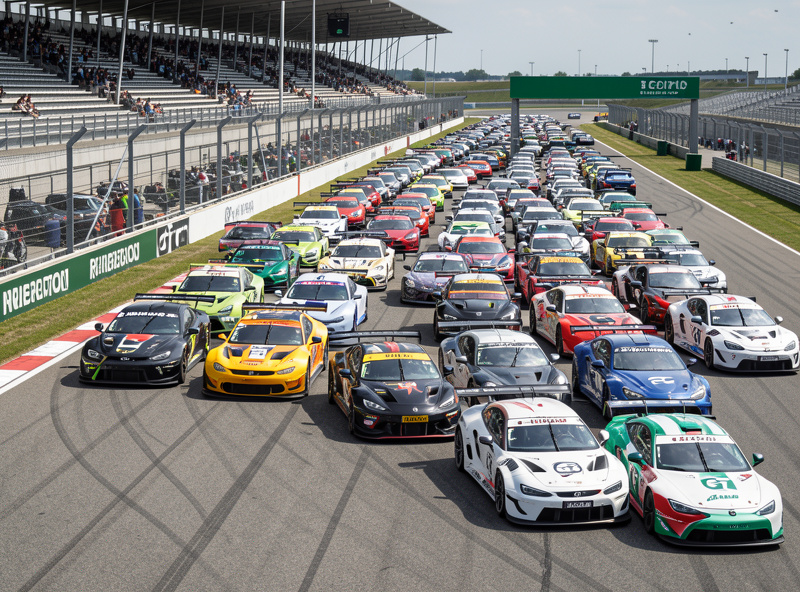
There’s a second thing nobody tells beginners: leagues make you faster, for free, faster than any paid coaching. When you’re forced to race wheel-to-wheel with the same group, you stop driving in a vacuum. You learn racecraft — where to place the car under pressure, when to yield, how to manage tyres over a stint — that no hotlapping session can teach. I improved more in three months of one weekly league than in the entire year I spent grinding alone before it. The mileage matters, but it’s the shared mileage that teaches racecraft. A clean overtake you pull off on a real opponent rewires something a thousand qualifying laps never will.
And there’s a third thing, quieter but just as real: leagues give the hobby a calendar. Left alone, sim racing dissolves into “I’ll jump on if I feel like it,” and “if I feel like it” loses to every other thing competing for your evening. A Wednesday-night grid that expects you turns a vague intention into a standing appointment. For a lot of us — me included — that external structure is the only thing that keeps an expensive rig from becoming a dusty clothes-horse.
How sim racing leagues are actually structured
“League” gets used loosely. Before you go looking, it helps to know the four shapes community racing actually takes, because they ask very different things of you.
Official matchmaking services (iRacing, ACC LFM)
These aren’t leagues in the traditional sense — they’re ranked, always-on matchmaking. iRacing is the giant here: you pick a series, you sign up for the next race slot, and the system grids you against drivers of similar skill and safety rating — the step-by-step process for how to join an iRacing league is covered in detail in its own guide. ACC’s Low Fuel Motorsport (LFM) does the same thing for free on top of Assetto Corsa Competizione. The appeal is enormous: zero commitment, race whenever you have an hour, and the rating system keeps the field clean. This is where I tell every beginner to start. It’s the on-ramp.
Scheduled community leagues
The classic format. A Discord community runs a championship — say, ten rounds of GT3 every Wednesday at 8pm over a season. Fixed grid, points table, qualifying, race stewards, the works. The commitment is real (miss two rounds and you’re out of the title fight), but so is the payoff: these are the closest, most satisfying races you’ll ever have because you know everyone on the grid by name. This is the format the league roundup mostly covers.
Community-hosted servers
Less formal than a championship, more structured than public. A community runs a custom server — often password-locked or admin-moderated — with its own rules and a regular crowd. ACC’s custom-server scene and Assetto Corsa’s server lists run on this model. You drop in when you can, the rules are enforced by people who care, and the entry bar is low. A genuinely underrated middle path for adults with unpredictable schedules.
One-off events and endurance specials
Special races — a 6-hour endurance, a fun-run series, a charity event. Low stakes, high enjoyment, a great way to test the water with a community before you commit to a full season. Many people find their permanent home this way: they show up for a one-night special, like the people, and never leave. Endurance events in particular often involve team entries, and if you’re curious how co-driving and team strategy work, the team racing in sim racing guide covers the basics.
League formats at a glance
Here’s how the four shapes compare on the things that actually decide whether one fits your life. I’ve raced in all four; this table is the cheat-sheet I’d give my past self.
| Format | Commitment | Beginner-friendly | Schedule flexibility | Cost | Best for |
|---|---|---|---|---|---|
| Official matchmaking (iRacing / ACC LFM) | Low — race per slot | High | Very high | iRacing subscription / LFM free | Getting started, racing on your schedule |
| Scheduled community league | High — full season | Medium | Low — fixed night | Usually free | The closest, most committed racing |
| Community-hosted server | Low to medium | High | High — drop in when free | Free | Adults with unpredictable schedules |
| One-off / endurance event | Per event | Medium | Per event | Free or small entry | Testing a community before committing |
If you take one thing from this table: you do not have to start with a six-month championship. Almost everyone who burns out tries to and shouldn’t. Start with matchmaking or a drop-in server, find your feet, then commit to a season once you know clean racing is a thing you can actually do.
The rating systems that gate everything
You can’t talk about leagues without talking about ratings, because the good ones use a rating system as a bouncer at the door. There are two numbers that matter, and beginners constantly confuse them.
Safety rating measures how cleanly you drive — incidents per distance, basically. It has nothing to do with how fast you are. Skill rating (iRating on iRacing, a similar ELO-style number on LFM) measures how fast you are relative to the field. You can be a slow, immaculately clean driver with a high safety rating and low skill rating, and that’s completely fine — that driver is welcome on any grid.
The reason this matters: most leagues and many matchmaking splits set a safety rating floor, not a skill floor. They don’t care if you’re slow. They care intensely whether you’re going to punt three people off in turn one. So the single highest-value thing a beginner can do is protect their safety rating — which I cover in depth in the iRacing safety rating guide. Get that number up, and doors open everywhere.
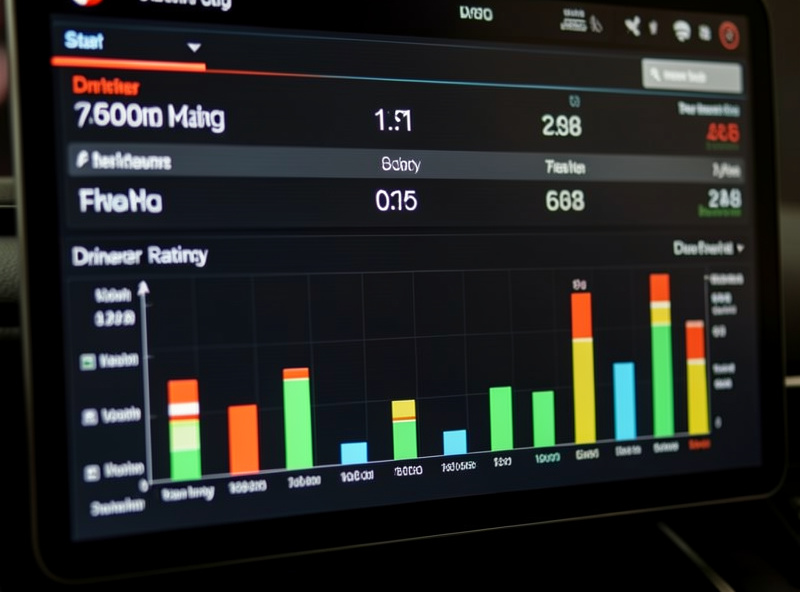
One nuance worth internalising early: these numbers move on different clocks. Skill rating can swing wildly race to race — one good result, one bad one, it bounces. Safety rating moves slowly and is hard to rebuild once you’ve tanked it, because it’s an average over a lot of laps. That asymmetry is exactly why I tell beginners to guard the safety number jealously and let the skill number take care of itself. Speed comes with mileage. A wrecked safety rating takes weeks of immaculate driving to repair. For a full breakdown of how iRacing safety rating is calculated, what counts as an incident, and how to raise it from a low starting point, the iRacing safety rating explained guide covers every mechanic in the system.
Clean racing: the actual entry requirement
Here is the thing the hardware reviews will never tell you. The price of admission to good racing is not a fancy wheelbase. It’s the ability to not crash into people. That’s it. That’s the bar. And it’s a learnable skill, not a talent.
Clean racing comes down to a handful of habits: leave a car’s width, never divebomb into a corner you can’t make, lift when you’re not sure, and treat every other driver’s car as if it has your own paint on it — the full clean racing etiquette guide covers every rule in the detail your first race week deserves. When two people both commit to those rules, you get racing that’s tense and close and safe at the same time — the whole reason the hobby is addictive. When one person abandons them, you get a wreck. I’ve written the full code elsewhere, but if there’s a single sentence to internalise: it is always better to lose a position than to cause a crash. Always. The clean driver who finishes 8th every week climbs the ranks. The fast driver who DNFs half the field doesn’t last a month.
This is also why the rating systems exist — they’re an automated enforcement of exactly these habits. Drive clean and the number rewards you. Drive like it’s a demolition derby and the number locks you out of the rooms you want to be in. The system isn’t punishing you; it’s filtering, and once you’re on the right side of the filter the racing you get is dramatically better than anything a public lobby will ever hand you.
How to find a league or community that fits you
The most common beginner mistake is joining the first big-name league they find, getting overwhelmed by a grid of aliens, and quitting. Finding the right grid matters more than finding a famous one. Here’s how I’d approach it now.
Start with what you already race. If you’re in iRacing, the matchmaking is your league for the first few months — work the official series before chasing a private championship. If you’re in ACC, LFM is your no-cost on-ramp. Pick the discipline you actually enjoy first — and if you’re still figuring out which series gives beginners the cleanest racing, the finding a sim racing series for beginners guide maps exactly which cars and series to target first. We also have a full breakdown of every sim racing discipline if you’re not sure whether you’re a GT, formula, oval, or rally person.
Match the car to your taste, not the hype. If GT3 is your thing, our complete ACC GT3 guide and beginner car picks will help you pick a grid you’ll enjoy. Love single-seaters? The open-wheel guide points to formula communities. Oval, rally, drift — there’s a community for each, and they don’t overlap as much as you’d think.
Find the Discord, lurk first. Almost every community lives on Discord. Join, read the rules channel, watch how the stewards handle a protest, and see whether the vibe is “supportive adults” or “screaming teenagers.” You’ll know within a day. A community’s culture is set by how it handles incidents, not by how fast its front-runners are.
Be honest about your schedule. If you can’t reliably make a Wednesday night for ten weeks, don’t sign up for a Wednesday-night championship and then ghost it — that’s how you get a reputation. Pick a drop-in server or matchmaking instead. There’s no shame in it; it’s the smarter choice for most working adults.
If you came up through the competitive side rather than the casual one, the path is a little different — the getting-started-in-esports guide covers the rated-racing ladder for people whose goal is climbing splits rather than hanging out.
One more thing on iRacing specifically: which series you race in is itself a choice, and the wrong one will sour league racing before it starts. Some series are notorious turn-one demolition derbies; others are reliably clean. The iRacing series guide and the deeper series and progression guide map which fields tend to race cleanly at which license levels — pick a calm series first, build the safety rating there, and graduate into the spicy ones once your habits are bulletproof. Trying to run before you can walk, in a series full of aliens, is the fastest way to convince yourself you hate online racing when really you just picked the wrong room.
What you actually need to race in a league (hardware reality check)
Good news: less than the marketing implies. I race in leagues against people on everything from $300 starter setups to multi-thousand-dollar rigs, and the rigs do not decide the racing. What matters is consistency, and consistency comes from a setup you can repeat lap after lap — which means a stable rig and decent pedals far more than a fancy wheelbase.
If you’re building toward league racing, prioritise in this order: a rig that doesn’t flex (see the complete rig-building guide), then pedals you can brake consistently with, then the wheelbase, then the rim. A load-cell brake will do more for your race results than upgrading from a belt-drive to a direct-drive base, because consistent braking is what keeps you out of the gravel under pressure. The direct drive vs belt drive comparison covers the wheelbase question if you’re weighing it.
One thing that genuinely matters for league racing specifically: your connection. A laggy connection in a public lobby is annoying. A laggy connection in a league gets you disconnected mid-race and costs you championship points — and gets you a reputation as the guy who warps. Get the sim PC on a wired, low-latency connection. Wi-Fi is for laptops, not racing. And don’t sleep on consistency tooling either — the skills and telemetry guide covers how to turn repeatable laps into repeatable results, which is exactly what a points table rewards.
Your first league race: what to expect and how not to embarrass yourself
Your first real grid start is nerve-wracking. Here’s how it actually goes, and how to survive it. Qualifying sets the grid — don’t send it, just bank a clean lap; a tidy mid-pack start is infinitely better than binning it in qualifying and starting last. On the formation lap, stay in line, keep your gaps, and warm your tyres and brakes. The standing or rolling start is the single most dangerous moment of the race — turn one of lap one wrecks more races than everything else combined. Be patient. The race is long; turn one is not the place to win it.
For the rest of the race, drive within yourself. Match the pace of the cars around you rather than chasing a hero lap, leave room in battles, and if someone’s faster, let them by cleanly — you’ll get the position back when they overcook it. And when something does go wrong — because it will — own it. A quick “sorry, my fault” in chat or Discord does more for your reputation than a perfect race. Communities forgive mistakes. They don’t forgive arrogance.

When incidents happen: the protest and review process
Eventually someone will wreck you, or you’ll wreck someone, and a steward will get involved. This is normal and healthy — it’s the system working. Most leagues run an incident-review process: you submit a clip or a description, stewards review the replay from multiple angles, and they issue a verdict (no fault, racing incident, or a penalty). The worst thing you can do is rage in the Discord. The best thing you can do is submit a calm, factual report with a timestamp and let the replay speak. Stewards see everything from the replay anyway, so honesty is always the winning move — getting caught spinning a story is far more damaging than admitting a mistake.
It’s worth understanding the verdict language, too, because it trips beginners up. “Racing incident” is not a cop-out — it’s the stewards saying two drivers contributed and neither was clearly at fault, which is genuinely how a lot of contact happens. Don’t take a racing-incident verdict as an insult or a victory; take it as the system declining to assign blame because the replay didn’t justify it. Learn to watch your own replays with that same neutrality and you’ll improve faster than any protest will make you feel better. For the full process of filing a protest correctly — what clip format stewards want, what verdict language means, and how to write a report that gets taken seriously — the sim racing incident review and protest guide walks through every step.
Frequently asked questions
Do I need iRacing to race in a league?
No. iRacing has the deepest organised racing, but Assetto Corsa Competizione (via LFM), Assetto Corsa, Automobilista 2, and rFactor 2 all have thriving league and community-server scenes. ACC’s LFM is completely free on top of the base game and is the best no-subscription on-ramp to clean, rated racing I know of.
I’m slow. Will I get kicked out of leagues?
No. Leagues care about clean, not fast. Most set a safety-rating floor, not a skill floor. A slow, clean, consistent driver is welcome on almost any grid, and you’ll get faster just by racing them. Speed is the easy part to fix; reliability is what gets you invited back.
What’s the difference between safety rating and iRating?
Safety rating measures how cleanly you drive (incidents per distance). iRating, or any skill rating, measures how fast you are relative to the field. They’re independent: you can have a high safety rating and a low iRating, which describes a careful beginner perfectly. For getting into leagues, the safety rating is the one that matters most.
How much of a time commitment is a sim racing league?
It depends entirely on the format. Official matchmaking is zero commitment, race whenever you have an hour. Community-hosted servers are drop-in. A scheduled championship is a real commitment, typically a fixed evening for a full season. Pick the format that fits your actual life, not the one that sounds the most serious.
What happens if I cause a crash in a league race?
Apologise, learn from it, and don’t do it again. One mistake is a racing incident; everyone has them. A pattern of them gets you reviewed and eventually removed. The protest-and-review system exists precisely so that genuine accidents get treated as accidents and repeat offenders get filtered out. Own your mistakes and you’ll be fine.
Where do sim racing communities actually hang out?
Discord, almost universally. Leagues and communities run their sign-ups, schedules, results, and incident reviews through Discord servers. Find the Discord, read the rules, and lurk for a day before you commit. The culture of a community is obvious within a few hours of watching how it talks.