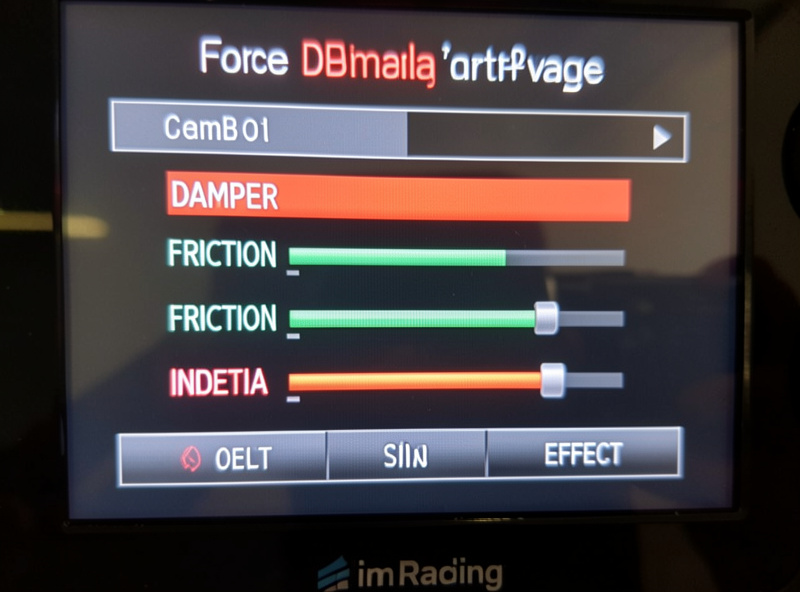
Damper and friction are the two force feedback effect filters most people misuse — damper resists how fast the wheel moves, adding weight and slowing quick motions, while friction adds a constant resistance like a stiffer steering column. The right amount of each is almost always close to zero: add the minimum needed to fix one specific problem, because every percentage point you add hides road detail along with the symptom you’re chasing.
These sliders exist to shape feel, not to add volume, and the trap is reaching for them to “calm down” a wheel that’s really just clipping. Across the bases I’ve tuned, the cleanest profiles run damper and friction at or near zero and let gain and clipping do the work. Here’s exactly what each filter does, when a small amount genuinely helps, and how the answer changes with your wheelbase technology. This is the effect-filter half of the sim racing force feedback tuning system.
What Damper Actually Does
Damper is a velocity-dependent force: the faster you move the wheel, the more it resists. That makes the wheel feel heavier and slows quick direction changes, which can settle a very strong base that feels nervous on straights. But damper also smears fast detail — kerb strikes, the flutter of a sliding tyre, the snap of oversteer — because those are exactly the quick movements it slows. A little can help a powerful direct-drive base feel planted; too much turns the wheel to syrup and you lose the road. Start at zero and add a few percent only if the wheel feels genuinely twitchy after gain and clipping are sorted.
Some sims also apply damper dynamically, scaling it with speed so the wheel is light at a standstill and weightier at pace. ACC’s dynamic damping is the well-known example, and a small amount there settles the wheel without the constant dead weight a static damper adds. Static damper is blunter — it’s on all the time, so use less of it.
What Friction Actually Does
Friction adds a constant resistance to motion regardless of speed — it’s like driving with a slightly seized steering column. A touch can stop a twitchy center from darting around on a nervous base, giving the wheel a steadier, more deliberate feel. The cost is that friction dulls the most important moment in driving: when grip breaks away. That transition should feel like the wheel going light, and friction masks exactly that lightening. For that reason I run friction at zero on every base I own, and I’d only add it to tame a genuinely darty center that gain adjustment couldn’t fix. It is the filter I trust least.
Inertia and Smoothing: The Other Two
Damper and friction get the headlines, but two more filters round out the set. Inertia simulates rotational mass, smoothing direction changes — useful on a light formula rim that feels too eager, rarely needed on a heavy GT setup. Smoothing (sometimes interpolation or reconstruction) filters the signal itself: a little removes notchiness on lower-Hz gear and belt bases, but a lot erases the kerb and slip texture you bought a good base to feel. On direct drive both stay at or near zero; on belt and gear bases a small amount of smoothing earns its place by masking mechanical roughness.
| Filter | What it does | Direct drive | Belt / gear | The cost |
|---|---|---|---|---|
| Damper | Resists wheel speed | 0–5% | 5–15% | Smears fast detail |
| Friction | Constant resistance | 0% | 0–10% | Hides grip break-away |
| Inertia | Simulated mass | 0% | 0–10% on light rims | Slows turn-in feel |
| Smoothing | Filters the signal | 0–3% | 5–20% | Erases kerb/slip texture |
The Cardinal Rule: Fix Clipping Before Filtering
The single most common reason people pile on damper and friction is to tame a wheel that feels harsh or twitchy — but that harshness is usually clipping artifacts, not something a filter should fix. Clipping flattens peaks and produces a jagged, fighting feel, and the cure is less gain, not more damper. If you add filters to a clipping wheel, you bury the symptom under vagueness while the underlying detail loss remains. Always set gain just below clipping first, with every filter at zero, and only then decide whether any filter is needed. Nine times out of ten you’ll find you need almost none. The clipping work itself is in the FFB wheel gain and clipping guide.
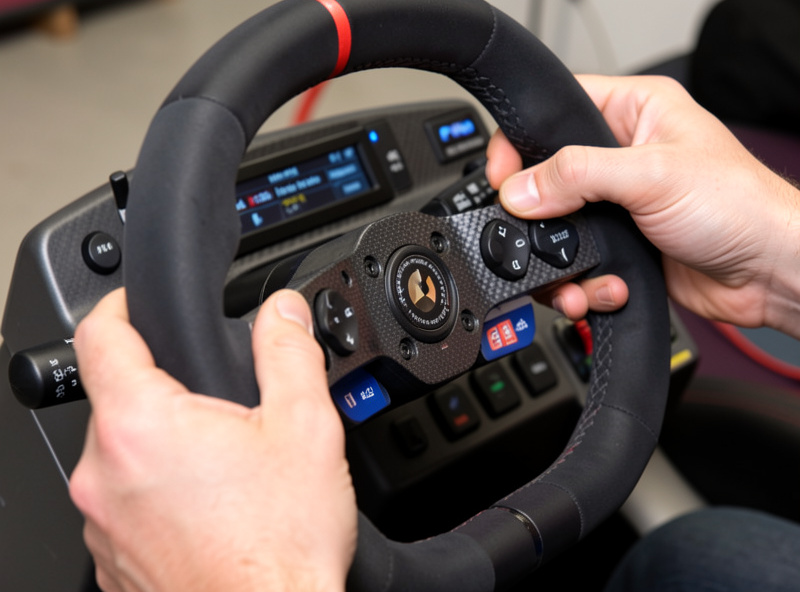
How Wheelbase Technology Changes the Answer
There’s no universal damper or friction number because the right amount depends on what your base does mechanically. Direct-drive bases have almost no inherent friction or notchiness, so they want these filters near zero — adding them just hides the clean signal the motor produces. Belt bases benefit from a little smoothing and sometimes a touch of damper to settle the pulley inertia. Gear bases are the only ones that often want noticeable smoothing, to mask cogging. This is why copying someone’s damper and friction values is a mistake unless they run the same base technology you do — the same number means different things on different hardware. The deeper hardware reasoning is in the direct drive vs belt drive force feedback comparison.
The Over-Filtering Mistake I Made
When I moved from a belt base to a Fanatec CSL DD as my daily, I carried my old settings across out of habit — roughly 12% damper and 8% friction that had quietly masked the belt’s pulley slop. On the direct-drive motor those same numbers turned a clean signal to mush, and I spent the better part of two weeks blaming the base for feeling vague before I admitted I was strangling it with filters built for completely different hardware. Zeroing everything and retuning gain from scratch fixed it in about twenty minutes. That is the lesson that stuck: filters are hardware-specific, and copying your own old profile across a technology change is as wrong as copying a stranger’s. On the Simagic Alpha Mini and the Moza R9 I have run since, I start every profile at zero and earn back each percent with a named reason. The only filter I reliably keep above zero is a few percent of smoothing on the rare occasion I drop back onto a gear base to mask cogging — everything else stays off until a problem I can describe in words forces my hand.
A Simple Method That Works
Here’s the routine I use on any new base. Set damper, friction, inertia, and smoothing all to zero. Tune gain just below clipping. Drive several laps and identify a specific problem in words — “the center darts on straights,” “kerbs feel jagged,” “turn-in is too eager.” Then add the single filter that addresses that one problem, a few percent at a time, until it’s solved and no further. If you can’t name a problem, you don’t need a filter. That discipline keeps your profile honest and stops the slow creep toward an over-filtered, numb wheel that feels safe but tells you nothing.
Frequently Asked Questions
What does the damper setting do in sim racing FFB?
Damper is a velocity-dependent force that resists how fast you move the wheel, adding weight and slowing quick motions. A small amount can settle a strong base that feels nervous, but too much smears fast detail like kerbs and oversteer. Start at zero and add only a few percent if the wheel is genuinely twitchy.
What is the difference between damper and friction?
Damper resists wheel speed, so it only adds force when you move the wheel quickly. Friction adds a constant resistance regardless of speed, like a stiffer steering column. Damper smears fast detail while friction dulls the moment grip breaks away. Both shape feel rather than volume and are best kept near zero.
How much damper and friction should I use?
As little as possible. On direct drive, keep both at or near zero. On belt and gear bases, a small amount of damper and smoothing can mask mechanical roughness. Add the minimum needed to fix one specific named problem, because every point you add hides road detail along with the symptom.
Should I add friction to stop my wheel feeling twitchy?
Usually no. A twitchy wheel is more often caused by clipping or excess gain than by a lack of friction. Fix gain and clipping first with all filters at zero. Friction dulls the important moment when grip breaks away, so reach for it only if a darty center remains after gain is correct.
Why do damper and friction values differ between wheelbases?
Because the right amount depends on the base’s mechanics. Direct drive has almost no inherent friction, so it wants these filters near zero. Belt bases benefit from a little smoothing and damper, and gear bases often need noticeable smoothing to mask cogging. The same number means different things on different hardware.
Further Reading
Once the filters are dialed, round out your setup with the rest of the cluster: the complete force feedback tuning guide for the whole system, the gain and clipping guide for the work that comes before any filtering, the beginner tuning guide if you’re just starting, the iRacing FFB settings guide for a worked per-title profile, and the direct drive vs belt drive force feedback breakdown for why your base wants the filtering it does.