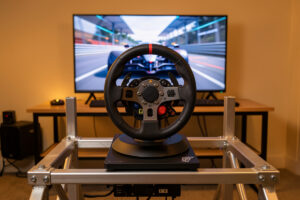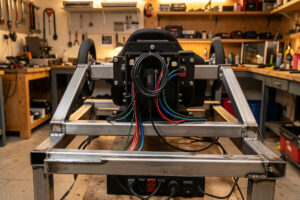
Notchy or grinding force feedback has a short list of real causes and a very long list of misdiagnoses. The ones I have actually fixed on the bench are clipping from gain set too high, where the torque signal slams into its ceiling and the fine detail flattens into a notch; a spike filter or heavy damping cranked so far it quantizes the torque into discrete steps; an aging belt on a belt-drive base; and, on direct-drive, a torque-ramp or slew setting pushed past what the rim can resolve. The single tool that finds the cause fastest is a telemetry overlay, because clipping shows up instantly as a flat-topped waveform and that flat top is the tell.
This is the fault family where guessing burns the most time, because notchy FFB feels like broken hardware when it is almost always a tuning or wear issue. Dialling honest force feedback off telemetry rather than parroting preset numbers is the part of this hobby I care about most, and notchy feel is where that discipline pays off. This spoke owns the bad-FFB-feel fault specifically; if you have no force feedback at all that is a different layer in No Force Feedback in Your Sim, and the full map lives on the troubleshooting hub.
The Difference Between Notchy and Grinding
Before changing anything, work out which fault you actually have, because the fixes diverge sharply. Notchy feel is a stepping sensation, as if the wheel is clicking through detents as you turn, and it is usually a signal-processing problem, clipping or over-filtering. Grinding feel is a rough spot or notch that appears at the same point every revolution of the wheel, and it is usually a mechanical problem, a belt, a bearing, or a sensor reading a fixed position. The reliable way to tell them apart is to turn the wheel slowly through a full revolution with the sim paused but the base powered: a notch that returns at the same steering angle every turn is mechanical; a stepping that scales with how hard the FFB is working is signal.
That single test saves people from the most common mistake here, which is chasing a mechanical grind with software gain changes, or chasing a signal notch by dismantling the base. I run it on every notchy-FFB report before I touch a setting, because it points the whole diagnosis in the right direction inside a minute.
Clipping, the Notch That Hides Detail
Clipping is the number-one cause of notchy feel, and it is entirely a tuning problem. Force feedback torque is a signal with a ceiling set by your gain and the base’s maximum output. When the sim commands more torque than that ceiling, the signal flat-tops, every peak above the ceiling gets crushed down to the same maximum value. The result is that all the fine detail in those peaks, the texture of the track surface, the build-up of grip loss, the weight of the car, gets flattened into a single uniform shove. Read through a corner, that feels like a notch or a step, because the gradient you should be feeling has been quantised to the ceiling.
The diagnosis is a telemetry overlay that graphs the FFB output. A clipping trace is unmistakable: the waveform flat-tops along a horizontal line at the maximum every time the car loads up. The fix is to lower the gain until the trace stays just under the ceiling through the hardest corners, leaving headroom for the peaks. The counter-intuitive part is that lowering gain makes FFB feel better, not worse, because you trade a loud crushed signal for a quieter one that still carries its detail. On my rig I set gain so the trace peaks at around 80 percent of the ceiling on the hardest corner of a given track, which leaves clean headroom and keeps the detail intact. When I first moved off an old belt-drive Fanatec base onto my direct-drive daily I left gain near maximum out of habit, and the wheel felt notchy and dead through the fast stuff until the telemetry overlay showed a flat top a mile wide. Dropping the gain roughly fifteen points brought back every bit of texture I had convinced myself the base could not render.

Filters Cranked Too High
If the telemetry shows no flat-topping but the feel is still notchy, the suspect shifts to the signal-processing filters. Spike filters, damping, friction, and various smoothing options all exist to tame harsh transients, and all of them, pushed too far, quantise the torque into discrete steps. A spike filter set aggressively chops the tops off fast transients, which reads as a step. Heavy damping or smoothing rounds and delays the signal so much that fine detail turns into a series of plateaus. The wheel literally cannot render the in-between values, so it steps between them, and that stepping is the notch.
The fix is to reduce or remove the filters rather than add more. Start from a minimal filter set, a small amount of damping if the base rings, no spike filter unless you have a specific harsh-transient problem, and add filters back one at a time only if the raw feel needs it. The temptation is to pile on filters to “smooth” bad feel, but every filter you add costs detail, and the notchy stepping is often the filters themselves. On my FFB profiles I run as little filtering as the base needs to stay stable, because honest force feedback is about what you remove, not what you add.
The Belt-Drive Grind
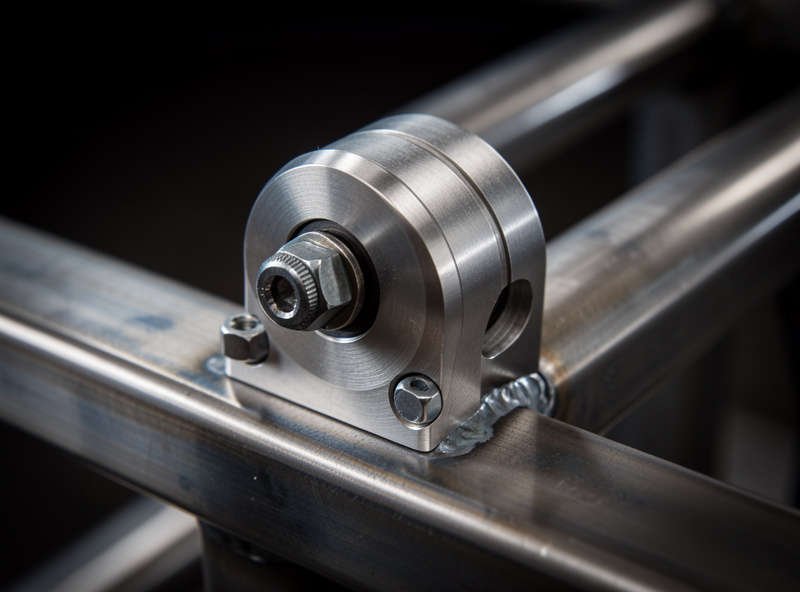
If the fault is a grind at the same point every revolution, the base is mechanical and the prime suspect on a belt-drive is the belt itself. A drive belt ages by stretching and glazing: it loses tension so it can slip under load, and the rubber surface hardens so it no longer grips the pulley smoothly. The signature is a rough spot or a slight skip at a fixed steering angle, often accompanied by a squeak or a chirp under heavy FFB. It gets worse as the belt warms up through a session, which distinguishes it from a signal fault that stays constant.
Checking the belt means opening the base, which is a job for someone comfortable with it, but the diagnosis does not require it. If the grind is fixed to a steering angle, worsens with warmth, and is unaffected by gain changes, a worn belt is the likely cause and a belt replacement is the fix. This is one of the few FFB-feel faults that is genuinely mechanical wear rather than tuning, and it is worth identifying correctly because no amount of software adjustment will smooth a slipping belt.
Direct-Drive Slew and Torque Ramp
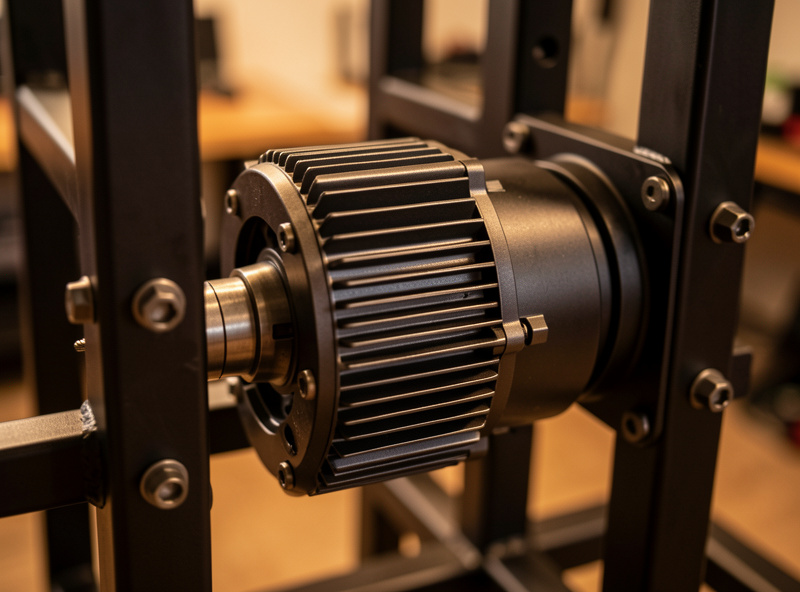
On direct-drive bases, the equivalent tuning trap is the slew rate or torque-ramp setting, which limits how fast the base is allowed to change its torque output. Pushed too high, the base commands torque changes faster than the control loop or the rim can resolve, which can produce a notchy or buzzy feel as the system overshoots and corrects. Set sensibly, it tames harshness without costing detail, but cranked to its most aggressive it can introduce exactly the stepping people mistake for clipping.
The approach I use is to leave slew at a moderate, manufacturer-recommended value and look for feel problems elsewhere first, because it is rarely the primary culprit and changing it has broad effects. If everything else, gain, filters, no mechanical grind, is ruled out and the feel is still buzzy or stepped, easing the slew rate back toward a smoother setting is worth a test. On a direct-drive base, the cleaner the signal you feed it and the less you ask it to change instantly, the more detail comes through, and that is the whole point of the upgrade.
FFB Feel Diagnosis Matrix
This is the matrix I work through when notchy or grinding feel will not resolve. Match the symptom to the cause, confirm with the test, apply the fix.
| Symptom | Likely cause | Confirm and fix |
|---|---|---|
| Stepping that scales with FFB load | Clipping from gain too high | Telemetry flat-tops; lower gain to leave headroom |
| Notchy with no flat-top on telemetry | Filters over-applied | Reduce spike filter, damping, smoothing |
| Grind at the same angle each revolution | Worn belt on a belt-drive | Worsens warm, unaffected by gain; replace belt |
| Buzzy or stepped feel on direct-drive | Slew or torque ramp too aggressive | Ease slew back toward a smoother setting |
| Rough feel only at high torque | Motor or encoder under heavy load | Lower overall gain, check base ventilation |
Frequently Asked Questions
Why does my force feedback feel notchy?
Notchy feel is usually clipping from gain set too high, which crushes detail into a ceiling, or signal filters like spike filter and damping cranked so far they quantise the torque into steps. Check a telemetry trace: a flat-top means clipping, no flat-top points at the filters.
How do I fix FFB clipping?
Lower the gain until the FFB telemetry trace stops flat-topping through the hardest corners and leaves headroom for peaks. Lower gain feels better, not worse, because it trades a loud crushed signal for a quieter one that still carries its detail. Aim for peaks around 80 percent of the ceiling.
Why does my force feedback grind on one spot?
A grind at the same steering angle every revolution is mechanical, usually a worn, stretched, or glazed belt on a belt-drive base. It typically worsens as the belt warms up and is unaffected by gain changes. That is a belt replacement, not a software fix.
What does FFB clipping look like on telemetry?
Clipping shows up as a flat-topped waveform: the FFB trace hits a horizontal ceiling and runs along it every time the car loads up in a corner. Every peak above the ceiling is crushed to the same maximum, which is why the detail flattens into a notch you can feel.
Why does my belt-drive wheel feel rough?
A rough belt-drive feel is usually an aging belt that has lost tension and glazed, so it slips and grips unevenly under load. If the roughness is fixed to a steering angle and gets worse warm, inspect or replace the belt. Gain and filter changes will not smooth a slipping belt.