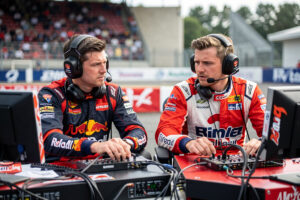
The first time I raced as part of a team instead of a lone driver, the whole hobby clicked into a new gear. Solo racing is you against the field. Team racing is you and a couple of mates against other crews — sharing one car, one strategy, one result — and it adds a social and tactical dimension that nothing in single-driver racing matches. This guide is the beginner’s on-ramp to that world: what team racing actually is, how to find or build a crew, the roles people play, and the communication habits that make it work. It’s the community side of team racing, not a deep stint-strategy manual — think of it as how to get started and not let your teammates down.
Team racing sits naturally alongside the rest of the community side of the hobby. If you haven’t yet, the leagues beginner guide covers the formats team events usually live inside, and the clean racing etiquette guide matters even more here — when you wreck as a team driver, you’re not just ending your race, you’re ending your whole crew’s.
What team racing actually is
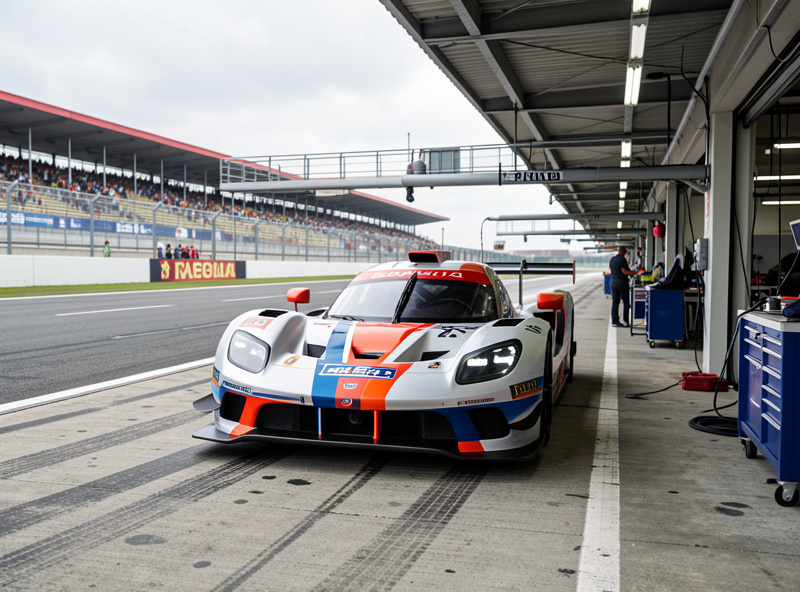
In its most common form, team racing means multiple drivers sharing a single car across a longer race — typically an endurance event. One driver races a stint, then hands the car over to a teammate at a pit stop, and so on until the chequered flag. The result belongs to the team, not the individual: your crew’s finishing position is the sum of everyone’s stints. Both iRacing and ACC support this driver-swap model in their endurance and team formats, and most active communities run team events regularly.
There’s also a looser sense of “team” — a group that races under a shared banner in single-driver events, sharing setups, practice, and support even when each person drives their own car. Both are worth doing, but the shared-car endurance format is where team racing becomes its own distinct discipline, because suddenly your pace isn’t the only thing that matters — your consistency, your communication, and your ability to hand the car over in one piece all count just as much.
Why team racing is worth trying
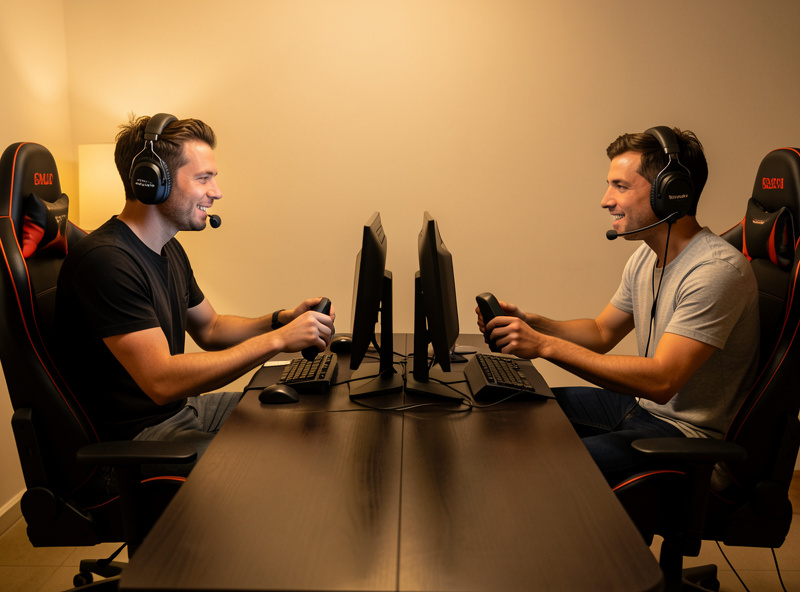
Beyond the obvious — racing with friends is just more fun — team racing teaches things solo racing can’t. You learn to drive for the team’s result rather than your own ego, which usually means driving more conservatively and consistently than you would alone. You experience the strategy layer properly, because now there are stops, stints, and handovers to coordinate. And you build the kind of camaraderie that keeps people in the hobby for years: a shared all-night endurance race with a good crew is one of the best experiences sim racing offers.
It’s also surprisingly beginner-friendly. A team can absorb a slower driver as long as they’re clean and consistent — in fact, a steady beginner who never crashes is more valuable to an endurance crew than a fast driver who bins it once a stint. If you’ve been worried you’re not quick enough for organised racing, team endurance is often the most welcoming door in.
How to find or build a team
As with everything in community racing, it starts on Discord. Most leagues and communities that run team events have a “looking for team” or “driver market” channel where crews recruit and solo drivers advertise themselves. Post honestly: your pace level, your time zone and availability, your experience, and what you’re looking for. Crews care far more about reliability and clean racing than raw speed, so don’t oversell — a reputation as a dependable, drama-free teammate is worth more than a fast lap.
If you’d rather build your own crew, start small. Two or three friends who race the same sim and can commit to the same events is plenty for most endurance formats. Agree upfront on the basics — which events you’ll do, roughly how you’ll split stints, and what your shared goal is (finish cleanly, fight for class, or just have fun). A team that aligns expectations early avoids the friction that breaks crews apart mid-season.
The roles on a team
Even a small crew benefits from understanding the roles people fall into. They’re not always formal, but they’re real.
| Role | What they do | Why it matters |
|---|---|---|
| Drivers | Drive the stints, hand the car over cleanly | Consistency over a stint beats a single hot lap |
| Strategist / spotter | Watches the race, calls pit windows and traffic | A driver focused on the stint can’t track the whole race |
| Setup lead | Develops and shares the car setup | One good shared setup beats everyone guessing alone |
| Team manager | Organises sign-ups, schedule, and comms | Someone has to herd the cats and book the events |
On a small crew one person wears several hats, and that’s fine. The point is to make sure nothing important is nobody’s job — the most common rookie-team failure is everyone assuming someone else booked the entry or built the setup.
Driver swaps and stints: the basics
The mechanical heart of team racing is the driver swap. In a shared-car event, drivers hand over at pit stops — the sim handles the actual swap, but the coordination is on you. The fundamentals every beginner needs: know your stint length before you start, communicate clearly as your stint winds down, bring the car in clean and undamaged for your teammate, and have the next driver ready and focused before the stop. A fumbled handover — a driver not ready, a miscommunicated pit call — costs more time than any on-track battle.
I’m deliberately keeping the deep strategy — fuel and tyre planning, stint-length optimisation, traffic management over long runs — out of this beginner guide, because it’s a big topic in its own right. For your first team races, the winning formula is simpler than people think: be consistent, be clean, hand the car over in one piece, and talk clearly. Master those, and the advanced strategy makes sense later.
Communication: the skill that makes teams work
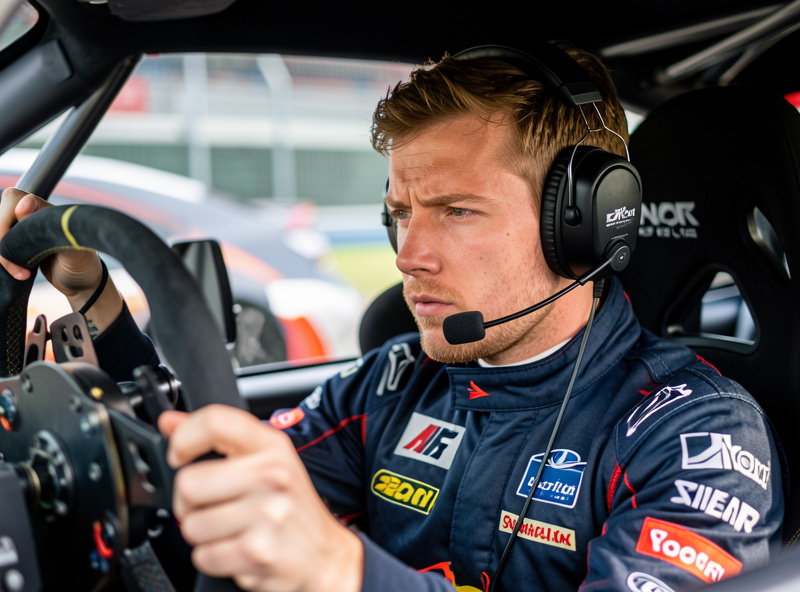
If there’s one skill that separates a good team from a frustrated one, it’s communication. Voice comms — Discord, TeamSpeak, or similar — are non-negotiable for team racing. You need to call your fuel level as a stint ends, warn the next driver they’re up, relay traffic and incidents, and keep everyone informed without flooding the channel. Calm, clear, concise comms win endurance races; panicked chatter loses them.
For this you genuinely want a decent headset with a clear microphone — not for the audio fidelity (that’s a different conversation, and I’ve written about sim racing audio separately), but because a crisp mic that your teammates can understand on the first try is worth its weight in a long race. A comfortable closed-back headset you can wear for a three-hour stint without fatigue, with a clear boom mic, is the one piece of gear team racing specifically rewards. As an Amazon Associate I earn from qualifying purchases. A solid option is a gaming headset with a boom microphone — comfort and mic clarity matter far more here than surround-sound gimmicks.
Don’t be the weak link: team racing etiquette
Team racing adds a layer of responsibility on top of normal clean-racing etiquette. When you crash, you’re not just ending your race — you’re throwing away hours of your teammates’ effort too. So drive within yourself, especially early in a stint when the car’s full of fuel and you’re settling in. Hand the car over undamaged. Be on time and ready for your stint. Own your mistakes to the crew immediately and honestly. And keep the morale up — a long endurance race has rough patches, and the teammate who stays positive when things go wrong is the one everyone wants back next season. Get those basics right and you’ll never struggle to find a crew, because reliable, clean, pleasant teammates are the rarest and most valued thing in team racing.
Frequently asked questions
What is team racing in sim racing?
Most commonly it means multiple drivers sharing one car across a longer race, usually an endurance event, swapping at pit stops so the result belongs to the whole team. There’s also a looser sense of a team racing under one banner in single-driver events while sharing setups and support.
Do I need to be fast to join a team?
No. Endurance teams value consistency and clean driving over raw speed. A steady beginner who never crashes is more useful to a crew than a fast driver who bins it once a stint. Team endurance is often the most welcoming door into organised racing.
How do I find a sim racing team?
Through Discord. Most communities that run team events have a looking-for-team or driver-market channel. Post your pace level, time zone, availability, and experience honestly, crews care more about reliability and clean racing than a fast lap.
How do driver swaps work?
In a shared-car event, drivers hand over at pit stops and the sim handles the actual swap. The coordination is on you: know your stint length, communicate as it winds down, bring the car in undamaged, and have the next driver ready before the stop. A fumbled handover costs more than any on-track battle.
Do I need voice comms for team racing?
Yes, effectively. Voice comms on Discord or similar are how you call fuel, warn the next driver, and relay traffic. A comfortable headset with a clear boom mic is the one piece of gear team racing specifically rewards, since teammates need to understand you on the first try.