The difference between a 2DOF and a 6DOF sim racing motion platform is how many independent axes of movement the rig has: a 2DOF platform reproduces pitch and roll, while a 6DOF platform adds heave, surge, sway, and yaw for all six degrees of freedom. More axes mean more faithful force reproduction — and a steep climb in cost, complexity, and space. The honest verdict from owners who run these daily is that the leap from no motion to 2DOF is transformative, while the leap from 2DOF to 6DOF is real but subject to sharp diminishing returns for most drivers.
This guide is part of the sim racing motion and haptics cluster. Motion platforms are the one area I treat as a deep-cut beyond my daily prosumer experience, so where I’m relaying what dedicated platform owners consistently report rather than my own long-run use, I’ll flag it plainly. The decision here is genuinely about where your money and floor space stop buying meaningful sensation.
What “Degrees of Freedom” Actually Means
Degrees of freedom describe the independent ways a rigid body can move in space: three rotations (pitch, roll, yaw) and three translations (heave, surge, sway). A platform’s DOF count is how many of those six it can reproduce. A 2DOF rig does the two rotations that matter most for driving feel — pitch (nose up/down under braking and acceleration) and roll (lean through corners). A 6DOF rig does all six.
The reason pitch and roll come first is that they carry the most useful information. Braking pitch tells you load is on the front tyres; cornering roll tells you the car is loaded laterally. These are the cues that inform driving, not just immersion. The extra axes a 6DOF adds — heave over crests, surge for sharper longitudinal punch, sway and yaw for slides — refine the picture but each contributes less than the two rotations a 2DOF already delivers.
What a 2DOF Platform Delivers
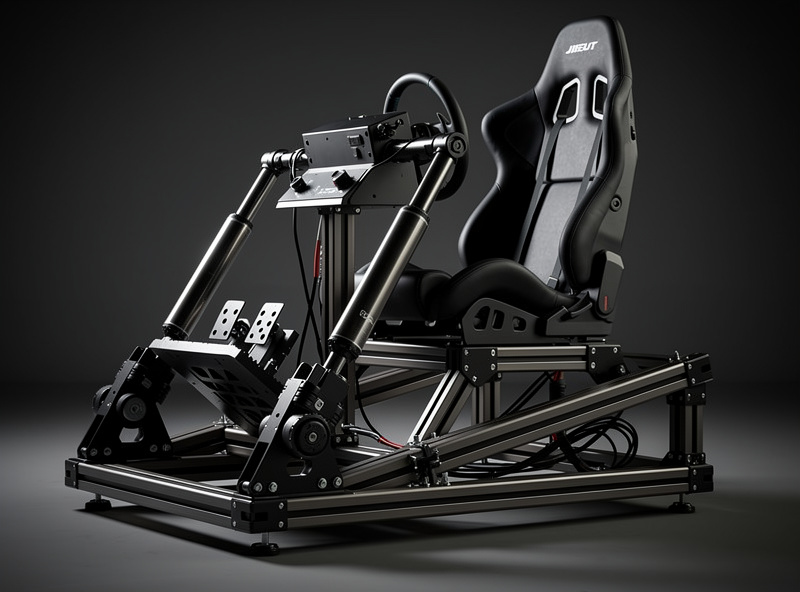
A 2DOF platform pitches the rig forward under braking and back under acceleration, and rolls it through corners. For the vast majority of home racers, this is the sweet spot of the entire motion category. It reproduces the two cues that change how you drive — load transfer fore-aft and side-to-side — at a cost and footprint that fits a normal room.
Owners consistently report that a well-tuned 2DOF rig with good tactile transducers layered on top covers nearly everything they want from motion. The transducers handle the high-frequency detail (lockups, kerbs, road) that motion platforms are too slow to reproduce, while the 2DOF handles the sustained load transfer. That combination — sustained motion plus haptic detail — is the configuration I’d point most people toward before they ever consider more axes. A pair of tactile transducers to pair with a motion platform is the cheapest way to fill in the detail a platform alone misses.
What 6DOF Adds — and What It Costs
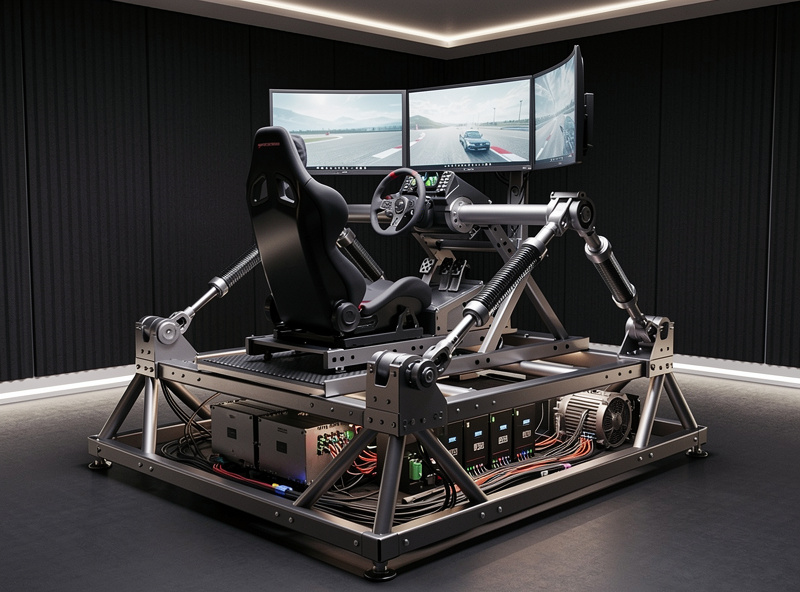
A 6DOF platform adds heave, surge, sway, and yaw. Heave is the most valued of the four: the rig dropping over crests and compressing in dips adds a genuine sense of the track surface. Surge sharpens the initial bite of braking and acceleration. Sway and yaw reproduce lateral slides and rotation, which matters most for drift and oversteer-heavy driving.
The cost is steep — a 6DOF platform is typically several times the price of a 2DOF, needs far more floor space for the additional actuators and swing, and demands considerably more tuning to feel coherent. Owners are candid that in a blind test, many drivers struggle to reliably distinguish a well-tuned 3DOF from a 6DOF. That single fact is the strongest argument that, past a point, the motion budget is better spent on tuning, a stiffer rig frame, and seat time than on chasing axis count.
2DOF vs 6DOF Motion Compared
| Attribute | 2DOF Platform | 6DOF Platform |
|---|---|---|
| Axes reproduced | Pitch, roll | Pitch, roll, heave, surge, sway, yaw |
| Key cues | Braking pitch, cornering roll | Adds crests, slides, rotation |
| Relative cost | Moderate | Several times higher |
| Floor space | Fits a normal room | Large dedicated space |
| Tuning effort | Moderate | High |
| Best for | Most home racers | Enthusiasts chasing max fidelity |
What About 3DOF?
3DOF sits between the two and is often the smartest buy. It adds heave to the 2DOF’s pitch and roll — and since heave is the most valued of the four extra axes, a 3DOF captures most of the perceptual benefit of a 6DOF for far less money and space. If your budget stretches past 2DOF but not comfortably to 6DOF, 3DOF is where I’d look hard.
The platform market reflects this: many of the popular consumer rigs are offered in 2DOF and 3DOF forms precisely because that range covers what most buyers actually want. The two dominant consumer brands take noticeably different approaches to the same axis counts, and if budget is the real constraint, layering tactile transducers and belt tension gets you a long way before any platform at all.
Which Should You Buy?
For most people the answer is 2DOF (or 3DOF) plus good haptics, not 6DOF. That configuration delivers the load-transfer cues that change how you drive, fits a real room, and leaves budget for tuning and seat time. Reserve 6DOF for the case where you have the space, the budget, and a specific appetite for maximum fidelity — and ideally have driven one first.
Whatever you choose, get the foundation right before bolting on motion. A platform amplifies frame flex rather than hiding it, so a rigid cockpit and honest force feedback come first. A solid multi-channel amplifier for tactile units is one accessory worth buying regardless of which platform you land on. The full motion and haptics guide lays out the complete upgrade order so you spend in the sequence that actually pays off.
Disclosure: As an Amazon Associate I earn from qualifying purchases. Any product search links point to genuinely stocked gear that fits the setups described, at no extra cost to you.
Frequently Asked Questions
Is 6DOF worth it over 2DOF for sim racing?
For most home racers, no. Owners report the jump from no motion to 2DOF is transformative, while 2DOF to 6DOF brings real but sharply diminishing returns at several times the cost, much more floor space, and far higher tuning effort.
What is the difference between 2DOF and 6DOF motion?
A 2DOF platform reproduces pitch and roll, the two rotations that carry the most driving information. A 6DOF platform adds heave, surge, sway, and yaw for all six degrees of freedom, refining the feel but contributing less per axis.
What does DOF mean in sim racing motion?
DOF stands for degrees of freedom, the independent ways a body can move: three rotations (pitch, roll, yaw) and three translations (heave, surge, sway). A platform’s DOF count is how many of those six it can physically reproduce.
Is 3DOF a good compromise between 2DOF and 6DOF?
Yes, often the smartest buy. 3DOF adds heave, the most valued of the four extra axes, to pitch and roll. It captures much of the perceptual benefit of 6DOF for far less money and space.
Do I still need bass shakers with a motion platform?
Yes. Motion platforms reproduce sustained forces but are too slow for high-frequency detail like lockups, kerbs, and road texture. Layering tactile transducers on top of a 2DOF rig is the configuration most owners recommend.
Can drivers tell the difference between 3DOF and 6DOF?
Owners are candid that many drivers struggle to reliably distinguish a well-tuned 3DOF from a 6DOF in a blind test. That is the strongest argument for spending the motion budget on tuning and seat time rather than chasing axis count.