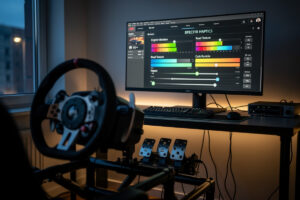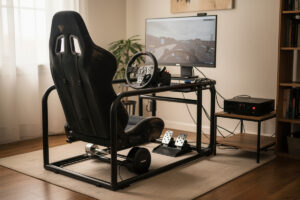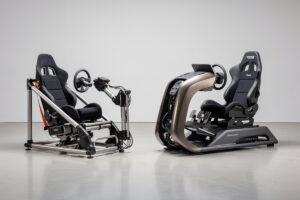
DOF Reality and Next Level Racing are the two brands most home racers compare when shopping for a consumer motion platform, and they pursue the same goal from different directions: DOF Reality builds dedicated rotational platforms in 2DOF and 3DOF forms at aggressive prices, while Next Level Racing’s motion offerings lean toward integrated, polished systems that prioritize fit and finish. The right pick depends on whether you value raw motion-per-dollar and a DIY-friendly attitude, or a more turnkey, refined experience. Both reproduce the pitch-and-roll cues that make motion worth having.
This comparison is part of the sim racing motion and haptics cluster. Motion platforms sit above my daily prosumer experience, so the comparisons here reflect what platform owners consistently report and the brands’ published positioning rather than my own long-run ownership of each — I’ll keep claims general and accurate rather than quoting falsifiable per-model specs that change between revisions.
Two Different Philosophies
DOF Reality’s reputation is built on delivering real rotational motion for the lowest credible price. Their platforms focus on the cues that matter most — pitch and roll, with heave on the 3DOF — and trade some refinement for accessibility. The community around them is large and DIY-friendly, with plenty of shared tuning profiles and mounting solutions.
Next Level Racing approaches motion as part of a cohesive cockpit ecosystem. Their motion products tend to emphasize integration with their broader rig lineup, build finish, and an out-of-the-box experience that needs less tinkering. The tradeoff is typically a higher price for comparable axis counts. Neither philosophy is wrong; they serve different buyers — the tinkerer chasing value versus the buyer who wants it to work cleanly with minimal setup.
It’s worth being honest about what “DIY-friendly” really means before you commit. A value-focused platform expects you to mount it correctly, manage the wiring, set up the software, and iterate on profiles — none of it hard, but all of it your job. An integrated system hands you more of that solved out of the box. I lean toward the build-it route because the assembly is part of the fun for me, but I’ve watched friends bounce off motion entirely because they bought a value platform expecting plug-and-play and lost patience with the setup. Be honest about which kind of buyer you are; it predicts your satisfaction more than the spec sheet does.
Motion Quality and Axes
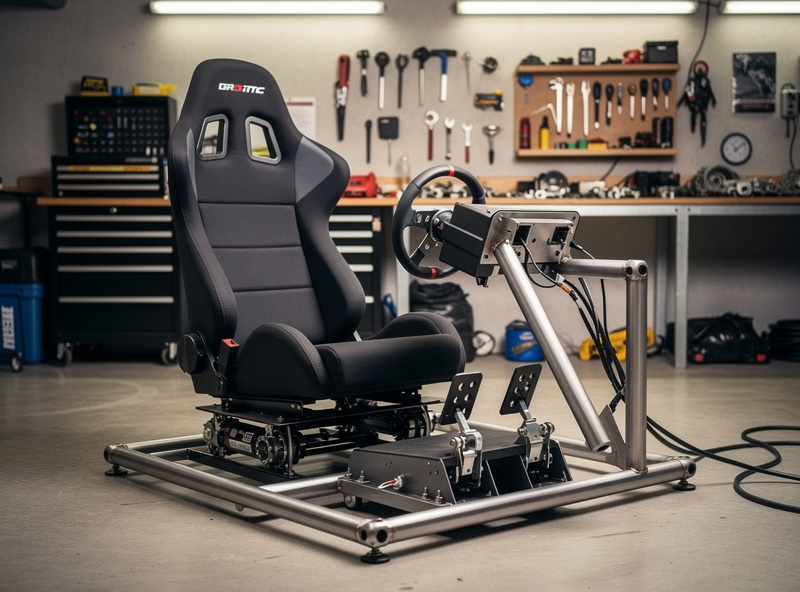
Both brands deliver the core pitch-and-roll motion that defines the category, and both offer options that add heave. The perceptual gap between a well-tuned platform from either brand is smaller than the price difference suggests — owners report that tuning quality and rig rigidity matter more to the end feel than which logo is on the actuators.
What separates them in practice is the experience around the motion: DOF Reality buyers often spend more time dialing in mounts and profiles to reach their platform’s potential, while Next Level Racing buyers tend to reach a good baseline faster. If you enjoy the building — and as someone who welds his own rig frame, I do — the DOF Reality route is rewarding. If you’d rather drive than tinker, the more integrated option earns its premium.
Cost, Space, and Noise
On pure cost-per-axis, DOF Reality is typically the value leader, which is much of its appeal. Next Level Racing’s premium buys finish, integration, and a smoother setup curve. For both, remember the costs the price tag hides: floor space for swing clearance, the amplifier and PC overhead, and actuator noise that matters in a shared home.
Whichever you choose, budget for the tactile transducers that fill in the high-frequency detail a platform is too slow to reproduce. A platform plus haptics is the complete picture; a platform alone leaves the lockup and kerb detail on the table. A pair of tactile transducers to pair with either platform is a small add-on relative to the platform cost and closes that gap.
Tuning, Software, and Long-Term Support
Both brands rely on motion software to translate telemetry into actuator movement, and this is where the daily experience is won or lost. The motion feel you actually get is largely a function of how well that profile is dialed in — the same lesson that applies to tuning bass shakers in SimHub. A platform left on default profiles underdelivers regardless of brand.
DOF Reality’s large DIY community is a real asset here: shared profiles, mounting guides, and troubleshooting threads shorten the learning curve, even if the official polish is lighter. Next Level Racing leans on its own ecosystem and support, which suits buyers who want a single point of contact rather than a forum deep-dive. Consider, too, the longevity question: open, DIY-friendly platforms are often easier to repair and upgrade piecemeal, while integrated systems trade some of that modularity for cohesion. For a workshop-minded racer who already prints brackets and wires his own rig, the repairable, modular path has obvious appeal — but it’s a genuine preference, not a clear winner.
DOF Reality vs Next Level Racing Motion
| Attribute | DOF Reality | Next Level Racing |
|---|---|---|
| Core philosophy | Motion-per-dollar, DIY-friendly | Integrated, turnkey, refined |
| Axis options | 2DOF and 3DOF | Motion within a cockpit ecosystem |
| Typical price position | Value leader | Premium for finish/integration |
| Setup effort | More tuning to reach potential | Faster to a good baseline |
| Community / profiles | Large, DIY-oriented | Brand-supported ecosystem |
| Best for | Tinkerers chasing value | Buyers wanting plug-and-play |
Which Brand Should You Choose?
If your priority is the most motion for your money and you don’t mind spending time on mounts and tuning, DOF Reality is the obvious starting point. If you want a cleaner, more integrated experience and are willing to pay for it, Next Level Racing’s motion fits better. Both deliver real pitch-and-roll motion — the deciding factor is your appetite for setup, not a fundamental difference in what the motion can do.
Either way, decide on axis count first using the 2DOF vs 6DOF guide, then pick the brand that matches your budget and tinkering tolerance. And get the rig fundamentals and force feedback sorted before motion — a platform under a flexy frame is money in the wrong order. To drive the transducers you’ll want alongside either platform, a multi-channel amplifier for bass shakers is the one accessory worth buying regardless of brand. The main motion guide ties the whole upgrade path together.
Disclosure: As an Amazon Associate I earn from qualifying purchases. Product search links point to genuinely stocked accessories that fit the setups described, at no extra cost to you. Motion platforms themselves are typically bought direct from the manufacturer.
Frequently Asked Questions
Is DOF Reality or Next Level Racing better for motion?
It depends on your priorities. DOF Reality leads on motion-per-dollar and suits tinkerers happy to tune. Next Level Racing offers a more integrated, refined experience for a premium. Both deliver real pitch-and-roll motion.
Does DOF Reality offer 2DOF and 3DOF?
Yes. DOF Reality is known for rotational platforms in both 2DOF (pitch and roll) and 3DOF (adding heave) configurations, positioned as a value-focused way into real sim racing motion.
Do I need bass shakers with a motion platform from either brand?
Yes. Platforms from both brands reproduce sustained pitch and roll but are too slow for high-frequency detail like lockups and kerbs. Adding tactile transducers fills that gap and completes the haptic picture.
Which brand is easier to set up?
Next Level Racing’s integrated approach generally reaches a good baseline faster, while DOF Reality platforms often need more time on mounts and tuning profiles to reach their full potential. The DIY community around DOF Reality helps with that.
Should I pick the platform brand before deciding on axis count?
Decide axis count first. Choose between 2DOF, 3DOF, or 6DOF based on budget and space, then pick the brand that matches your price range and how much setup tinkering you are willing to do.