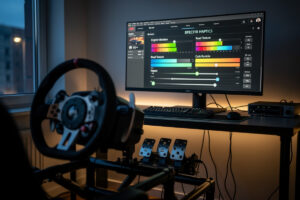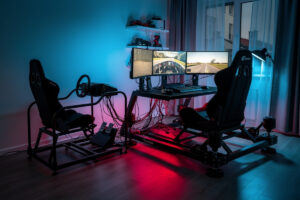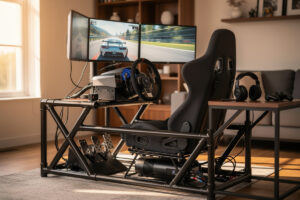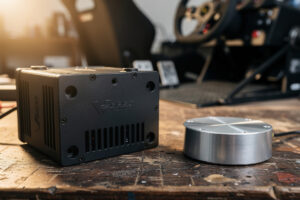
Bass shakers and tactile transducers are the same category of device used two different ways: both are voice-coil units that turn an audio signal into physical vibration, but “bass shaker” usually means a cheap, low-frequency rumble unit, while “transducer” implies a higher-fidelity puck that reproduces sharp detail too. On my rig I run both — a big low-frequency unit under the seat for engine and road rumble, and smaller transducers on the pedal deck for lockups and ABS pulses. The distinction matters because buying the wrong type leaves you with a one-note buzz instead of a full haptic language.
This guide is part of the sim racing motion and haptics cluster, and it answers the question that trips up almost every first-time haptics buyer: which devices do what, and how many of each you actually need. Get the hardware split right and the software side that tunes these effects has something worth working with.
Same Technology, Different Jobs
A bass shaker and a tactile transducer are both inertial exciters: a magnet and voice coil drive a weight, and the resulting vibration transfers into whatever the unit is bolted to. The difference is frequency response. A typical bass shaker is tuned for roughly 20–80 Hz — pure low-end rumble. A higher-grade tactile transducer extends usefully toward 200 Hz and beyond, so it can reproduce the sharp, fast events a pure rumble unit smears into mush.
That single spec is why people are disappointed when they buy one cheap shaker and expect to feel a wheel lockup. The lockup cue lives in higher frequencies the rumble unit can’t render cleanly. The fix isn’t more power — it’s the right device for the cue. I learned this by running a single big shaker for weeks, feeling great rumble but no detail, then adding small pucks and suddenly being able to trail-brake by feel. The two device classes are complementary, not competing.
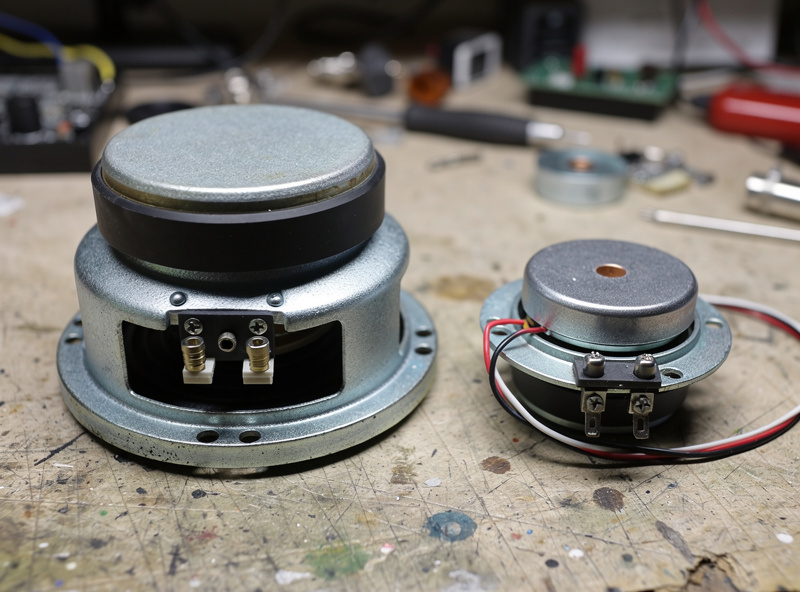
Low-Frequency Bass Shakers
The big low-frequency units are the foundation of a haptic rig. Bolted to the seat or the underside of the seat pan, they deliver the chest-felt rumble of engine RPM and coarse road surface. This is the cue that makes a static rig feel alive the instant you fire up a session, and it’s why a single large shaker is the upgrade I recommend before anything fancier.
Mounting is everything with these units. The energy has to couple into a rigid surface — a flexy plastic seat or a loose bracket absorbs the vibration and you feel a fraction of what the unit can deliver. On my welded frame I bolt the big shaker to a steel plate that ties directly into the seat rails, and the difference versus a soft mount is night and day. If you’re shopping, a 50W-plus low-frequency unit driven by a proper amp is the sensible starting point. Here’s a solid low-frequency bass shaker for sim racing as a reference point for the class.
High-Frequency Tactile Transducers
The smaller, higher-bandwidth pucks are where detail lives. Mounted closer to the inputs — on the pedal deck and near the wheel — they reproduce the fast transients: ABS pulses, wheel lockup, wheelspin, gear engagement, and kerb edges. These are the cues that turn haptics from immersion into information you can drive on.
Because they handle higher frequencies, placement is more surgical. A puck on the pedal tray makes lockup feel like it’s coming through your foot, which is exactly where your brain expects brake information. Run separate units front and rear and you can localize cues — front for braking, rear for traction — which is the foundation of a properly zoned haptic setup. A pair of compact tactile transducer pucks alongside the big rumble unit is the combination I’d build toward.
How Many Do You Need?
For a first haptic setup, one large low-frequency unit under the seat plus a basic amp is enough to transform the rig — start there. The next step is a second small puck (or pair) on the pedal deck for braking detail. A serious zoned setup runs four units: two low-frequency for rumble, two high-frequency for transient detail, front and rear.
Beyond four, returns diminish fast for most drivers. More units mean more amp channels and more tuning effort, and the immersion gain per added unit drops sharply. I’ve run a four-zone setup for a long time and never felt the need for more — the realism ceiling is set by tuning quality, not unit count. That’s the same lesson the main motion guide draws for actuated platforms: past a point, spend on tuning, not on more hardware.
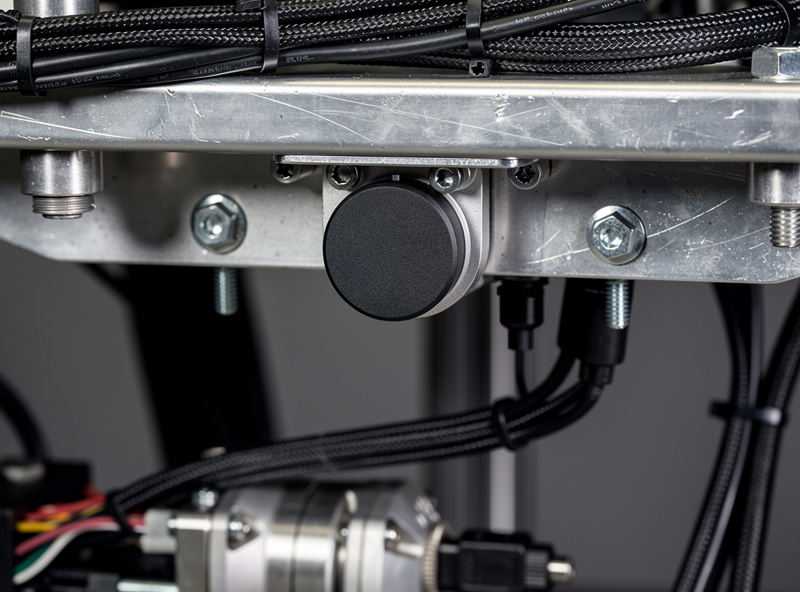
Powering Bass Shakers and Transducers
These units are passive — they need an amplifier to drive them, exactly like speakers. A multi-channel amplifier lets you drive each zone independently, which is what makes zoned tuning possible. The common beginner error is running a shaker off a spare speaker output at low power and concluding the unit is weak; it isn’t, it’s starved.
Match amp power roughly to the unit’s rating and give each zone its own channel. A four-channel amp comfortably runs a two-low, two-high setup. A basic multi-channel amplifier for tactile units is the piece that unlocks proper per-zone control. From there, the software is what assigns sim effects to each channel — the hardware just needs to be present and properly powered.
Bass Shaker vs Tactile Transducer Compared
| Attribute | Low-Frequency Bass Shaker | High-Frequency Transducer |
|---|---|---|
| Frequency range | ~20–80 Hz | ~40–200+ Hz |
| Best cues | Engine rumble, coarse road | Lockup, ABS, wheelspin, gear shift |
| Mounting spot | Seat / seat pan | Pedal deck, near inputs |
| Size / weight | Larger, heavier | Compact pucks |
| Role in rig | Foundation rumble | Detail and information |
Disclosure: As an Amazon Associate I earn from qualifying purchases. The product links above are search links to genuinely stocked items; I only point to gear that fits the setups I describe, at no extra cost to you.
Frequently Asked Questions
Is a bass shaker the same as a tactile transducer?
They are the same category of voice-coil device, but the terms imply different tuning. A bass shaker usually means a low-frequency rumble unit around 20-80 Hz, while a tactile transducer extends higher to reproduce sharp detail like lockups and ABS pulses.
How many bass shakers do I need for sim racing?
Start with one large low-frequency unit under the seat. A strong setup runs four: two low-frequency for rumble and two high-frequency pucks on the pedal deck for braking and traction detail, zoned front and rear.
Do bass shakers need an amplifier?
Yes. Bass shakers and transducers are passive and need an amp like speakers do. A multi-channel amplifier lets you drive each zone independently, which is what makes proper zoned tuning possible. Underpowering them is the most common mistake.
Where should I mount tactile transducers on a sim rig?
Mount low-frequency units to the seat or seat pan for chest-felt rumble, and smaller high-frequency pucks on the pedal deck and near the wheel so braking and traction cues arrive where your brain expects them.
Why can’t I feel wheel lockup with my bass shaker?
Lockup lives in higher frequencies a pure low-frequency shaker cannot render cleanly. The fix is adding a higher-bandwidth tactile transducer near the pedals, not more power to the rumble unit.
Are bass shakers worth it for sim racing?
They are the highest immersion-per-dollar upgrade in sim racing. A single transducer reproduces lockups and kerbs through the seat, letting you react earlier than visuals alone, for a fraction of the cost of any motion platform.