The entry direct-drive fight comes down to one question: what do you race on? Buy the Fanatec CSL DD if you’re on Xbox or you value the deepest rim catalogue; buy the Moza R5 if you’re on PC and want the best value, because the R5 undercuts it while giving you a complete upgrade ladder. Both sit around 5–5.5 Nm — enough torque for almost any car — so this is an ecosystem and platform decision, not a torque one.
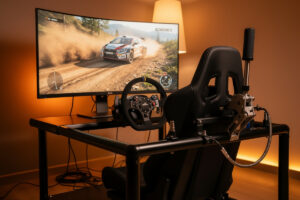
I’ve run both as the entry point into direct drive, on the same welded rig with the same load-cell pedals, and the honest truth is that a beginner blindfolded would struggle to tell 5 Nm of Fanatec from 5.5 Nm of Moza. The difference that matters isn’t the feel of the base — it’s what happens after the base, when you start adding rims, pedals, and a second wheel. That’s where these two diverge, and that’s what should decide your money.
Torque: both are plenty, and that’s the point
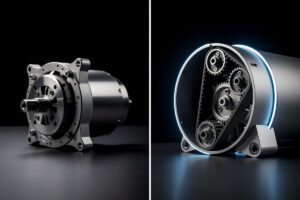
The CSL DD ships at 5 Nm and reaches 8 Nm with the optional Boost Kit power supply; the Moza R5 is 5.5 Nm out of the box. For an entry base those numbers are close enough to call equal, and more importantly, both are enough. I keep saying it because it’s true: 5 Nm of honest, well-tuned direct drive feels dramatically better than any belt or gear wheel, and a beginner will spend months learning to use it before the ceiling ever feels limiting.
If you already know you want more weight for heavy GT3 cars, neither of these is your base — you’d step up to an R9 or a ClubSport DD. But as a first direct-drive base, both the CSL DD and R5 hit the sweet spot where the torque is real, the wheel finally tells you what the front tyres are doing, and the price is still sane. Don’t let the 0.5 Nm gap factor into your decision; it’s noise.
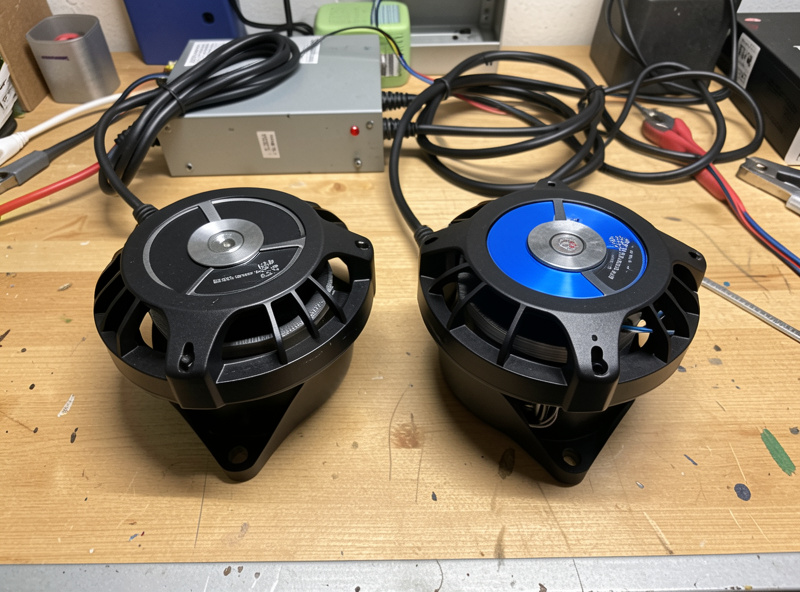
Platform is the real decider
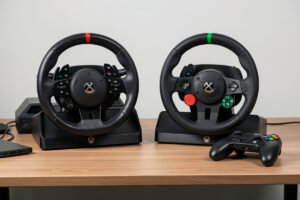
This is where the fight is actually won or lost. The CSL DD has an Xbox-compatible version and a long history of console licensing, so if you race on Xbox — or you want a base that plays nicely with both PC and console — Fanatec is the cleaner path, full stop. Gran Turismo and PlayStation players similarly lean Fanatec-friendly through the licensed ecosystem. The Moza R5 is a PC-first base; if your sim time is on a console, the decision is basically made for you.
On PC, the platform argument disappears and it becomes pure value. The R5 typically costs less for similar torque, and Moza’s bundle pricing (base plus a wheel) is aggressive. If you’re a PC racer who doesn’t care about console at all, the R5 gives you more rig for the money, which leaves budget for the upgrade that actually matters — pedals. I’ll come back to that, because it’s the same advice I give for every base.
Ecosystem and the upgrade ladder
Fanatec’s biggest advantage is catalogue depth: the range of rims, pedals, shifters, and accessories is the broadest in sim racing, and many are officially licensed replicas of real race wheels. If you dream of a specific GT3 or formula rim, Fanatec probably makes it. The trade-off is that the catalogue depth comes with premium pricing, and you’re committing to Fanatec’s quick-release and connector standard for the long haul.
Moza’s ecosystem is younger but now genuinely complete — rims, load-cell pedals, dashes, button boxes, sequential and H-pattern shifters, all talking through Pit House. The R5 is the bottom rung of a ladder that climbs cleanly to the R9, R12, and beyond without rebuying peripherals. For a buyer who wants to start cheap and grow, that matters more than catalogue breadth they’ll never fully use. Both ecosystems are good; Fanatec is wider, Moza is better value per rung.
| Spec | Fanatec CSL DD | Moza R5 |
|---|---|---|
| Peak torque | 5 Nm (8 Nm with Boost Kit) | 5.5 Nm |
| Platforms | PC, Xbox (and PlayStation-friendly ecosystem) | PC only |
| Software | Fanatec driver + tuning menu | Moza Pit House |
| Ecosystem | Broadest catalogue, licensed rims | Complete, value-priced ladder |
| Best for | Console racers, ecosystem buyers | PC racers wanting best value |
Software and feel
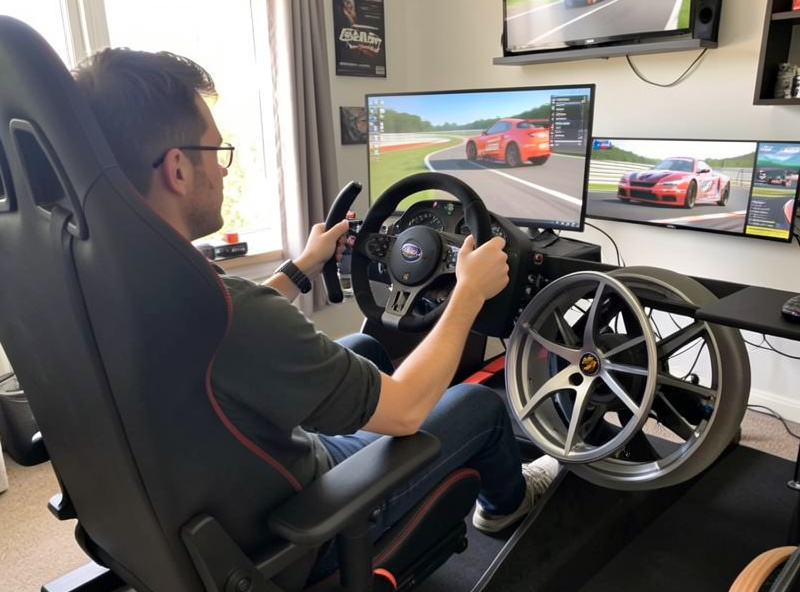
The CSL DD tunes through Fanatec’s on-wheel menu and driver, which is mature and console-aware — you can adjust force, natural damper, and more without leaving the seat. The R5 uses Pit House, which I find the friendliest tuning software of any brand for a beginner: clear sliders, sensible defaults, and easy per-title profiles. Neither is hard, but Pit House gets a newcomer to a clean profile slightly faster.
Feel-wise, both have the crisp, immediate character that makes direct drive worth buying. The Fanatec leans a hair smoother by default; the Moza a touch more detailed and raw. Tuned honestly off a telemetry overlay, the gap closes to almost nothing. If you want the method I use to set min force and avoid clipping on either base, my force-feedback tuning guide covers it step by step — it applies equally to both.
Spend the savings on pedals
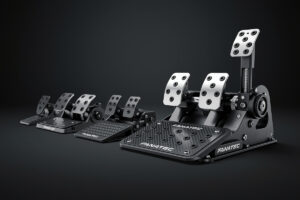
Whichever base you choose, the single best thing you can do with any money left over is buy a load-cell brake. A beginner on a 5 Nm base with a load-cell brake will out-drive a beginner on an 8 Nm base braking through a flexy potentiometer pedal, because consistent braking by pressure is where lap time and confidence come from. This is the upgrade-order rule: rig, then pedals, then wheelbase, then rim. The base is important, but the brake is where you’ll feel the biggest jump.
That’s also why I lean toward the value option when platform allows — the cheaper the base that still does the job, the sooner you can fund the pedal upgrade that genuinely changes your driving. Both the CSL DD and R5 are perfectly good first bases. Pick by platform first, value second, and put the difference into the pedals.
The verdict
On console, the CSL DD wins by default — it’s the cleanest licensed path and a genuinely great base. On PC, the Moza R5 is the smarter buy for most people: similar torque, better value, and a complete ladder to grow into, with the savings funding a load-cell brake. Neither will disappoint you; both are real direct drive at an honest entry price. Decide the platform, respect the upgrade order, and you can’t go far wrong.
As an Amazon Associate I earn from qualifying purchases. Compare current pricing on entry-level direct-drive wheelbases before you commit.
Further Reading
- Best Direct-Drive Wheelbase Brands: Moza vs Fanatec vs Simagic
- Best Entry-Level Direct-Drive Wheelbase Under $500
- Fanatec vs Moza Ecosystem: Which Should You Buy Into?
- Best Sim Racing Pedals 2026: Load Cell, Hydraulic, and Budget
- Direct Drive vs Belt Drive Sim Racing Wheels: Which Is Better?
Frequently Asked Questions
Is the Fanatec CSL DD or Moza R5 better?
It depends on your platform. On Xbox or console, the CSL DD wins thanks to licensing. On PC, the Moza R5 is usually the better value at similar torque. Both are genuine entry direct-drive bases with enough power for any car a beginner drives.
How much torque do the CSL DD and R5 have?
The Fanatec CSL DD is 5 Nm, rising to 8 Nm with the optional Boost Kit power supply. The Moza R5 is 5.5 Nm out of the box. Both numbers are more than enough for an entry base, so torque should not be your deciding factor.
Does the Moza R5 work on Xbox or PlayStation?
No. The Moza R5 is a PC-only base. If you race on Xbox or want console compatibility, the Fanatec CSL DD is the correct choice because of Fanatec’s licensed console ecosystem. PC-only racers can pick either freely.
Do I need the Fanatec Boost Kit?
Not to start. The CSL DD is enjoyable at 5 Nm, and most beginners spend months before the ceiling feels limiting. The Boost Kit to 8 Nm is a worthwhile later upgrade if you race heavy GT3 cars and have a rigid rig to anchor the extra force.
Which entry base has the better ecosystem?
Fanatec has the broadest catalogue with licensed rims, while Moza offers a complete, value-priced ladder from the R5 up to high-torque bases. Fanatec is wider; Moza is better value per upgrade. Choose based on whether you want catalogue depth or cheaper growth.