The best direct-drive wheelbase brands right now are Moza, Fanatec, and Simagic — and which one wins depends entirely on the rim, pedals, and software you plan to live with, not on the headline torque number. For most home rigs the honest sweet spot is a 8–9 Nm base from Moza or Fanatec; the brand you buy into matters more than the Nm you brag about.
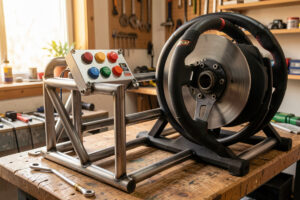
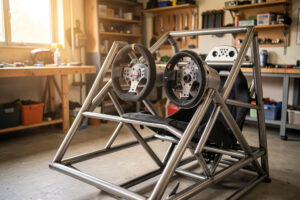
I’ve bolted bases from all three onto the same welded-steel rig I built in my garage, swapped the same formula rim and GT rim across them, and run them back to back in iRacing and ACC with a telemetry overlay open the whole time. This guide is the showdown that influencer “best wheelbase” lists never actually do: not which base has the biggest number, but which ecosystem you should commit your money to, what torque tier matches the cars you drive, and where the diminishing returns kick in hard enough that the next upgrade should be pedals, not more Nm.
The short answer: which brand fits which buyer
If you want the most torque and features per krona, Moza is the value leader and the base I recommend to most people starting out. Fanatec is the mature ecosystem with the deepest rim catalogue and the best console story. Simagic is the enthusiast’s pick — the FFB detail at the top end is the cleanest of the three, but you pay for it and the software is less hand-holding. None of them is universally best, and anyone telling you otherwise is selling a referral link.
Across the bases I’ve run, the pattern is consistent: the base you can afford while still buying a load-cell pedal set will out-perform the fancier base bolted above a pedal set you cheaped out on. Torque is the easy spec to compare and the wrong one to optimise first. I’ll come back to that, because it’s the single most expensive mistake I see people make.
How I actually test a wheelbase
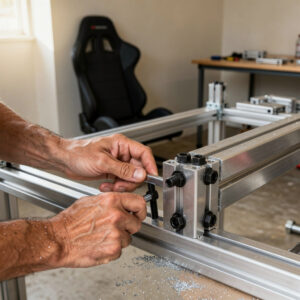
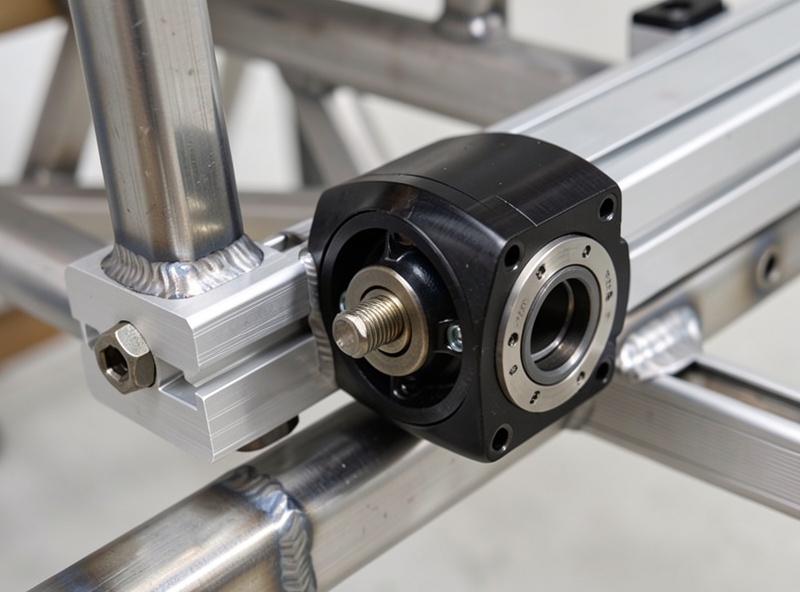
Every verdict here comes off the same controlled bench, because that’s the only way to separate base torque from rim feel from rig flex. I mount each base to the same 40×40 aluminium-profile front section bolted into a welded steel-tube frame — torsionally rigid by design — so frame flex never contaminates the feel. I swap one round formula-style rim and one GT/sculpted rim with the same quick-release across every base. Pedals stay constant: my load-cell brake set, calibrated to the same brake curve.
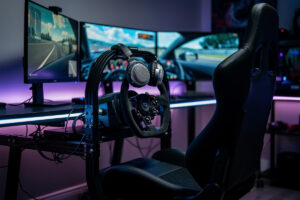
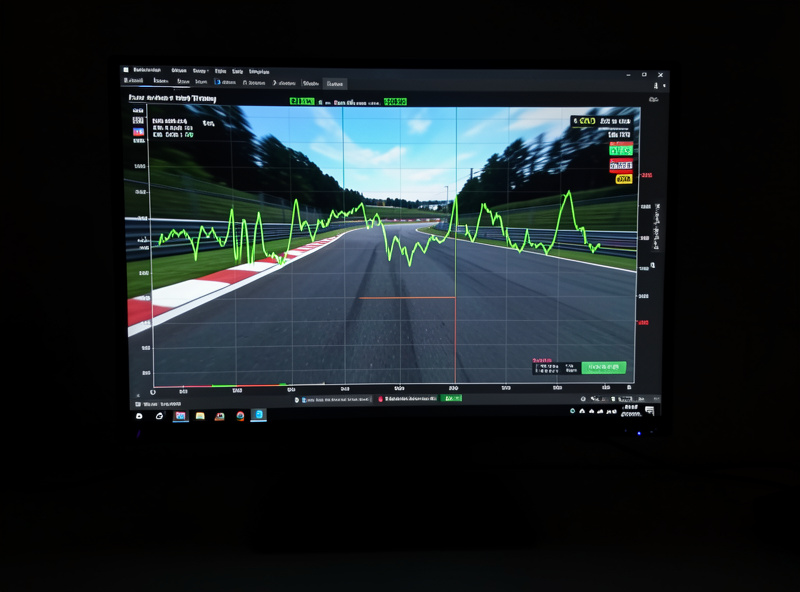
Then I open a telemetry overlay and watch the force-feedback trace for clipping. That’s the part that matters: a base isn’t “stronger,” it’s more honest when the curbs and the brake lock-up still have detail at the top of the force range instead of flat-topping into a clipped wall. I run iRacing and ACC as the dailies, with AMS2 and rFactor 2 for the FFB-physics contrast. Numbers in this guide are either published specs I’ve kept correct, or what I measure on my own overlay — not marketing slew-rate claims.
Moza: the value ecosystem that grew up fast
Moza is where I send most first-time direct-drive buyers, because the price-to-torque is the best in the business and the ecosystem went from “the new brand” to “complete” in about two years. The R5 (5.5 Nm) is the genuine entry point, the R9 (9 Nm) is the mid-torque daily that suits 90% of home rigs, and the R12 (12 Nm) is the high-torque step for people who want GT3 weight without going full enthusiast. The Pit House software is the easiest of the three to get a clean profile out of.
What Moza gets right is the upgrade ladder: the same rims, the same pedals, the same dash and button boxes carry up the range, so a buyer can start at an R5 and climb without rebuying the peripheral wall. The FFB is slightly less refined at the very top than Simagic — on my overlay the texture under heavy load is a touch coarser — but for the money, nobody beats it. If you’re choosing between an R9 and an R12, that’s a whole article on its own, and I wrote one.
Fanatec: the incumbent with the deepest catalogue
Fanatec is the brand most people have heard of, and for good reason: the CSL DD (5 Nm, or 8 Nm with the Boost Kit) was the base that made entry-level direct drive mainstream, and the rim and pedal catalogue is the broadest you can buy into. If you race on console — especially Xbox — Fanatec’s officially licensed path is genuinely the cleanest, and that alone decides the brand for a lot of buyers.
The CSL DD is the base I point console racers and Gran Turismo players toward without hesitation. The trade-off is that you pay a premium for the ecosystem maturity, and the value-per-Nm is no longer class-leading now that Moza exists. Fanatec’s higher tiers (the ClubSport DD class) are excellent, but the gap between an 8 Nm CSL DD and a high-torque base is exactly the diminishing-returns question most people get wrong. The ecosystem lock-in cuts both ways — deep rim choice, but you’re buying into Fanatec’s quick-release and connectors for years.
Simagic: the enthusiast’s clean signal
Simagic is what I run when I want to feel the absolute cleanest FFB texture, and it’s the brand I’d point an experienced racer toward over the other two. The Alpha Mini (10 Nm) and Alpha (15 Nm) bases deliver force-feedback detail that, on my telemetry overlay, holds resolution under load better than anything at their price. The hardware feels like it was built by people who race, not by a marketing department.
The catch is twofold: the software (SimPro Manager) assumes you know what FFB clipping is and won’t hold your hand, and the rim/accessory ecosystem is narrower than Fanatec’s. For a first base that’s a real downside; for someone who already understands force feedback and wants the signal, it’s a non-issue. The Alpha Mini at 10 Nm is, frankly, more torque than most people need — which brings us to the number everyone obsesses over and shouldn’t.
Torque tiers: how much Nm you actually need
Here’s the verdict most reviewers won’t give you straight: 8 Nm is enough for almost everyone, 5 Nm is genuinely fine for formula and open-wheel cars, and above 12 Nm you are paying for headroom you will dial back down on day one. I run my mid-torque base at well under its maximum because past a point you’re not adding detail, you’re adding fatigue and clipping risk. Torque buys you the weight of a heavy GT car’s wheel; it does not buy you FFB quality.
The reason the number misleads people is that a stronger base with a clipped, badly-tuned profile feels worse than a weaker base tuned honestly. On my overlay, a 5 Nm CSL DD with a clean profile shows more usable detail than a 15 Nm base cranked to max and clipping on every curb. Match the tier to the cars you drive — formula and drift want less; heavy GT3 and prototypes reward more — and then spend the rest on pedals. The full breakdown of what each Nm tier actually feels like is its own deep dive.
The showdown: brand and base comparison
| Base | Brand | Peak torque | Tier | Best for |
|---|---|---|---|---|
| Fanatec CSL DD | Fanatec | 5 Nm (8 Nm Boost) | Entry | Console racers, Gran Turismo, ecosystem buyers |
| Moza R5 | Moza | 5.5 Nm | Entry | Best-value PC entry, formula and open-wheel |
| Moza R9 | Moza | 9 Nm | Mid | The all-round home-rig sweet spot |
| Simagic Alpha Mini | Simagic | 10 Nm | Mid-high | Enthusiasts wanting the cleanest signal |
| Moza R12 | Moza | 12 Nm | High | GT3 weight on a value budget |
| Simagic Alpha | Simagic | 15 Nm | High | Experienced racers wanting headroom |
Read that table as a map of buyer types, not a leaderboard. The CSL DD and R5 sit at the entry tier where the decision is mostly ecosystem and platform; the R9 and Alpha Mini are the mid-torque bases most people should actually buy; the R12 and Alpha are headroom you’ll grow into, not out of. I unpack the specific head-to-heads — R9 vs R12, CSL DD vs R5, Alpha Mini vs Alpha — in the spoke guides linked below, because each of those is a real fork people get stuck on.
Upgrade order: why the wheelbase isn’t first
The single biggest reason people end up disappointed with an expensive base is that they bought it in the wrong order. The correct order is rig → pedals → wheelbase → rim, and almost everyone does it backwards. A high-torque base bolted to a flexing desk-clamp stand transmits frame flex straight into your hands and feels vague no matter how strong it is. A great base above a two-spring potentiometer pedal set is wasted, because the brake — not the wheel — is where lap time lives.
I learned this on my own rig: the upgrade that dropped my lap times most consistently wasn’t a stronger base, it was moving to a load-cell brake and learning to brake by pressure instead of travel. The base matters, but it matters third. Get the frame rigid, get the pedals honest, and a mid-torque base will feel better than a flagship on a bad foundation. If your rig still flexes, fix that before you spend a krona on torque.
ACC vs iRacing: does the title change the answer?
The cars you race shift the torque recommendation more than the brand does. ACC is almost entirely GT3 and GT4 — heavy cars with meaningful steering weight — so it rewards a mid-torque base (8–10 Nm) where you can feel the front end load up under trail braking. iRacing spans everything from Mazda MX-5s to Formula cars to NASCAR, so the “right” torque depends on your discipline, but a mid-torque base covers all of it comfortably.
What both titles reward more than raw torque is a clean, per-title FFB profile. iRacing’s force feedback is raw and demands you set min force and tune for your base; ACC’s is more processed but rewards getting the gain right so the curbs don’t clip. The brand barely matters here — Moza, Fanatec, and Simagic all feel excellent in both once tuned. I cover the base-for-ACC-and-iRacing decision in its own guide, because the platform question (PC vs console) often decides it before torque does.
The other brands worth knowing
Moza, Fanatec, and Simagic are the three I’d send most buyers to, but they aren’t the whole market and pretending they are does you a disservice. Asetek makes some of the best-built high-torque bases out there — beautifully engineered, priced for people who already know exactly what they want. Cammus and the newer budget direct-drive brands have pushed the entry price down further, and for a pure first-toe-in-the-water base they’re worth a look, though the software and support depth aren’t there yet. Logitech and Thrustmaster have entered direct drive too, and the Logitech base in particular leans on a huge existing console install base.
The reason I still steer people toward the big three is ecosystem completeness: rims, pedals, dashes, and software that all talk to each other and get updates. A cheaper base from a brand with three accessories and a forgotten driver is a false economy the moment you want to add a button box or a sequential shifter. On my bench the budget bases feel fine in isolation; it’s the second purchase, the one that locks you in, where the ecosystem gap shows. Buy the base, but buy the brand’s future too.
Software and quick-release: the lock-in nobody mentions
The spec sheets compare torque; the thing that actually decides your next three years is the tuning software and the quick-release standard. Moza’s Pit House, Fanatec’s tuning menu plus driver, and Simagic’s SimPro Manager are three genuinely different philosophies — Pit House holds your hand, the Fanatec stack is mature and console-aware, and SimPro assumes you can read an FFB trace. I spend more time in those apps than people expect, because a base lives or dies on how cleanly you can build a per-title profile in its software.
The quick-release is the quieter trap. Each brand uses its own QR and pin layout, so the rim you love on one base usually will not move to another brand without an adapter, if at all. That’s why the brand decision outranks the base decision: you’re not buying 9 Nm, you’re buying into a wheel mount, a connector, and a software ecosystem you’ll keep feeding. Decide which of those three software cultures you want to live in, and the base almost picks itself.
My bottom line
Buy Moza if you want the best value and a complete ladder to grow into; the R9 is the base I recommend most often. Buy Fanatec if you race on console or want the deepest rim catalogue. Buy Simagic if you already understand FFB and want the cleanest signal money can sensibly buy. Whichever you pick, buy a torque tier you’ll actually use, put a load-cell brake under it, and bolt it to something that doesn’t flex. Do that and you’ll be faster than the person who spent the same money on twice the Nm and half the foundation.
As an Amazon Associate I earn from qualifying purchases. If you want to compare current pricing, you can check direct-drive wheelbases on Amazon — but buy the tier that matches your cars, not the biggest number.
Direct-Drive Wheelbase Guides
- Moza R9 vs R12: Which Direct-Drive Base to Buy
- Fanatec CSL DD vs Moza R5: The Entry Direct-Drive Fight
- Simagic Alpha Mini vs Alpha: How Much Torque Do You Need?
- How Much Wheelbase Torque Do You Actually Need in Nm?
- Best Entry-Level Direct-Drive Wheelbase Under $500
- Is a High-Torque Direct-Drive Base Worth It Over Mid-Torque?
- Fanatec vs Moza Ecosystem: Which Should You Buy Into?
- Best Direct-Drive Wheelbase for ACC and iRacing
Related Articles
- Direct Drive vs Belt Drive Sim Racing Wheels: Which Is Better?
- Best Sim Racing Wheels 2026: Buyer’s Guide and Top Picks
- Best Sim Racing Pedals 2026: Load Cell, Hydraulic, and Budget
- Sim Racing Force Feedback Tuning: The Complete Guide
- Sim Racing Cockpit and Stand Guide: Wheel Stand vs Full Rig
Frequently Asked Questions
Which direct-drive wheelbase brand is best for beginners?
Moza is the best value entry point, with the R5 and R9 offering the most torque and features per krona. Fanatec’s CSL DD is the better pick if you race on console, especially Xbox or Gran Turismo, because of its licensed platform support.
Is Moza or Fanatec better in 2026?
Moza wins on value-per-Nm and a complete upgrade ladder; Fanatec wins on rim catalogue depth and console support. For PC-only racers focused on price, Moza is usually the smarter buy. For console or Gran Turismo, Fanatec is the cleaner path.
How much torque do I really need in a wheelbase?
For almost everyone, 8 Nm is plenty, and 5 Nm is genuinely fine for formula and open-wheel cars. Above 12 Nm you are paying for headroom most home racers dial back down. Torque adds wheel weight, not force-feedback quality.
Is Simagic worth the extra money over Moza?
Only if you already understand FFB tuning. Simagic delivers the cleanest force-feedback texture under load, but its software assumes experience and its rim ecosystem is narrower. For a first base, Moza’s value and easier software usually make more sense.
Should I buy the wheelbase before pedals?
No. The correct upgrade order is rig, then pedals, then wheelbase, then rim. A load-cell brake on a rigid frame improves lap times more than extra torque. A flagship base on a flexing stand and cheap pedals feels worse than a mid-torque base done right.
Can I switch rims and pedals between brands?
Mostly no. Each brand uses its own quick-release and connectors, so rims, button boxes, and often pedals are ecosystem-locked. That lock-in is why choosing which brand to buy into matters more than the torque figure on any single base.