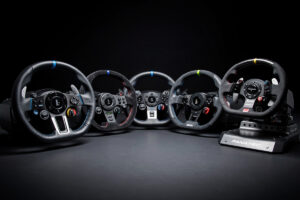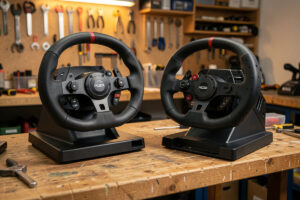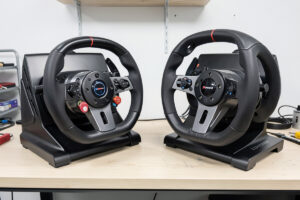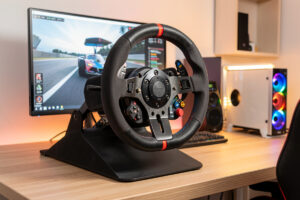
The best entry-level direct-drive wheelbase under $500 is the Moza R5 for PC racers and the Fanatec CSL DD for console players. Both deliver real 5–5.5 Nm direct drive — a transformational step up from belt and gear wheels — within a sane budget, and both anchor a complete upgrade ladder so you’re not buying a dead end. The right pick comes down to platform first, then how much you want to spend on the wheel rim that comes with it.
Getting into direct drive used to mean spending serious money; that’s no longer true. There’s now a real cluster of capable bases at or under the $500 mark, and the gap to flagship feel is smaller than the price gap suggests. I’ve run the entry options on the same welded rig with the same load-cell pedals, and the honest takeaway is that a well-chosen sub-$500 base plus good pedals will out-drive a far pricier base bolted over cheap pedals. Here’s how to choose.
What “entry direct drive” actually gets you
An entry direct-drive base in this bracket means roughly 5 Nm of torque from a motor that connects straight to the wheel — no belts, no gears, no slop. That direct connection is the whole point: the wheel finally tells you what the front tyres are doing, kerbs feel like kerbs, and the moment of front grip loss is something you feel rather than guess. Five Nm is genuinely enough for formula, open-wheel, drift, and most road and GT4 cars.
What you give up versus a flagship is mostly peak torque and some software polish, not the core direct-drive experience. The fundamental feel — crisp, immediate, detailed — is there at this price. That’s why I push beginners straight to entry direct drive rather than a high-end belt wheel: the cheapest direct drive beats the best belt drive for the thing that actually matters, which is honest feedback. If you’ve only ever used a geared wheel, the jump is enormous.
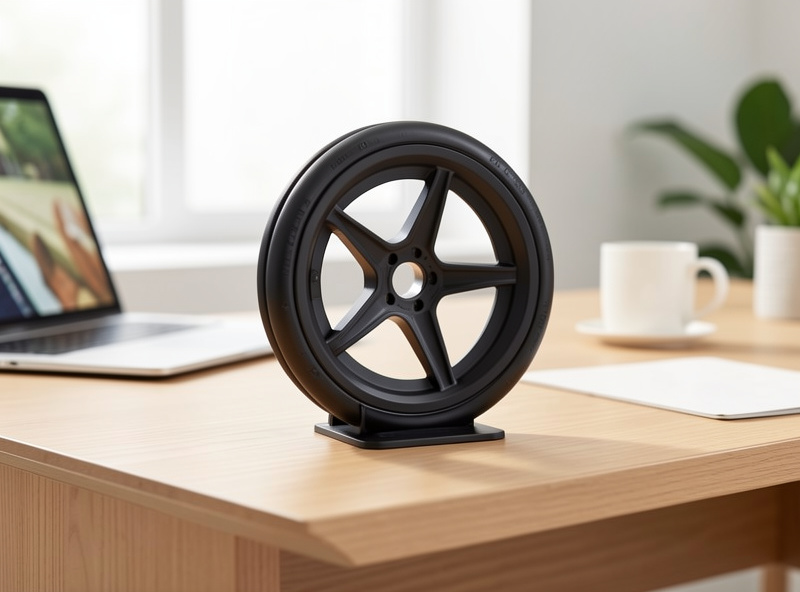
Moza R5: the best-value PC pick
For a PC racer on a budget, the Moza R5 is my default recommendation. It delivers 5.5 Nm, the Pit House software is the friendliest of any brand to get a clean first profile from, and Moza’s bundle pricing — base plus a wheel — is aggressive enough to sit comfortably under $500. Crucially, it’s the bottom rung of a complete ladder: the same rims, load-cell pedals, and dashes carry straight up to the R9 and R12 if you upgrade the base later.
That ladder is what makes the R5 a smart first buy rather than a throwaway. You’re not buying an orphan; you’re buying into an ecosystem you can grow inside without rebuying peripherals. The only real catch is that it’s PC-only — no console support — so if you race on Xbox or PlayStation, it’s off the table. For PC players, though, it’s the most rig-for-the-money in the bracket.
Fanatec CSL DD: the console-friendly choice
If you race on console, the Fanatec CSL DD is the entry base to buy. It starts at 5 Nm (upgradeable to 8 Nm later with the Boost Kit), has a long track record of console licensing, and an Xbox-compatible version that makes it the cleanest path for console racers. Even on PC it’s excellent, and Fanatec’s catalogue of rims and accessories is the deepest in sim racing if you plan to expand.
The trade-off at the entry level is value: a CSL DD plus a wheel tends to cost a little more than the Moza equivalent for similar torque, and you’re committing to Fanatec’s quick-release standard. But for console players that’s a non-issue — the platform compatibility alone decides it, and it’s a genuinely great base. On Gran Turismo or Xbox, this is the answer, full stop.
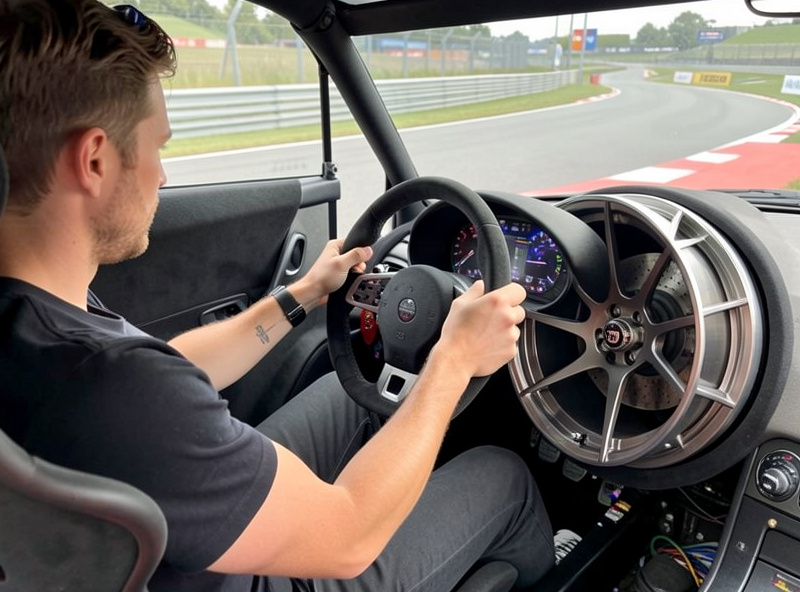
The budget options below them
Beneath the R5 and CSL DD sit cheaper bases — Moza’s smaller R3, Cammus units, and other newer budget direct-drive brands — that push the entry price down further. These can be a genuine bargain for a pure first toe in the water, and the core direct-drive feel is still there. The catch is ecosystem depth and software maturity: fewer accessories, less polished tuning apps, and shallower support. The base feels fine in isolation; the limits show up on your second purchase.
I’d only steer someone to the cheapest budget bases if money is genuinely the deciding constraint, or if they want to try direct drive before committing. For most people, stretching to the R5 or CSL DD buys a complete ecosystem and a clear upgrade path, which is worth more over time than the small initial saving. A bargain base you outgrow in a year isn’t a bargain.
| Base | Torque | Platform | Best for |
|---|---|---|---|
| Moza R5 | 5.5 Nm | PC only | Best-value PC entry, complete ladder |
| Fanatec CSL DD | 5 Nm (8 Nm Boost) | PC, Xbox | Console racers, deepest catalogue |
| Budget DD (R3, Cammus, etc.) | ~3.5–5.5 Nm | Mostly PC | Lowest price, trying direct drive |
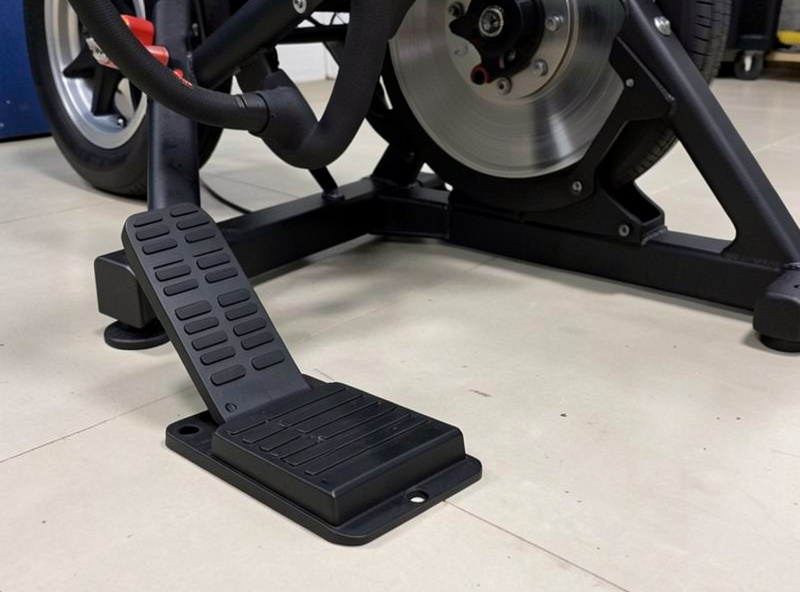
Don’t blow the whole budget on the base
The most important advice for anyone shopping under $500: leave room for a load-cell brake. The biggest consistency gain in sim racing comes from braking by pressure instead of travel, and a base-plus-cheap-pedals setup leaves the single most valuable upgrade on the table. If your $500 has to cover both, I’d rather see a slightly cheaper base and a better brake than a flagship-adjacent base over two-spring pedals.
The upgrade order — rig, pedals, wheelbase, rim — holds even at the entry level. A rigid mount and an honest brake make a 5 Nm base feel fantastic; a wobbly stand and vague pedals make any base feel mediocre. Spend the budget across the whole chain, not all on the headline component, and your entry setup will punch well above its price.
My pick
PC racer: buy the Moza R5 for the best value and a clean upgrade path. Console racer: buy the Fanatec CSL DD for platform compatibility and catalogue depth. On the tightest budget, a sub-R5 budget base gets you into direct drive, just with a shallower ecosystem to grow into. Whichever you choose, keep enough back for a load-cell brake and a rigid mount — that’s how a sub-$500 setup ends up feeling like much more.
As an Amazon Associate I earn from qualifying purchases. Compare current pricing on entry-level direct-drive bundles to see what fits your budget today.
Related Guides
- Best Direct-Drive Wheelbase Brands: Moza vs Fanatec vs Simagic
- Fanatec CSL DD vs Moza R5: The Entry Direct-Drive Fight
- How Much Wheelbase Torque Do You Actually Need in Nm?
- Best Sim Racing Pedals 2026: Load Cell, Hydraulic, and Budget
- Direct Drive vs Belt Drive Sim Racing Wheels: Which Is Better?
Frequently Asked Questions
What is the best entry-level direct-drive wheelbase under $500?
The Moza R5 for PC racers and the Fanatec CSL DD for console players. Both deliver real 5 to 5.5 Nm direct drive within budget and anchor complete upgrade ladders, so you are buying into an ecosystem rather than a dead-end base.
Is 5 Nm direct drive worth it over a belt-drive wheel?
Absolutely. Even an entry 5 Nm direct-drive base beats the best belt or gear wheel for the thing that matters most: honest, detailed feedback. The direct motor connection removes slop, so you feel the front tyres and kerbs clearly. It is the biggest single upgrade for a beginner.
Can I get a direct-drive wheelbase for console under $500?
Yes. The Fanatec CSL DD is the entry direct-drive base for console, with an Xbox-compatible version and a long licensing history. The Moza R5 is PC-only, so console racers should choose the CSL DD, which sits within or near the $500 budget with a wheel.
Should I buy the cheapest budget direct-drive base?
Only if price is the deciding factor or you want to try direct drive first. Budget bases deliver the core feel but have shallower ecosystems and less polished software. For most people, the Moza R5 or Fanatec CSL DD offer a better long-term path for a small extra cost.
How much should I spend on the base versus pedals?
Leave room for a load-cell brake. Braking by pressure is the biggest consistency gain in sim racing, so a slightly cheaper base plus a good brake beats a pricier base over cheap pedals. Spread a sub-$500 budget across the rig, pedals, and base, not all on the wheel.