Across every wheelbase I’ve bolted to the rig I welded, I’ve run iRacing series at every license class from Rookie through Class A — and choosing the wrong one for your level wastes money, time, and iRating. iRacing runs over 30 official series across four racing disciplines, each restricted to specific license classes. The best series for your level depends on your license class, preferred discipline, and whether you already own the required cars and tracks. Most Rookie series use free content, while higher-class series require purchased vehicles and circuits.
On my rig, I treat series selection the same way I treat load-cell brake calibration — match the tool to the task, and do not skip the fundamentals. Choosing the right series is one of the most impactful decisions in iRacing. Entering a series where you own all the content and match the license requirement means you can race every week without buying anything new. Entering a series where you are missing tracks or cars forces you to skip weeks or make unplanned purchases. This guide maps every major official series to its license class, content requirements, and typical participation level so you can plan your racing season effectively. For the full breakdown of how the license system gates access to these series, see our iRacing series progression guide.
Rookie Series: Your First Races
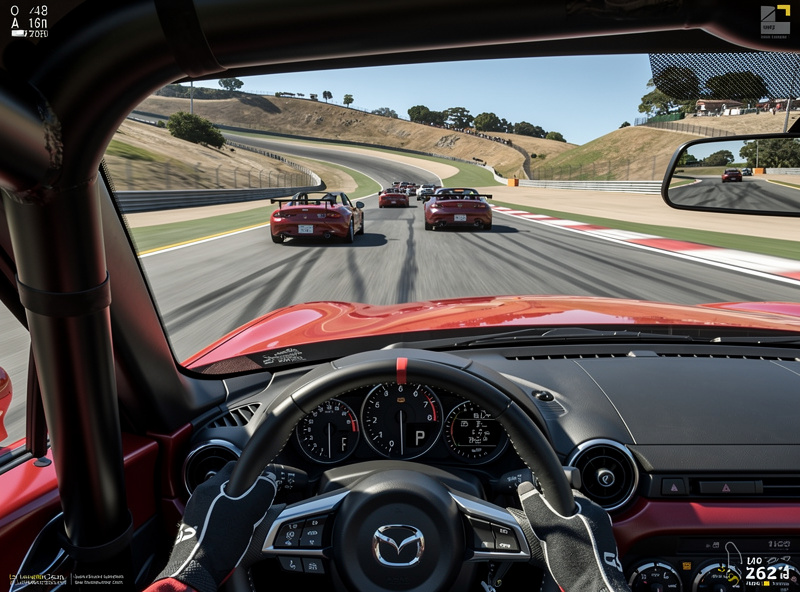
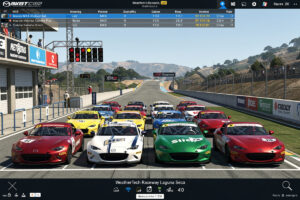
Rookie series use only base content included with your iRacing subscription, so every new member can race immediately without any additional purchases. The Global Mazda MX-5 Cup is the most popular Rookie road series and runs 12-minute fixed-setup races every hour. The car is forgiving, the races are short, and the fields are always full. When I first bolted my direct-drive base to the rig, I spent a full season in the MX-5 just learning racecraft fundamentals — the car teaches you more about race spacing and consistency in a month than hotlapping alone does in a year.
The Formula Vee series offers a single-seater alternative for Rookies who prefer open-wheel racing. The car is slower than the MX-5 but teaches different skills — trail braking, weight transfer management, and open-wheel racecraft. The Vee races are also 12 minutes with fixed setups and run on the same schedule as the MX-5. If your pedal box already has a load-cell brake, the Vee becomes a fantastic tool for practicing smooth inputs — the car punishes abrupt pedal work immediately.
On the oval side, the Street Stock series and Legends Cup provide Rookie-level stock car and short-track racing. Both use free content exclusively and run on Charlotte Motor Speedway, USA International, and Lanier National Speedway. The Street Stock races are 15 minutes and feature close pack racing that teaches drafting and side-by-side skills. Learning to manage your safety rating in these tight packs is essential before moving up.
Class D Series: Expanding Your Horizons
Class D introduces paid content for the first time, and this is where the iRacing cost structure really starts to matter. The Ferrari Challenge series races the Ferrari 488 GT3 Evo around popular road circuits in 15-minute fixed-setup sprints. This series is one of the most popular on the platform because the Ferrari is a relatively forgiving GT3 car that teaches advanced car control. The entry cost is one car purchase ($11.95) plus whatever tracks you do not already own. When I moved from the MX-5 to the Ferrari Challenge, the jump in corner-entry speed was real — but the car control lessons from the Cup car transferred directly, and that convinced me the license progression structure is sound.
The Porsche Cayman GT4 Clubsport series provides a stepping stone between the MX-5 and full GT3 machinery. The GT4 car is slower than a GT3 but faster than the MX-5, and the series visits a mix of free and paid tracks. The BMW M4 GT4 runs in a parallel series with identical format and similar participation levels. Before committing to either, check the track buying guide — knowing which circuits appear across multiple series maximizes the value of every purchase.
For oval racers, the ARCA Menards Series in Class D represents a significant step up from Rookie Street Stocks. The ARCA car is faster, the races are longer at 20 minutes, and the competition is noticeably tougher. The series primarily races on intermediate ovals and superspeedways, and the pack racing dynamics are more complex than anything in the Rookie class.
Class C Series: The Competitive Core
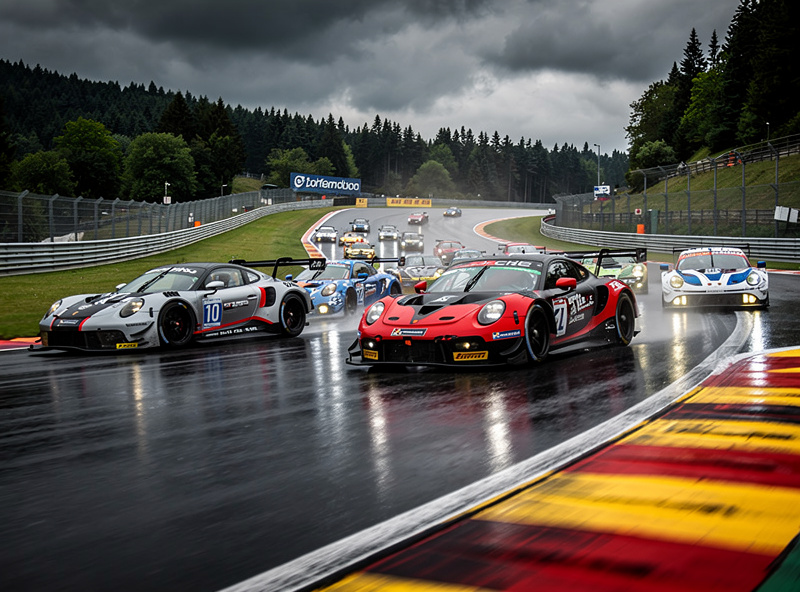
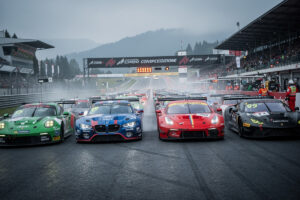
Class C is where iRacing’s competitive depth really opens up — and on my rig, the GT3 Sprint Fixed series is where I spend the majority of my road-racing time. This series is the most popular road series on the platform, running 20-minute fixed-setup races with any GT3 car. The series visits a rotation of top-tier circuits and consistently fills multiple splits every hour. With multiple splits come better matchmaking — the iRating system places you against drivers within a narrow skill band, and on my telemetry overlay I can watch the racecraft improve dramatically once you crack the top split.
The Porsche 911 Cup series races a spec Porsche with no traction control or ABS in 20-minute fixed races. This series is considered one of the most challenging in iRacing because the car demands precise throttle control and rewards smooth driving. On my load-cell pedal set, the Porsche Cup forces me to recalibrate my braking habits every time I switch from the GT3 — the ABS-off nature of the car punishes any lazy pedal work. The Cup car has a passionate following and the series consistently delivers clean, competitive racing.
NASCAR Trucks in Class C offer 40-minute oval races at superspeedways and intermediate tracks. The truck races are longer than the ARCA events and feature green-flag pit stops that add strategic depth. The series is popular among oval-focused drivers and serves as the primary feeder series for the higher-level NASCAR competition.
Class B and A Series: The Top Level
Class B unlocks the IMSA Michelin Pilot Challenge, which features multi-class GT4 and TCR racing in 40-minute events with open setups. This series demands awareness of faster and slower class traffic, making it a unique challenge that no other series on the platform replicates. Esports racers report that the IMSA multi-class format develops more situational awareness than any single-class racing — you are constantly managing closing speeds between classes while protecting your own race. The races are long enough to require pit strategy and tire management.
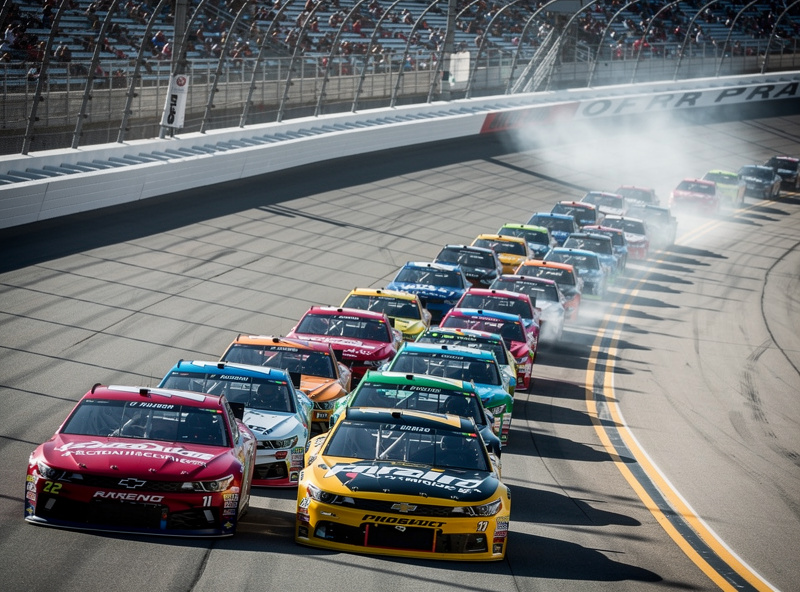
The NASCAR Xfinity Series in Class B runs 60-minute races at the same tracks as the Cup Series but with slightly slower cars. The Xfinity races are considered more accessible than Cup events while still offering the full oval racing experience including drafting, pit strategy, and pack racing at superspeedways.
Class A features the NASCAR Cup Series, which runs 100-lap or timed races at every major oval on the schedule. Cup races are the pinnacle of iRacing oval competition and attract the most skilled oval drivers on the platform. The races are long, the competition is fierce, and the strategy is complex.
The iRacing Endurance series and special events like the Daytona 24 and Spa 24 also require Class A or B licenses. These team events run for 6 to 24 hours and represent the most prestigious races on the platform. The preparation required for these events — setup development, stint planning, team coordination — makes them the sim racing equivalent of real-world endurance racing. For drivers who enjoy the long-form format, how iRacing stacks up against its competitors matters; see our full sim racing comparison for context on where iRacing sits in the broader ecosystem.
Series by Discipline and License Class
| Discipline | License | Series Name | Car | Race Length | Free Content? |
|---|---|---|---|---|---|
| Road | Rookie | Global Mazda MX-5 Cup | Mazda MX-5 | 12 min | Yes |
| Road | Rookie | Formula Vee | Formula Vee | 12 min | Yes |
| Road | D | Ferrari Challenge | Ferrari 488 Evo | 15 min | No ($12) |
| Road | D | GT4 Fixed | Any GT4 | 15 min | No ($12) |
| Road | C | GT3 Sprint Fixed | Any GT3 | 20 min | No ($12+) |
| Road | C | Porsche Cup | Porsche 911 Cup | 20 min | No ($12) |
| Road | B | IMSA Pilot Challenge | GT4 / TCR | 40 min | No ($12+) |
| Oval | Rookie | Street Stock | Street Stock | 15 min | Yes |
| Oval | D | ARCA Menards | ARCA car | 20 min | No ($12) |
| Oval | C | NASCAR Trucks | Silverado | 40 min | No ($12) |
| Oval | B | NASCAR Xfinity | Mustang / Camaro | 60 min | No ($12) |
| Oval | A | NASCAR Cup | Mustang / Camaro | 100 laps | No ($12) |
How to Choose the Right Series for You
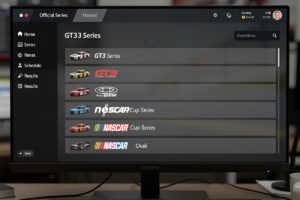
Start by checking which series you can enter with your current license class and existing content. The iRacing UI shows your eligibility for every series, but manually checking the track schedule before the season starts saves you from entering a series where you are missing half the tracks. A series where you own 10 of 12 tracks is a good investment; a series where you own 4 of 12 is not. On my rig, I keep a simple spreadsheet — cross-referencing owned content against each series schedule before a new season. It takes ten minutes and saves me from impulse-buying tracks I will use once.
Consider participation levels when choosing between similar series. The GT3 Sprint Fixed series fills multiple splits every hour, while a niche series like the Lotus 49 might only run one or two sessions per day. Higher participation means better matchmaking through the iRating split system, which produces closer and more competitive racing. Check the iRacing forums or series-specific Discords to gauge community size before committing. This is something I learned the expensive way — buying the Lotus 49 and discovering it barely goes official in my time zone felt like lighting twelve dollars on fire.
Match your series choice to your available time. If you can only race 30 minutes at a time, the 20-minute GT3 Sprint or Porsche Cup series fit your schedule. If you have two-hour blocks available, the IMSA or endurance series offer deeper racing experiences. Choosing a series that matches your time availability prevents you from missing races and losing out on the participation credits that offset your subscription cost. A consistent schedule across multiple series also helps build safety rating stability — bouncing between formats week to week is a sure way to hemorrhage SR.
Frequently Asked Questions
What is the most popular series in iRacing?
The GT3 Sprint Fixed series is the most popular road series, consistently filling 3 to 5 splits per hour. On the oval side, the NASCAR Cup Series draws the largest fields. Both series use the most popular car classes on the platform.
Can I race any series with a Rookie license?
No. You can only enter series that match or are below your current license class. Rookie series use only base content, while D-class and above require specific cars and tracks. Your license class in each discipline determines your access.
How do I find out which tracks a series uses?
Each series publishes a 12-week schedule before each season begins. You can view it in the iRacing UI under the series details, or check the iRacing forums where schedules are posted weeks in advance with track names and configurations.
What happens if I miss a week in a series?
Nothing negative on its own, but participation credits require hitting a threshold, not partial scaling. To earn up to $10 per season in participation credits, you need to race at least 8 of the 12 weeks. Missing one or two weeks still leaves you above that threshold and eligible for the full credit; miss more than 4 weeks and you get nothing for the season.
Are there free series above Rookie class?
Yes. Several Class D series use a mix of free content, and some weeks in higher-class series feature free tracks. However, most series above Rookie require at least one car purchase ($11.95) to enter.
Related Articles
- iRacing Series and Progression: A Complete Guide — understand the license system that gates series access
- iRacing Safety Rating: How It Works and How to Improve Fast — the clean-driving metric that determines your promotions
- iRacing Track Buying Guide: Which Circuits to Buy First — maximize value from track purchases across multiple series
- iRacing Cost Breakdown: Subscription, Cars, and Tracks in 2026 — budget planning for your racing season
- Best Sim Racing Games 2026 — how iRacing compares to other simulators