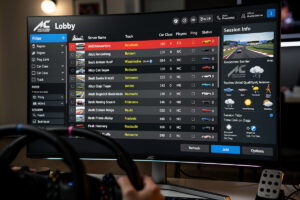
On my account, iRacing Safety Rating is the first number I check after a race — before iRating, before lap times. It is a rolling weighted metric calculated from your incidents per corner over roughly your last 10-15 races in official sessions, with the most recent races weighted heaviest. A Safety Rating above 3.0 keeps you eligible for promotion to the next license class, while dropping below 2.0 triggers a demotion. Improving your Safety Rating requires finishing races with fewer than 6 incident points on average.
Understanding how Safety Rating works is the single most important skill in iRacing because it directly gates your access to faster cars and more competitive series. The full license ladder — from Rookie through Class A — is covered in our iRacing Series and Progression guide, but Safety Rating is the engine that drives every promotion. Unlike iRating, which measures speed, Safety Rating measures discipline — and the system rewards patience far more than it rewards aggression. Drivers who master the Safety Rating early reach Class A within months, while those who ignore it spend years stuck in the lower license classes.
How Safety Rating Is Calculated
Safety Rating uses a weighted rolling average of your incident points per corner. The system examines your most recent corners — a window that varies by license class and by discipline (road vs. oval) — and calculates the ratio of total incident points to total corners driven. This ratio is then compared to a baseline for your current license class to determine whether your Safety Rating goes up or down after each session. If you are still learning where to spend your first season, the iRacing Beginner’s Guide walks through the subscription tiers and car selection that match your starting license.
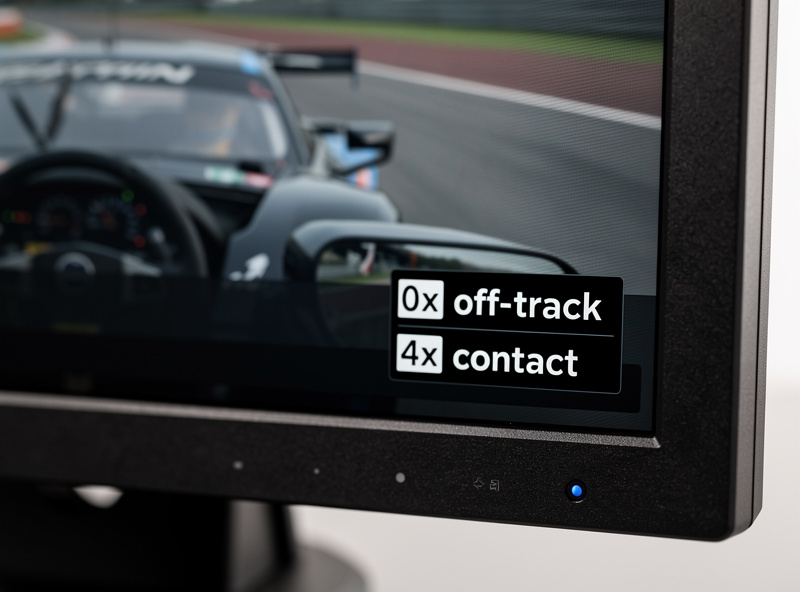
Every incident type carries a specific point value, and iRacing’s own incident-points breakdown is worth reading once in full. A 0x is light contact — recorded but not scored. A 1x is an off-track, which triggers when your car’s centerline crosses the track-edge boundary, not when all four wheels leave the surface. A 2x covers loss of control (a spin or slide) or lighter wall contact. A 4x is heavy contact in paved racing (2x in dirt). One detail that surprises new drivers: these do not stack within a single incident sequence — if you spin and then hit another car in the same messy moment, only the highest-scoring event of the sequence counts, not both added together. I still watch my replays closely after any big moment at Spa’s Eau Rouge because knowing which single incident actually got scored, versus which ones you just felt, changes how you adjust your line next lap.
The weighted average means recent corners count more than older corners. This creates a system where your Safety Rating responds relatively quickly to changes in driving behavior. A series of clean races can recover a damaged Safety Rating within five to eight races, while a single bad race with 15 or more incident points can drop your rating noticeably. The system essentially has a memory of about your last ten to fifteen races depending on how many corners you complete in each.
Incident Types and How to Avoid Them
The most common source of Safety Rating loss in iRacing is not dramatic crashes — it is accumulated off-track incidents. New drivers frequently cut corners, run wide on exit, or drive over kerbs that count as off-track zones. Each 1x adds up over a 20-minute race, and drivers who consistently run 8 to 10 off-tracks per race will struggle to maintain a positive Safety Rating trend even if they never make contact with another car. The Clean Racing Etiquette guide covers the unwritten rules that keep you and the field incident-free in traffic.
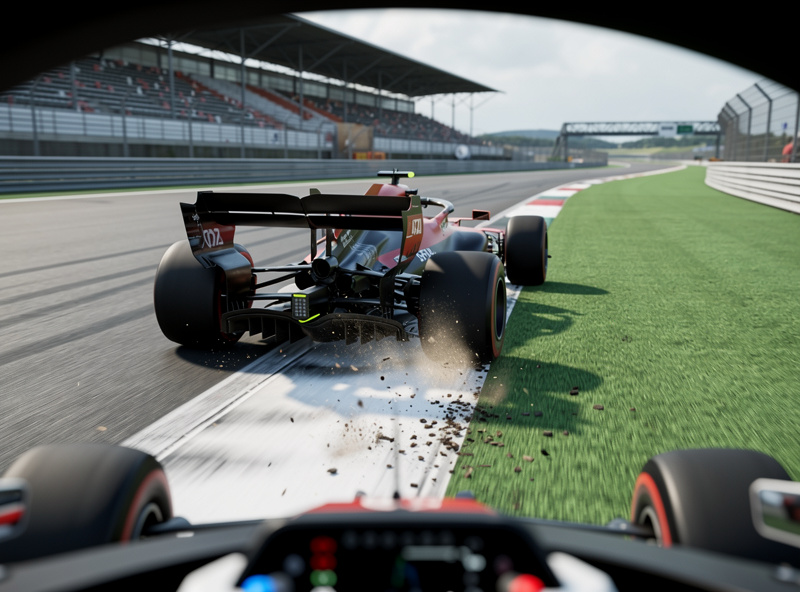
Car contact incidents (4x) are the most damaging to your Safety Rating because they carry the highest point value. A single race with three separate 4x contacts adds 12 incident points — enough to erase the credit from several clean races. The key to avoiding contact incidents is spatial awareness. Use your mirrors, spotter calls, and relative black box to track cars around you. Leave extra space in the first lap when the field is bunched and when battling for position in heavy traffic.
Loss of control (2x) incidents happen when you push beyond the car’s grip limit. This usually occurs when drivers try to match lap times that are faster than their current skill level. Running at 95% of your maximum pace consistently produces fewer spins and slides than alternating between 80% and 100% effort. Consistency builds Safety Rating far more effectively than raw speed.
Speed vs Safety: Finding the Balance

The fastest way to gain Safety Rating is to drive conservatively — brake earlier, leave extra margin at corner apex, and avoid close battles entirely. However, this approach has a cost: your iRating will stagnate or drop because you are not competing for positions. The challenge of iRacing is learning to race cleanly while still being competitive enough to maintain or improve your iRating. The Sim Racing Racecraft Guide covers the specific techniques that let you race hard without piling up incident points.
Most experienced drivers recommend a split strategy. In Rookie and Class D, prioritize Safety Rating exclusively. Your goal is to reach Class C as quickly as possible so you unlock access to the best series. Once at Class C, shift toward balancing Safety Rating with competitive performance. By this point, you should have developed the racecraft to maintain your Safety Rating while racing hard for position. My rule of thumb after thousands of corners on my rig: if you are still treating Safety Rating like a scoreboard in Class C, you are focusing on the wrong number.
A practical approach is to target a specific incident budget per race. For a 20-minute race, aim for zero to four incident points. If you reach four incident points before the halfway mark, shift into conservation mode and focus on bringing the car home cleanly. This self-imposed discipline prevents the catastrophic races that destroy weeks of clean driving progress.
License Promotion and Demotion Rules
License promotions happen in two ways. A Safety Rating of 3.0 or higher at the end of a season grants an automatic promotion to the next class. A Safety Rating of 4.0 or higher triggers an instant mid-season promotion regardless of where you are in the season calendar. The instant promotion path is faster but requires exceptionally clean driving — maintaining a 4.0 means averaging fewer than two incident points per race over dozens of races. The iRacing Series Guide shows you exactly which races unlock at each promotion threshold so you can plan your content purchases.
Demotions work similarly. If your Safety Rating drops below 2.0 at the end of a season, you are demoted to the previous license class. If it drops below 1.0 at any point, you receive an instant demotion. Demotions are rare for drivers who race regularly and avoid reckless behavior, but they do happen to drivers who have a string of bad races or who return to iRacing after a long break with rustier racecraft than they remember.
The system also includes a fast-track promotion mechanism. If you earn a promotion through the 3.0 threshold and then immediately push your Safety Rating to 4.0 in the new class, you can fast-track to the next class again. This is how some extremely clean drivers reach Class A in under 30 races — it requires deliberate, conservative driving focused entirely on incident avoidance. The iRacing Track Buying Guide helps you pick circuits where the off-track zones are forgiving while you build the Safety Rating cushion for each promotion push.
Practical Tips to Improve Your Safety Rating Fast
Start by racing on tracks you know well. Familiar circuits let you focus on other cars and incident avoidance rather than learning the racing line. If a series visits a track you have never driven, spend at least 30 minutes in a test session before entering an official race. Knowing where the off-track zones are and which kerbs you can safely use prevents unnecessary 1x penalties. The Sim Racing Driving Techniques guide walks through the car-control fundamentals that make every incident less likely.
Run qualifying and start from the back of the grid. This sounds counterintuitive, but starting from the back lets you watch the first-lap chaos unfold ahead of you rather than being in the middle of it. You lose two to three positions on average but avoid the 4x incidents that happen when cars collide at the first corner. Over a full race, the Safety Rating gain from avoiding one major incident outweighs the iRating loss from starting further back.
Use the incident history in the post-race results to identify patterns. If you consistently receive off-track penalties at the same corner, that corner needs practice work. If you consistently receive car contact penalties, your racecraft in traffic needs development. The data tells you exactly where your Safety Rating is leaking, and targeted practice on those specific situations produces faster improvement than generic driving.
Common Safety Rating Myths
The most persistent myth is that Safety Rating measures speed or finishing position. It does not. You can finish last in every race and still gain Safety Rating if your incident count stays low. The system cares only about clean driving, not competitive results. This is why Safety Rating and iRating are tracked separately — they measure fundamentally different aspects of your performance. The Incident Review and Protests guide shows how the stewarding system reinforces this separation.
Another myth is that Safety Rating drops are permanent or take months to recover. In reality, the rolling average means your Safety Rating reflects your recent driving, not your entire history. A bad week of racing drops your rating, but five to eight clean races bring it back to where it was. The system is designed to give drivers second chances, and long-term trends matter more than short-term fluctuations.
Some drivers believe that avoiding official races and only practicing preserves their Safety Rating. While technically true, this strategy is counterproductive. Safety Rating only matters because it gates access to official series — preserving it by not racing defeats the entire purpose. Race regularly, drive cleanly, and let the system do its work.
Frequently Asked Questions
How many clean races to improve Safety Rating in iRacing?
Most drivers see a noticeable Safety Rating improvement within 5 to 8 clean races averaging under 4 incident points each. The exact number depends on how far your current rating has dropped and how many corners you complete per race.
Does finishing position affect Safety Rating?
No. Safety Rating is calculated purely from incident points per corner. You can finish last in every race and still gain Safety Rating if your incident count remains low. Only your iRating changes based on finishing position.
What is a good Safety Rating in iRacing?
A Safety Rating above 3.0 is considered good for your current license level. Above 4.0 is excellent and qualifies for instant promotion. Below 2.0 is a warning zone where you risk demotion if the trend continues.
Can you recover from a low Safety Rating?
Yes. The rolling average means recent races count more than older ones. Five to eight consistently clean races averaging under 4 incident points will reverse a declining Safety Rating trend, regardless of how bad your previous races were.
Do practice and qualifying sessions affect Safety Rating?
Official practice and qualifying sessions do affect your Safety Rating because they are part of the official session. Warm-up laps, qualifying runs, and free practice within an official event all count toward your incident average.
How many incident points before Safety Rating drops?
There is no fixed threshold. The system compares your incidents per corner to the expected rate for your license class. Generally, averaging more than 6 incident points per race over several races will cause a declining Safety Rating trend.
Related Articles
- iRacing Series and Progression: A Complete Guide — the full license system explained with series recommendations
- iRacing Series Guide: Which Races Match Your License Level — find the right series for your class
- Sim Racing Driving Techniques: How to Actually Get Faster — racecraft skills that reduce incident frequency
- iRacing Cost Breakdown: Subscription, Cars, and Tracks in 2026 — plan your content purchases by license class
- Sim Racing Skills Guide: Software, Telemetry, and Driving Techniques — analyze your driving to find incident patterns