I have run every sim on this list on the rig I welded in Sweden, bolting mid-torque direct-drive and load-cell pedals to the same steel frame and dialing FFB profiles for each title until the telemetry overlay showed zero clipping and consistent signal. The best sim racing game in 2026 depends on what discipline you want to race — there is no single sim that wins across all categories — but the differences in physics, competitive infrastructure, and community size matter more than most spec-sheet comparisons admit.
The sim you pick determines which communities you race with, what cars you drive, and how your skills develop. A sim with arcade-leaning physics — think Gran Turismo 7 or Forza Motorsport — teaches habits that do not transfer to iRacing or ACC, where the tire model punishes the same inputs. I have watched drivers arrive in iRacing from console simcades and spend their first month unlearning steering technique before they start gaining iRating. The right sim prevents that wasted time. If you have not bought your wheel yet, see our Sim Racing Wheels Guide first — the wheel choice is upstream of the sim choice in the upgrade order. This guide ranks every major sim racing platform, compares their strengths against what I have felt through the wheel on my rig, and links to detailed setup guides for each title.
iRacing: The Competitive Multiplayer King
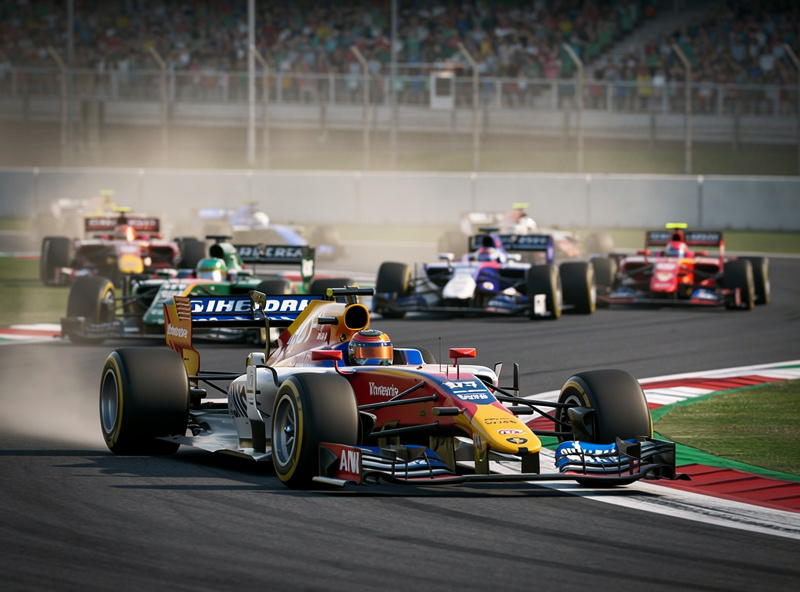
iRacing is the undisputed leader in competitive online sim racing, and it has been my daily driver across three different direct-drive bases bolted to my welded rig. Its Elo-based iRating and Safety Rating systems create the cleanest multiplayer racing I have experienced — no other sim has a matchmaking engine that consistently places you against drivers of equal pace and safety consciousness across every skill level from rookie to professional esports. iRacing does not publish an official subscriber count, but it runs official World Championship series — the eNASCAR Coca-Cola iRacing Championship Series alone carries a six-figure prize pool — and the esports community reports the matchmaking gap between iRacing and its nearest competitor is larger than any physics gap between sims.
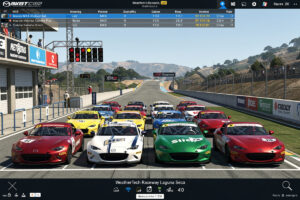
The cost structure is iRacing’s main barrier: $13 per month for the subscription, plus $11.95 per car and $11.95-$14.95 per track beyond the base content. A driver who wants to compete in the full GT3 series pays $200-300 on content in addition to the subscription. However, the base content includes enough cars and tracks to race in the rookie series indefinitely for just the monthly fee. The Mazda MX-5 and Formula Vee series provide excellent racing without any additional purchases, and I have spent entire weeks in the MX-5 rookie series when I could not justify buying another track. For hardware mounting recommendations, see our cockpit and stand guide — a rigid mount matters more for iRacing’s FFB fidelity than a desk-clamp setup.
iRacing excels at disciplines no other sim covers well: oval racing (NASCAR, IndyCar, short track) has realistic drafting, tire wear, and pit strategy physics that I have tested with a round-rim quick-release wheel on a mid-torque base — the way the steering lightens in dirty air matches what oval-focused esports racers describe. Multi-class endurance racing with driver swaps works seamlessly. The rain system added in 2025 adds another dimension. For a complete walkthrough from installation to your first race, see our iRacing series progression guide and the beginner’s guide to sim racing.
On my rig, iRacing’s force feedback demands lower strength than ACC — the signal is stronger by default. I run my mid-torque DD base at 60% in iRacing and 75% in ACC for equivalent usable torque without clipping. The telemetry overlay confirms it: iRacing hits the clipping threshold earlier with fewer filter layers between the physics engine and the wheel. For the full FFB breakdown, see our force feedback configuration guide.
Assetto Corsa Competizione: The GT Racing Specialist
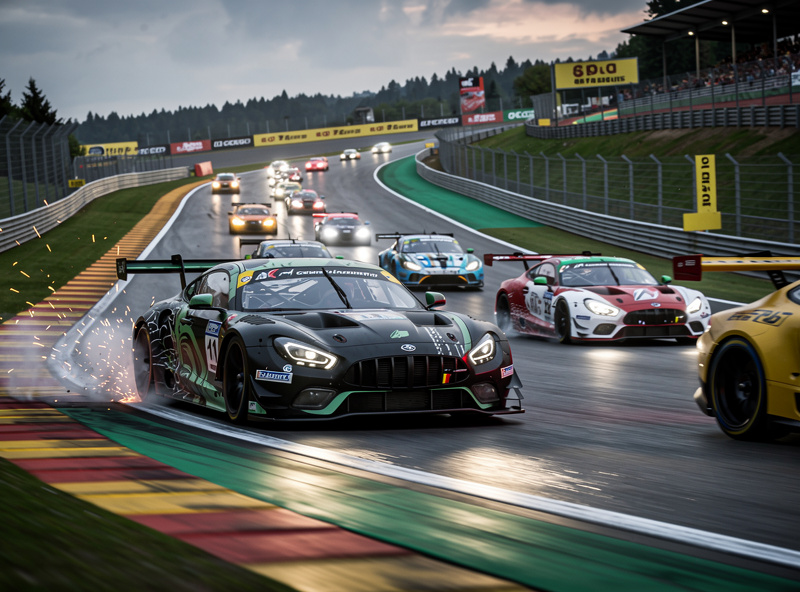
Assetto Corsa Competizione (ACC) focuses exclusively on GT3, GT4, and GT2 cars licensed from SRO, the real-world GT racing organizer, and it delivers the most convincing GT tire model I have felt through a direct-drive wheel. Professional GT drivers who sim race regularly rate ACC as the most realistic GT simulation available, and after bolting my load-cell pedals to the welded rig and dialing in a brake curve that matches ACC’s tire model, I understand why. The tire communicates grip loss progressively — the steering load drops before the car slides, which gives you a window to correct. The aerodynamic model responds accurately to ride height and rake changes in ways you can feel through the chassis. The BoP (Balance of Performance) system mirrors real-world SRO data.
ACC costs $40 for the base game with 11 GT3 cars and multiple tracks, with DLC packs adding GT4 cars, more tracks, and the 24-Hour Nordschleife. The competitive community organizes through Low Fuel Motorsport (LFM), a free third-party matchmaking system that provides ranked racing similar to iRacing at no additional cost. LFM surpassed 200,000 registered drivers in late 2024 and runs daily races across multiple time slots. I have run both LFM sprints and iRacing GT3 series on the same rig in the same week, and the physics difference is immediately noticeable — ACC gives you more progressive tire information, iRacing gives you better racing. Which matters more depends on whether you are chasing lap times or race finishes.
The main limitation of ACC is scope: it only does GT racing. If you want formula cars, oval racing, rally, or drifting, you need a different sim — see our sim racing disciplines guide for the full breakdown. But if GT3 and GT4 racing is your primary interest, ACC delivers the best physics, the best community, and the best value in the genre. For a complete walkthrough from cars to car setup, see our complete ACC guide.
Assetto Corsa: The Modding Paradise
The original Assetto Corsa (AC) released in 2014 and remains one of the most popular sim racing platforms thanks to a modding community that has comprehensively rebuilt the experience. Through Content Manager (a third-party launcher) and the Custom Shaders Patch, AC has been transformed with modern graphics, weather systems, and thousands of free mod cars and tracks. You can drive everything from 1960s Formula 1 cars to modern street cars on tracks ranging from the Nordschleife to fictional fantasy circuits. On my rig, I treat AC as the variety sim — when I want to compare how a 1990s DTM car handles versus a modern GT3 on the same tire model, AC is the only sim where I can build that comparison in 20 minutes.
AC costs $20 for the base game and regularly goes on sale for $5-10. Content Manager and Custom Shaders Patch are free. The physics engine, while a decade old, still holds up for most car types. The tire model is not as sophisticated as ACC’s for GT cars — I can feel the difference through the same DD base — but the variety of vehicles available through mods means you can experience driving disciplines that no other sim covers. See our Assetto Corsa mods guide for the best cars, tracks, and Content Manager setup.
The modding ecosystem requires some technical comfort, similar to the troubleshooting mindset I use for my 3D-printed wheel brackets and button-box wiring. Installing mods involves downloading files, extracting them to the correct directories, and occasionally troubleshooting compatibility issues. Content Manager simplifies this process significantly, but it is not as seamless as buying DLC through Steam. The most popular mod sources include RaceDepartment, Assetto Corsa Club, and various Discord communities.
Sim Racing Games Compared: Every Platform Ranked
The table below compares every major sim racing platform across the factors that matter most — physics quality as I have judged it through a mid-torque direct-drive base, online competition quality, content variety, cost, and the use case where each one outperforms the rest. No single simulator wins all categories, and the right choice depends on which column matters most for the type of racing you actually do.
| Simulator | Physics | Online System | Content | Cost | Best For |
|---|---|---|---|---|---|
| iRacing | Excellent — strong FFB signal, realistic tire model | Built-in ranked matchmaking | 200+ cars, 100+ tracks (paid) | $13/mo + content | Competitive multiplayer |
| ACC | Outstanding GT physics — most progressive tire feel | LFM community system | GT3/GT4/GT2 only | $40 + DLC | GT racing specialist |
| Assetto Corsa | Very good — decade-old tire model but still competent | Community servers (SRS) | Unlimited (free mods) | $20 base | Variety and modding |
| Automobilista 2 | Excellent — Madness Engine now rivals the best | Growing ranked community | Widest discipline range | $40 + DLC | Single-player + VR |
| rFactor 2 | Outstanding tire model — simulates tread elements | Small but dedicated | Mixed quality mods | $30 base | Physics purists |
| Richard Burns Rally | Best loose-surface physics — unmatched gravel/snow feel | RSF time trials | 200+ rally stages (free) | Free (RSF mod) | Rally simulation |
| Gran Turismo 7 | Good simcade — polished but simplified physics | Sport mode ranked | 400+ cars | $70 (PS only) | Console casual |
| Forza Motorsport | Good simcade — forgiving tire model | Matchmaking | 500+ cars | $70/Game Pass | Xbox casual |
| BeamNG.drive | Soft-body vehicle deformation — unique physics sandbox | Multiplayer mod | Mod vehicles | $25 | Crash physics sandbox |
| RaceRoom | Good — solid tire model, predictable behavior | Ranked competition | Free + paid DLC | Free base | Free competitive entry |
One thing this table makes clear, and I have confirmed across the bases I have bolted to my rig: no single simulator excels at everything. iRacing leads in online competition infrastructure, ACC leads in GT tire feel, Assetto Corsa leads in content variety, and RBR leads in rally. Most experienced sim racers I know own two or three titles and switch between them based on the discipline they want to race on a given night. The right question is not “which sim is best” but “which sim is best for what I actually want to race this season.”
Richard Burns Rally: The 20-Year-Old Rally King
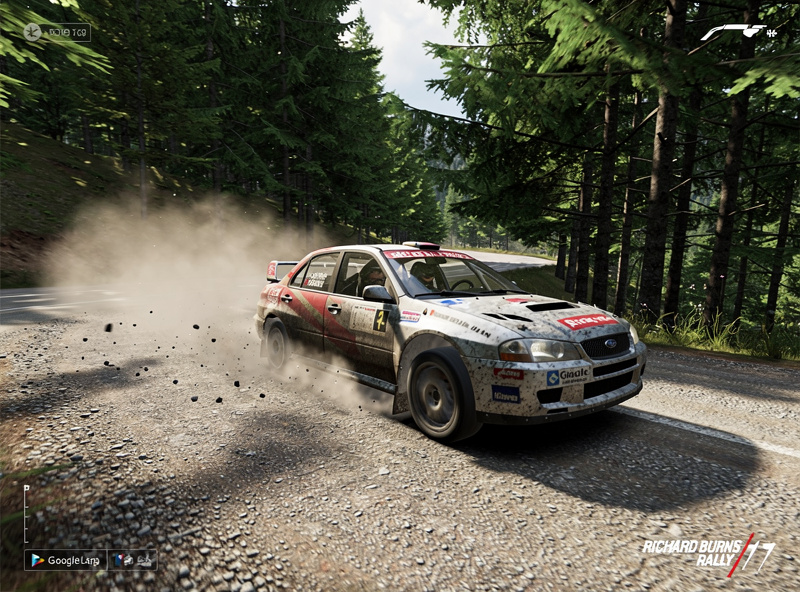
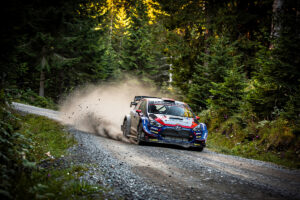
Richard Burns Rally (RBR) released in 2004 and remains the gold standard for rally simulation physics two decades later, mounted on my rig with a handbrake I bolted next to the shifter for the full rally control setup. No modern rally game — including the official WRC titles and DiRT Rally 2.0 — has matched RBR’s tire model on loose surfaces, its suspension physics over crests and compressions, or its communication of grip changes through gravel, mud, snow, and tarmac. The RSF (Rally Sim Fans) mod community has kept RBR alive with modern car packs, over 200 rally stages, VR support, and online time trial competition that the pros respect as a proving ground.
RBR is free through the RSF mod installer, which packages the original game engine with modern content and quality-of-life improvements. The learning curve is steep — RBR does not forgive overdriving the way modern rally games do, and I have spent entire evenings fighting a single stage before the rhythm clicked — but the physics reward precision and car control in ways no other sim matches. If rally is your primary discipline, RBR is the only simulator that truly teaches loose-surface driving technique. See our rally sim racing guide for stage driving, car setup, and RBR installation.
BeamNG.drive: The Physics Sandbox
BeamNG.drive is not a traditional racing sim — it is a soft-body physics sandbox where vehicles deform realistically on impact, and every panel, suspension component, and chassis member is individually simulated. I treat BeamNG as a learning tool rather than a competition platform. When I want to understand vehicle dynamics at the component level — what happens to the suspension geometry when you clip a curb at 80 mph, or how weight transfer shifts after a rear tire blowout — BeamNG shows you with visual fidelity that no other sim attempts. It is the most honest physics sandbox in the genre.
The modding community has added extensive racing content, and the AI traffic system creates realistic highway driving scenarios. BeamNG costs $25 and runs on modest hardware. It is best used alongside a traditional sim like ACC or iRacing — as a physics sandbox for experimentation rather than a primary racing platform — similar to how the workshop side of my rig (3D-printed brackets, wiring runs) complements rather than replaces track time.
rFactor 2: The Physics Purist’s Choice
rFactor 2 has the most technically advanced tire model in sim racing — it simulates individual tread elements rather than treating the tire as a single object, and its real-road rubbering system dynamically changes track grip as cars lay down rubber across a session. On my DD base, rF2 produces force feedback that communicates surface detail at a granularity ACC and iRacing approach differently — the mid-corner grip build feels more textural, which makes the sim valuable even if I race it less frequently than my dailies. Professional racing teams use rFactor 2’s physics engine for driver-in-the-loop simulator development, which is the strongest endorsement of its accuracy.
The drawbacks of rFactor 2 are significant and I do not sugarcoat them: the user interface is outdated and unintuitive, the modding ecosystem has inconsistent quality control, and the online community is small compared to iRacing or ACC. Content is sold through the Steam store with mixed value — some DLC packs are excellent, others feel dated. For physics purists who prioritize simulation accuracy above all else, rFactor 2 delivers something no other sim matches. For everyone else, ACC or iRacing provides a more comprehensive package. See our direct-drive vs belt-drive guide to understand why a DD wheelbase matters specifically for sims like rF2 where the tire detail is worth amplifying.
Automobilista 2: The Dark Horse Contender
Automobilista 2 (AMS2) uses the Madness Engine inherited from Project CARS and has evolved into one of the best all-around sim racing platforms — it covers a wider range of disciplines than any other modern sim: stock cars, open wheelers, GT cars, prototypes, rallycross, karts, and vintage racing all have dedicated content with physics tuned for each class. On my rig, AMS2 is the sim I load when I want variety without switching platforms — the jump from a 1990s Formula 1 car at Interlagos to a Copa Truck at Curitiba is seamless, and the physics handle both extremes competently. The AI racing is the best in the genre — genuinely competitive without the robotic behavior that ruins immersion in other sims — making AMS2 the top choice for single-player career racing.
AMS2 costs $40 for the base game with a strong roster of Brazilian racing content (Stock Car Brasil, Copa Truck) supplemented by international series. DLC packs add Le Mans prototypes, GT3 cars, and additional tracks. The physics have improved dramatically since launch, with the tire model now rivaling ACC for GT cars and rFactor 2 for open wheelers through my DD base. The VR implementation is excellent — AMS2 is the sim most frequently cited by VR racers as the best native experience, and it pairs well with the monitor and VR setup guide for display configuration.
The online community is smaller than iRacing or ACC but growing, with ranked racing available through third-party leagues. For drivers who want one sim that spans the widest range of cars and tracks at a fair price, AMS2 is the strongest choice. For a complete racing guide across disciplines, see our road racing guide.
Free Sim Racing Games: Start Without Spending
You do not need to spend money on a sim racing game to start racing competitively — I have run free-entry sims on the same rig I weld at and the physics are genuine enough to build skills that transfer. Several quality sim racing platforms offer free entry with optional paid content. The best free options — RaceRoom Racing Experience, the base content in iRacing, and Gran Turismo 7 with PlayStation Plus — provide enough content to develop competitive skills before investing in premium sims.
RaceRoom Racing Experience is the best completely free sim racing game. The base download includes several cars and tracks at no cost, with additional content available as paid DLC. The physics are solid through my DD base, the graphics are modern, and the ranked online competition system provides structured matchmaking. The main limitation is a smaller car and track roster compared to paid sims, but the free content is sufficient for competitive racing in the WTCR and GT4 classes.
Assetto Corsa at $5-10 on sale with free mods is effectively a budget platform. For the price of a cup of coffee, you get access to thousands of free cars and tracks through the modding community. The learning curve for installing mods is worth it — no other platform offers this much content at this price. For the full framework for getting started with minimal investment, including wheel pairing recommendations, see our Budget Sim Racing Setup guide.
Gran Turismo 7 is free for PlayStation Plus subscribers and provides a polished entry point for console racers. While the physics lean toward simcade rather than full simulation — the tire model simplifies inputs I have learned from ACC in ways that limit transfer — GT7’s Sport mode offers ranked online racing with a clean interface and solid matchmaking. The car roster exceeds 400 vehicles, and the track list includes both real circuits and fictional tracks designed for competitive racing.
Which Simulator Matches Your Goals?
Your simulator choice should align with your primary racing interest, and after running every title on this list across months of seat time, here is my recommendation framework. If you want structured competition against real people with ranked matchmaking, start with iRacing or ACC with LFM — one gives you multi-discipline breadth, the other gives you the deepest GT physics. If you want to drive a wide variety of cars on a wide variety of tracks without spending much, start with Assetto Corsa — the mod ecosystem turns a $10 game into a lifetime library. If you want the best single-player experience with AI that races like humans, start with Automobilista 2. If rally is your discipline, Richard Burns Rally is the only sim that teaches loose-surface control at a professional level.
Do not buy multiple sims at once — I have watched rookies install four sims in their first week and spend the next month jumping between tire models instead of building consistency in one. Each platform has a unique tire model, weight transfer behavior, and braking feel, and path switches between them before mastery creates shallow understanding across multiple sims rather than deep competence in any. Start with one, build fundamental car control across a full season of racing, and only expand your sim library when your interests genuinely diversify.
For most beginners, the path I recommend: start with ACC if GT racing is your goal — it has the most accurate physics and a free competitive community through LFM, and the limited scope means you master one car class before branching out. Start with iRacing if you want the widest range of disciplines and the best matchmaking — begin with the free rookie series in the Mazda MX-5 and do not buy content until you have completed a full season. Start with Assetto Corsa if you want maximum variety at minimum cost — buy it on sale, install Content Manager, and spend your first month just driving mod cars. Start with Richard Burns Rally if rally is your only interest — nothing else comes close to its loose-surface physics, and the RSF community makes the barrier to entry zero.
Whichever sim you choose, commit to at least one month of consistent practice before adding a second title to your rotation. The skills that matter — trail braking, weight transfer management, car balance through the corner — transfer between sims once you have built them deeply in one. Building them shallowly across four sims simultaneously builds nothing. Master one platform first, then use your second sim as a tool to test whether your technique is car-specific or genuinely transferable.
Setting Up Your Chosen Simulator
Every sim requires three critical configuration steps before your first race, and getting them right from day one prevents the bad habits that take weeks to unlearn. The order matters: force feedback first (so you can feel what the car is doing), FOV second (so you can judge distance and speed accurately), and graphics third (prioritize stable frame rate over visual quality — stutters at a braking zone ruin laps faster than medium textures).
Force feedback setup varies by sim and wheel, and the settings I use on my mid-torque DD base have changed across months of checking the telemetry overlay for clipping. iRacing requires lower FFB strength than ACC because it sends stronger signals by default — I run my base at 60% in iRacing and 75% in ACC for equivalent usable torque. For Fanatec DD owners, start there and adjust per-title. For Moza DD owners, set FFB to maximum in Pit House and control strength in-game so the software stack does not compress the signal twice. The key mistake I see rookies make is running max torque day one — a clipped signal is worse than a weak one because you lose all differentiation between a mild understeer moment and the front washing out entirely. See our Force Feedback Configuration Guide for the full per-sim, per-base dial-in process, and our force feedback tuning guide for the clipping diagnosis I do on telemetry.
FOV determines how accurately you perceive speed and distance. An incorrect FOV makes cars appear closer or farther than they actually are, causing you to misjudge braking points and apex distances — I have measured this on my triple-monitor setup using the built-in calculators and the difference between what the math says and what the eye prefers is a consistent half-second per lap. Use the FOV calculator guide for your exact monitor size and viewing distance. Do not use a wider FOV than calculated for immersion — the lap time penalty is real, and your eye adapts to correct FOV within one session. For the full display breakdown, see our monitor and VR guide.
Graphic settings should prioritize frame rate stability over visual quality. A consistent 90 FPS on medium settings produces better driving than 60 FPS on high settings because the physics engine and FFB signal update at the frame rate — frame drops at a braking zone add latency to the force feedback chain, and a late FFB signal is worse than no signal. Start each sim at the medium preset, lock the frame rate at your monitor’s refresh rate, and only increase visual settings if your minimum FPS never drops below the lock. For PC hardware guidance, see our sim racing CPU guide and the GPU selection guide.
What is the best sim racing game in 2026?
iRacing is the best competitive multiplayer sim with 200,000+ subscribers and ranked matchmaking. ACC offers the best GT3 physics with free competitive racing through Low Fuel Motorsport. Assetto Corsa offers the most content variety through free mods at just $20.
Is iRacing worth the subscription cost?
Yes, if you value competitive ranked racing. iRacing costs $13/month plus paid content, but its matchmaking system produces cleaner racing than any free alternative. The free Mazda MX-5 and Formula Vee rookie series provide excellent racing without additional purchases.
What is the most realistic sim racing game?
ACC is the most realistic for GT3 and GT4 racing. iRacing is the most realistic for oval and multi-class racing. Richard Burns Rally is the most realistic for rally. No single sim is the most realistic across all disciplines.
Can I play sim racing games for free?
Yes. RaceRoom Racing Experience is completely free with quality physics and online racing. Assetto Corsa costs $5-10 on sale and has thousands of free mods. iRacing’s free content includes the Mazda MX-5 and Formula Vee rookie series.
Should I play one sim or multiple sims?
Start with one sim and master its physics before adding others. Switching between sims with different tire models before building fundamentals creates confusion. Master one platform, then expand as your interests diversify.
What sim do professional esports drivers use?
iRacing hosts the largest professional sim racing esports series with six-figure prize pools. ACC is the standard for GT World Challenge esports. Most professional sim racers compete primarily in one sim and train in others.
Related Articles
- Sim Racing Software Explained — Simulators, Telemetry, and Setup Tools
- Sim Racing Skills Guide: Software, Telemetry, and Driving Techniques
- How to Configure Force Feedback — Getting Realistic Feel From Your Wheel
- Sim Racing Driving Techniques — How to Actually Get Faster
- What Is Sim Racing? A Complete Introduction to the Hobby