iRacing uses a four-tier license system—Rookie, Class C, Class B, and Class A—combined with a Safety Rating and iRating that together determine which official series you can enter and who you race against. I have run the full progression on my DIY welded-steel rig with a direct-drive base and load-cell pedals, and the system takes roughly 40 to 60 races to get through when you drive clean. Understanding how the license gates work early saves new drivers months of frustration—especially if you are bolting up serious hardware and want to race the fast cars from day one.
Unlike most sim racers that let you jump into any car immediately, iRacing gates content behind its progression system. If you are new to the hobby entirely, start with our complete introduction to sim racing before diving into iRacing specifically. Understanding the broader landscape of every simulator ranked and compared helps you decide where iRacing fits in your setup. Your Safety Rating tracks how cleanly you drive by measuring incident points per corner, while your iRating reflects your competitive skill against other drivers. Both numbers move after every official race, and both directly shape your experience on the platform. On my rig—a welded steel-tube cockpit with a mid-torque direct-drive base and load-cell brake—I treat Safety Rating as the build-quality metric and iRating as the lap-time readout: one gates what you can race, the other decides who you race alongside.
How iRacing’s License System Works
Every iRacing member starts with a Rookie license in at least one discipline—oval, road, dirt oval, or dirt road. You earn a promotion to the next class by maintaining a Safety Rating of 3.0 or higher at your current license level, or 4.0 for an instant promotion. The system tracks your incident count across your most recent corners and compares it to the expected incident rate for your class. When I first mounted a direct-drive base on the rig I welded, I learned fast that precision hardware does not mean precision racecraft—the license system measures the driver, not the gear.
Each license class unlocks access to new official series. Your hardware affects how quickly you develop—pairing a quality sim racing wheel with load cell or hydraulic pedals gives you the precision feedback needed to learn clean driving habits from day one. Rookies can race the Mazda MX-5, Formula Vee, and Street Stock among others. Class D opens up GT4, Ferrari Challenge, and the ARCA Menards Series. Class C brings you GT3 Endurance, NASCAR Trucks, and the Porsche Cup. Class A unlocks the top-tier NASCAR Cup Series and IMSA endurance events. The progression is designed so that by the time you reach each new class, you have developed the racecraft needed to handle faster cars in closer competition. Across the bases I have bolted onto my rig—mid-torque and high-torque direct-drive units—I have found that a deliberate, safety-first approach works with any level of gear; the license curve does not care what wheelbase you own.
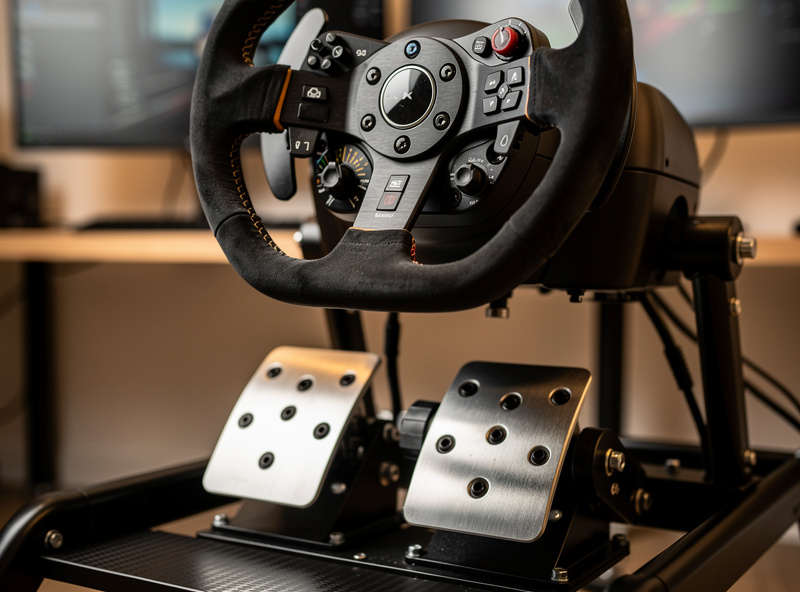
Your iRating works on an Elo-style system where you gain points for beating higher-rated drivers and lose points for finishing behind lower-rated ones. A new account starts at 1,350 iRating. Professional esports drivers typically sit above 8,000, while casual racers hover between 1,200 and 2,500. The iRating determines which split you are placed into when a session has more registered drivers than the server can hold—the system groups drivers by iRating so you consistently race against similarly skilled opponents. On my telemetry overlay I watch both my FFB clipping and my iRating trends after each session, because when iRating places you in a faster split, the whole feel of the race changes—braking zones tighten, margins shrink, and the force feedback tells a different story.
Understanding Safety Rating and iRating
Good sim racing driving techniques directly impact your Safety Rating. Safety Rating is iRacing’s clean-driving metric, calculated as a rolling weighted average of your incidents per corner, with recent races counted most heavily and older ones fading out of the average over your last 10-15 races or so. Each 0x contact, 1x off-track, 2x loss of control, and 4x car contact event adds to your incident count. The ratio of incidents to corners determines whether your Safety Rating rises or falls after each session. I run this on my load-cell pedal set where the brake curve I have dialed in gives me the muscle memory to trail-brake consistently—clean corner entries start with a pedal box that repeats the same pressure every lap.
A Safety Rating above 3.0 keeps you in good standing at your current license level. Dropping below 2.0 triggers a demotion back to the previous class. The system penalizes aggressive driving patterns heavily—a single race with 12 or more incident points can erase the clean driving credit from several previous races. This is why patience matters more than raw speed in iRacing’s early ranks. The rig I welded is torsionally rigid enough that no frame flex masks a pedal input, and that consistency translates directly to fewer off-tracks and cleaner corner exits across a full season.
iRating serves a completely different purpose. It measures competitive performance rather than cleanliness. After every official race, iRating transfers between drivers based on finishing position relative to their ratings. A driver rated 2,000 who finishes ahead of a 3,000-rated driver gains more points than if they beat a 1,500-rated driver. Over time, iRating self-calibrates to your true skill level and ensures you race against comparable competition. I treat the Safety Rating as the gate and the iRating as the mirror—one opens the door, the other tells you exactly how fast you actually are relative to the field.
Official Series Structure and Schedules
iRacing runs official series on a 12-week season schedule that mirrors real-world racing calendars. Proper force feedback configuration is essential for feeling the car during these longer races, and I dial my per-title FFB profiles off telemetry rather than copying presets—the Mazda MX-5 in a 12-minute Rookie sprint needs a different damping curve than a GT3 car in a 40-minute Class C endurance stint. Each season features one or two free tracks and several paid circuits, so you always have at least one week per season where you can race with only base content. Series rotate through different tracks each week, with the full schedule published before each season begins.
There are three tiers of official competition. The standard series run fixed or open setups with races every hour. The special events include endurance races like the Daytona 24, Spa 24, and Bathurst 1000 that run on specific weekends. The iRacing World Championship Series represents the highest level of competition with live-broadcast races featuring the world’s best sim racers competing for real prize money. On my welded rig I have run all three tiers, and the step from standard hourly races to a special event is where your cockpit build quality genuinely matters—a rig that flexes under hard braking during hour three of a team endurance race costs you both lap time and safety margin.
Each series has participation credits available. Race at least eight of the twelve weeks in a season and you earn up to $10 in iRacing credits per season (up to $40 per year across four seasons), as long as you score championship points and complete at least half the class winner’s lap count. This loyalty program rewards consistent participation and makes the platform more affordable over time for active drivers.
From Rookie to Class A: The Progression Path
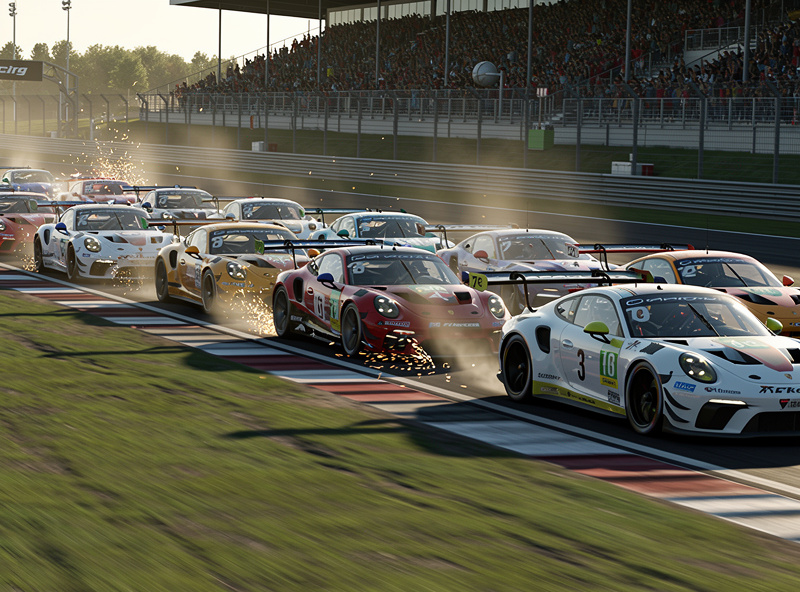
The Rookie-to-Class-A path in iRacing typically takes between 40 and 60 races over three to six months, depending on how frequently you race and how cleanly you drive. Speed is not a factor in promotions—only Safety Rating matters for license advancement. This means you can promote to Class A while finishing last every race as long as you avoid incidents. When I worked through the license ladder on my DIY rig, I ran the first 15 races with the explicit goal of zero incident points regardless of finishing position, and that single decision shaved weeks off the progression compared to the friends I race with who chased podiums too early.
Rookie class focuses on teaching racecraft fundamentals with the Mazda MX-5 and Formula Vee. These cars are forgiving, relatively slow, and included with every subscription. Most drivers spend two to four weeks in Rookies learning how to race wheel-to-wheel, manage tire degradation, and avoid common incidents like dive-bombing corners or rejoining the track unsafely. Even on my mid-torque direct-drive base—hardware that outclasses these cars by a wide margin—the Rookie series teaches lessons about spatial awareness and risk management that no amount of torque or load-cell precision can substitute for.
Class D introduces faster machinery and longer races. The Ferrari 488 Challenge Evo, Porsche Cayman GT4, and BMW M4 GT4 are popular choices that cost $11.95 each. Races run 15 to 20 minutes, and the competition steps up noticeably. This is where most drivers develop their consistency and learn to manage races over multiple stints. The hardware you run starts to matter here—a load-cell brake pedal set gives you repeatable braking zones lap after lap, and that repeatability is what separates drivers who promote cleanly from those who bounce between Class D and a demotion.
Class B and A unlock the most popular and competitive series on the platform. GT3 Sprint, IMSA Endurance, and the NASCAR Cup Series all require Class B or A licenses. These series feature multi-class racing, longer race formats, and some of the tightest competition in sim racing. The payoff for the patience required to reach these classes is access to the best racing experiences iRacing offers. At this level your FFB profile matters—I run different per-title settings for the GT3 cars in IMSA than I do for the Porsche Cup, and the difference between a well-tuned FFB profile and the auto-configure default is the difference between catching a slide early and losing the rear at corner exit with traffic behind you.
How Your Rig Build Affects License Progression Speed
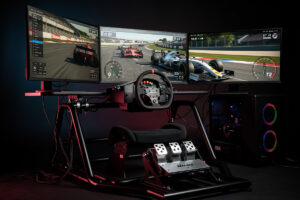
The gear you race on does not change the license requirements—a Rookie with a $5,000 direct-drive setup still starts in MX-5s—but it changes how quickly you develop the consistency that Safety Rating demands. The correct upgrade order, which I learned building my own cockpit from a welded steel frame upward, is rig rigidity first, then pedals, then wheelbase, then rim. A stiff cockpit with a budget wheel produces faster license progression than a high-end direct-drive base clamped to a wobbly desk, because frame flex introduces variable brake-pedal positioning that makes consistent corner entry impossible.
Load-cell pedals are the single biggest hardware contributor to clean driving in iRacing. A load-cell brake measures pressure rather than pedal travel, and your leg builds muscle memory for pressure far more repeatably than for position. On my pedal box I run a stiff elastomer stack with a short travel curve—the brake feels the same every single corner, and that consistency means I trail-brake into the same apex at the same speed lap after lap. The Safety Rating math rewards exactly this kind of repeatability: fewer off-tracks and fewer car contacts from late-braking mistakes add up to faster promotions.
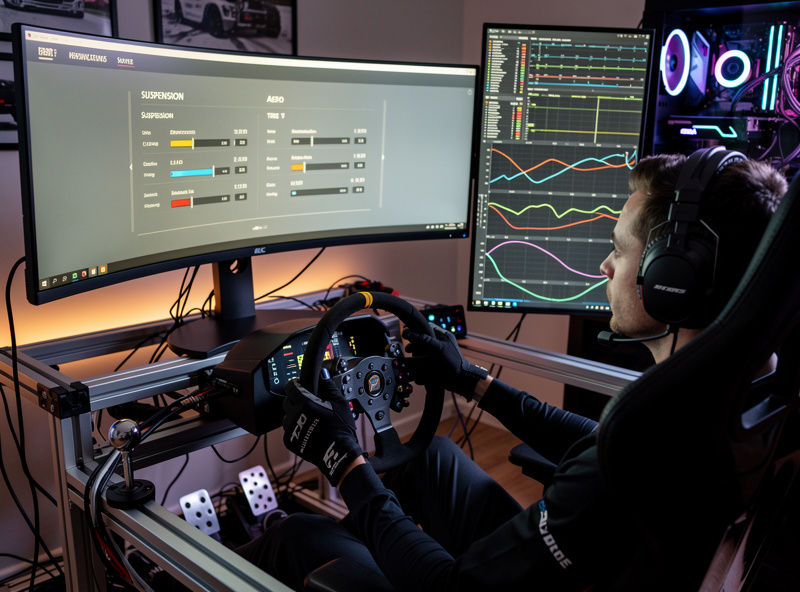
Force feedback tuning matters more as you move up the license ladder. In Rookies and Class D, the cars communicate enough through default FFB settings that you can drive cleanly without deep tuning. By Class C and above—where GT3s, prototypes, and NASCAR trucks demand precise car control—a dialed-in FFB profile becomes a safety tool. I use telemetry to check for FFB clipping on corner entries and adjust per-title gain and damping so the wheel never goes numb at the limit of grip. A wheelbase that clips during a braking zone gives you zero information about rear-end stability at the exact moment you need it most.
iRacing License Classes Compared
| License Class | Safety Rating Required | Popular Series | Typical Race Length | Key Cars |
|---|---|---|---|---|
| Rookie | Starting class | Mazda Cup, Formula Vee, Street Stock | 12–15 minutes | Mazda MX-5, Formula Vee, Street Stock |
| Class D | SR 3.0+ at Rookie | Ferrari Challenge, GT4, ARCA | 15–20 minutes | Ferrari 488 Evo, BMW M4 GT4, ARCA car |
| Class C | SR 3.0+ at D | GT3 Sprint, Porsche Cup, Trucks | 20–40 minutes | Mercedes GT3, Porsche 911 Cup, Silverado |
| Class B | SR 3.0+ at C | IMSA, Xfinity Series, GT3 Endurance | 40–60 minutes | Acura GT3, Ford Mustang, Lamborghini GT3 |
| Class A | SR 3.0+ at B | NASCAR Cup, Special Events, Endurance | 60+ minutes | Camaro Cup, Mustang GT3, LMDh prototypes |
What Content Comes Free With Your Subscription
An iRacing subscription includes 32 cars and 29 tracks. Running these on a budget sim racing setup works well because the base content is optimized for a wide range of hardware. A good gaming monitor or VR headset completes the visual experience. The base content alone provides enough cars and tracks to race every week in the Rookie series and participate in several D-class events. The free content covers the core learning vehicles and several popular road and oval circuits including Laguna Seca, Brands Hatch, Charlotte Motor Speedway, and Watkins Glen.
The base content alone provides hundreds of hours of racing. Most experienced drivers recommend racing exclusively with free content until you earn at least a Class C license and understand which type of racing you enjoy most. This approach avoids wasting money on cars or tracks you may not use once you find your preferred discipline. I spent my first two seasons on free content alone, running the MX-5 and Formula Vee while I figured out whether road or oval racing fit my driving style—by the time I bought my first paid car I knew exactly which series I wanted to commit to.
Free cars include the Mazda MX-5, Formula Vee, Global Mazda Cup car, Legends Ford, Street Stock, and several oval-specific vehicles. On the track side, you get enough road and oval courses to fill a complete season schedule across multiple series. The content is generous enough that many members race for months before purchasing anything additional.
Essential Tips for New iRacing Members
The most common mistake new iRacing members make is prioritizing speed over safety. Your first 20 races should focus entirely on finishing without incidents rather than fighting for position. A clean race that finishes eighth builds your Safety Rating faster than a crash-filled race that finishes third. The license system rewards patience, and rushing the progression only leads to frustration and demotions. On my welded rig I ran a full season of MX-5 races where my only goal was to finish with zero incident points—my iRating stayed flat but my Safety Rating climbed steadily enough to promote to Class D in under three weeks.
Use the ghost racing and test drive features before entering official sessions. The FOV calculator guide helps you set up your view correctly, which is critical for spatial awareness in close racing. Proper sim racing space setup with correct monitor distance and angle makes a measurable difference in your consistency. iRacing allows you to spectate live races and drive as a ghost—you can see other cars on track and practice racing alongside them without the risk of contact. This is the single best way to learn racecraft without damaging your Safety Rating during the learning phase.
If you are building a dedicated rig, building a DIY sim racing rig from aluminum profile gives you a stable platform that handles the forces from a direct drive wheel. My own rig started as a welded steel-tube frame and evolved with 3D-printed brackets and button-box mounts—the rigidity under braking is what I credit for my cleanest Safety Rating seasons. DIY sim racing upgrades like button boxes and wind simulation add functionality that iRacing’s complex interface benefits from.
Configure your force feedback settings before your first official race. iRacing’s auto-configure feature detects your wheel and applies baseline settings, but most drivers need to fine-tune the force strength, damping, and minimum force values for their specific hardware. The iRacing forums contain detailed setup guides for every major wheel on the market, and spending 30 minutes dialing in your FFB prevents the fatigue and inconsistency that come from running default settings. Across every base I have bolted onto my cockpit—Fanatec CSL DD, Simagic Alpha Mini, and Moza R9—the auto-configure baseline was always a starting point, never the final profile.
Join a league or community once you are comfortable with official racing. The sim racing skills guide covers telemetry analysis and setup tools that help you improve beyond what seat time alone provides. For competitive drivers, the coaching and improvement guide details how to accelerate your development. Leagues run outside the official series structure and often provide cleaner, more organized racing with custom schedules and rules. Many leagues welcome drivers of all skill levels and offer coaching, setup sharing, and team endurance events that add significant depth to the iRacing experience.
The Four Racing Disciplines in iRacing
iRacing offers four distinct racing disciplines, each with its own license track and series lineup. Road racing covers circuit-based competition with GT cars, formula cars, and prototypes. Oval racing focuses on American stock car competition across superspeedways, short tracks, and intermediate ovals. Dirt road and dirt oval add off-road rallycross and dirt track racing to the mix, each requiring entirely different driving techniques. I have spent most of my seat time on the road side with iRacing and ACC as my daily sims, but I have run enough oval races on my rig to know the discipline demands a completely different setup philosophy—and a different FFB profile for every track type.
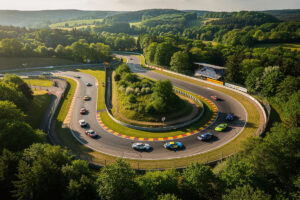
Road racing is the most popular discipline. The direct drive vs belt drive comparison is relevant here because road racing demands the most precise force feedback fidelity, and it is the one most sim racers gravitate toward first. It includes the full progression from Rookie MX-5 and Formula Vee races up through GT3, LMDh prototypes, and the Porsche Cup series. Road tracks range from tight street circuits like Long Beach to legendary permanent circuits like Spa-Francorchamps and the Nordschleife. The discipline rewards precision, consistency, and the ability to manage tire wear over long stints.
Oval racing holds a massive following in iRacing and represents a discipline you will not find in most other simulators. Adding a sequential shifter or handbrake enhances the experience for dirt oval and rallycross disciplines. The NASCAR Cup Series, Xfinity Series, and ARCA Menards series all feature on iRacing with laser-scanned tracks and realistic drafting physics. Oval races demand a different skill set than road racing—setup knowledge, pack racing awareness, fuel strategy, and the ability to run within inches of other cars at 200 mph. The community around oval racing in iRacing is among the most dedicated in all of sim racing.
Dirt disciplines add variety but have smaller communities. Finding full official sessions in dirt series can be challenging outside of peak North American evening hours. If dirt racing interests you, check the series participation data on the iRacing forums before committing to dirt-specific content purchases. Dirt oval racing uses sprint cars, late models, and modifieds on clay surfaces where the racing line shifts constantly as the track surface changes throughout a race. Dirt road features rallycross-style racing on mixed surfaces. Both disciplines are rewarding but have fewer participants, which means longer wait times between official sessions and smaller fields.
Choosing Your First Paid Content Wisely
iRacing’s content pricing structure rewards strategic purchasing. Individual cars cost $11.95 and tracks cost either $11.95 or $14.95 depending on the circuit. Buying three items at once gives a 10% discount, and buying six items at once gives a 15% discount. Once you own 40 or more items total, you receive a permanent 20% discount on all future purchases.
The smartest strategy for new members is to race exclusively with free content through at least two license classes. This means completing your Rookie season and starting your Class D season using only the included cars and tracks. By the time you reach Class C, you will know whether you prefer road racing, oval racing, or both—and you can target your purchases accordingly.
When you do start buying content, prioritize tracks over cars. Tracks appear in multiple series across seasons and retain their value long-term, while cars are limited to specific series. Popular tracks like Spa, Monza, Watkins Glen, and the Nurburgring Nordschleife appear in nearly every road racing season. On the oval side, Daytona, Charlotte, Bristol, and Talladega are staples of multiple NASCAR series. Investing in the right tracks first gives you more racing options per dollar spent.
iRacing Special Events and Endurance Racing
For endurance events, the right sim racing cockpit matters—a full rig keeps your wheel, pedals, and monitor stable during multi-hour stints. Bass shakers and quality headphones add immersion through road texture and engine vibration feedback. On my rig the bass shaker is hard-mounted to the pedal plate, and during a three-hour endurance stint that tactile feedback through my feet is what keeps my braking consistent when fatigue sets in.
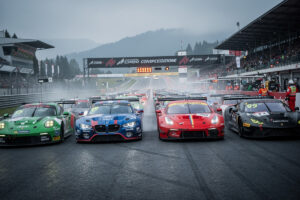
iRacing’s special events calendar represents some of the most exciting competition in sim racing. These events replicate real-world race weekends with practice sessions on Thursday, qualifying on Friday, and the main race running from Saturday through Sunday. Registration opens weeks in advance, and top splits fill within hours of opening. Planning ahead and owning the required content is essential for anyone who wants to participate. The major endurance events—the Daytona 24, Sebring 12, Spa 24, Bathurst 1000, Nurburgring 24, and Petit Le Mans—draw thousands of entries and run with realistic weather, driver swaps, and pit strategy. These events require a Class C or higher license and are open to all members who own the required content.
Team endurance racing adds a collaborative dimension that is missing from standard sprint races. Finding the right teammates matters—the best sim racing leagues article lists communities that organize team events. The road racing guide covers GT and touring car techniques that transfer directly to iRacing’s most popular endurance series. Teams of two to six drivers share a single car, rotating through driver changes at pit stops. Each driver must complete a minimum percentage of the race to receive championship points. The coordination of driver stints, fuel windows, and tire strategy creates a race-within-a-race that many members consider the highlight of their iRacing experience. The rig I welded runs a quick-release wheel and a pedal box that holds its calibration across driver swaps, and those mechanical details—things no spec sheet covers—are what make a team endurance event work logistically.
iRacing’s biggest esports purse sits on the oval side: the eNASCAR Coca-Cola iRacing Series broadcasts live and pays out $500,000 across its championship to 40 signed drivers, with $100,000 going to the season champion. The road-racing equivalent, the Grand Prix World Championship Series, is a much smaller purse by comparison — competitive for the prestige more than the payout. Members interested in competing at either level should review the sim racing esports guide for the full competitive pathway. Streaming your races is another rewarding path—the streaming setup guide covers the hardware and software needed to broadcast your iRacing sessions. Qualifying for the World Championship requires competing in the Pro Series, which itself requires finishing in the top tier of the Pro Series qualifiers. The path from casual Rookie racer to World Championship competitor can take years, but the journey itself is the core of iRacing’s long-term appeal.
Frequently Asked Questions
How long does it take to get Class A in iRacing?
Most drivers reach Class A within 3 to 6 months of regular racing, completing roughly 40 to 60 official races. The path depends entirely on Safety Rating, not speed, so clean driving accelerates the process.
Is iRacing worth the subscription cost?
iRacing’s annual membership is $110 per year with base content (promotional first-year rates run lower). Including 2 to 3 car purchases and seasonal track investments, most active members spend $250 to $450 annually. The online competition quality is unmatched by any other sim.
What is the difference between iRating and Safety Rating?
Safety Rating measures how cleanly you drive by tracking incidents per corner. iRating measures competitive skill using an Elo-style system where you gain or lose points based on finishing position relative to opponent ratings. Both update after every official race.
Can you lose your license in iRacing?
Yes. If your Safety Rating drops below 2.0 at your current license level, you receive a demotion to the previous class. You can also be suspended for repeated intentional wrecking or abusive behavior through the protest system.
How much does iRacing content cost beyond the subscription?
Individual cars cost $11.95 and tracks cost $11.95 or $14.95 each. Buying in bundles of 3 or 6 items gives 10% to 15% discounts, and owning 40 or more items permanently unlocks a 20% discount on all future purchases.
Do you need a wheel to play iRacing?
A force feedback wheel is strongly recommended and practically required for competitive racing. Controller support exists but the precision needed for consistent lap times and close racing makes a wheel essential. Budget options like the Logitech G29 work well for beginners.
Related Guides
Whether you are just starting out or planning your iRacing budget, these guides cover every aspect of the platform:
- iRacing Safety Rating: How It Works and How to Improve Fast — understand the clean-driving metric that gates your license progression
- iRacing Series Guide: Which Races Match Your License Level — find the right series for your current class and interests
- iRacing Track Buying Guide: Which Circuits to Buy First — maximize value from your first track purchases
- iRacing vs Assetto Corsa Competizione: Which Sim Is Right for You? — compare the two leading competitive simulators
- iRacing Cost Breakdown: Subscription, Cars, and Tracks in 2026 — plan your annual budget with real pricing data