Good sim racing corner apex technique comes down to one principle: the apex you choose is the one that gives you the best exit, not the prettiest entry. The racing line through a corner is a chain of compromises, and the compromise that pays is almost always the one that lets you get back to full throttle earliest. On my telemetry overlay, drivers lose more time waiting at a bad apex than they ever lose braking too early.
I have spent a lot of hours studying my own steering and speed traces against faster references, and the pattern is consistent — the quick laps are built on patient entries and clean, early-throttle exits, not on heroic apex speed. This guide covers corner entry, apex placement, minimum speed, and the unwind to exit: the parts of cornering that actually move the clock. It expands on the cornering section of the complete racecraft guide.
The Line Exists to Protect the Exit
The classic racing line — wide on entry, in to the apex, wide on exit — exists because it straightens the corner and lets you carry the most speed onto the following straight. Exit speed is multiplied by the entire length of the next straight, so a tenth gained on exit can become three tenths by the next braking zone. That single fact decides almost every line choice you make.
This is why “slow in, fast out” is not a beginner crutch but a description of how time actually works on a stopwatch. Arriving too hot means you are still braking or still turning at the apex, which delays throttle and bleeds speed down the whole straight. The driver who gives up a little entry speed to nail the exit beats the one who throws the car at the apex and waits. Everything below is in service of that exit.
Corner Entry: Get the Car Rotated Early
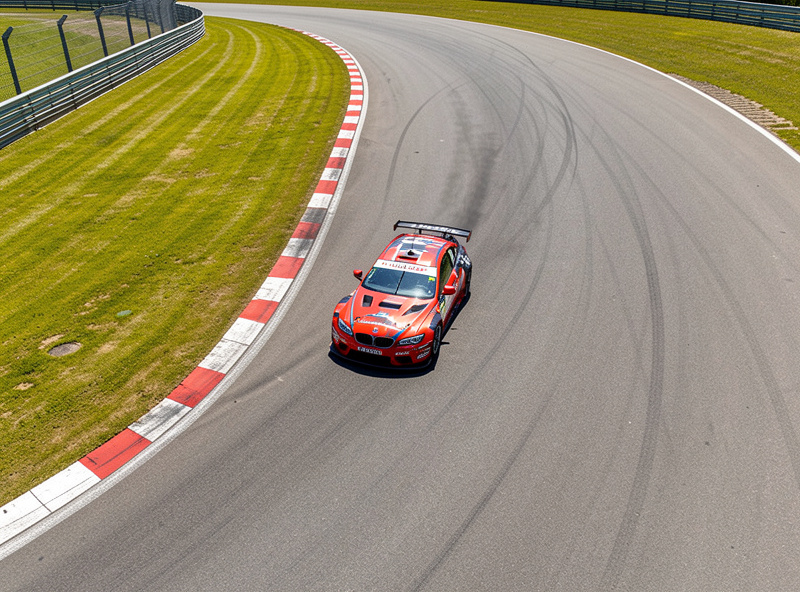
Your job on entry is to have the car decelerated and pointed where you want it before you reach the apex, so that from the apex onward you are only accelerating. That means doing your direction change on the way in — under trail braking — rather than at or after the apex. A car that is still trying to rotate at the apex is a car that cannot take throttle, and that is lost time.
The tool that makes this work is the brake. Trailing brake pressure into the corner keeps weight over the front tyres and helps the car turn; releasing the brake too early lets the nose wash wide into understeer. So entry technique and braking technique are really the same skill viewed from two angles — you are managing the front tyre’s grip budget between slowing down and changing direction. Get greedy with entry speed and you spend the whole grip budget on slowing, leaving nothing to turn with.
Finding the Apex: Early, Geometric, or Late
The apex is the point where the car runs closest to the inside of the corner, and where you put it changes everything downstream. A late apex — clipping the inside later in the corner — sacrifices a little entry speed but opens up the exit, letting you unwind and accelerate sooner. For most corners that lead onto a straight, a late apex is the fast choice, and it is the default I reach for. It took me a long time to trust that. For my first year I apexed almost everything early because it felt fast in the moment, and it was only when I overlaid my speed trace against a reference lap on my mid-torque direct-drive base — same corner, the quicker driver getting back to throttle a full car-length earlier — that I could finally see the early apex was bleeding me time down the entire next straight. Forcing myself to wait for the later apex felt slow in the seat and read faster on the stopwatch every single lap.
An early apex is the classic trap: it feels fast on entry because you turn in early and brush the inside quickly, but it forces the car to the outside edge too soon on exit, so you either run out of road or have to lift. Geometric apexes — dead in the middle of the corner — suit corners that are not followed by a straight, like a quick direction change into another corner. The skill is reading what comes after the corner: if it is a long straight, favour a later apex and protect the exit; if it flows into another corner, the line through both together matters more than either alone.
Minimum Speed: The Number That Decides the Corner
Every corner has a minimum speed — the slowest the car gets, usually around the apex — and that single number tells you more about your cornering than almost anything else. Carry too little minimum speed and you scrubbed off pace you did not need to; carry too much and you ran wide and compromised the exit. Finding the right minimum speed for each corner is the core of cornering, and it is something you can read directly off a speed trace.
The way to dial it in is experimental and repeatable: pick a corner, note your minimum speed on the telemetry, and try carrying a few km/h more next lap while keeping the same reference points. If the exit still works, keep it; if you run wide or have to lift, you went too far. Overlaying against a faster reference lap shows the target immediately — usually the quicker driver carries more minimum speed and gets to throttle at the same point. The reading telemetry data guide shows how to pull these channels up.
The Unwind: Trading Steering for Throttle
From the apex to the exit, cornering becomes a handover from steering to throttle, and how smoothly you make that trade decides your exit speed. As the corner opens up you unwind the wheel, and as grip frees up you feed in throttle in proportion. The two motions are linked: every degree of steering you remove is grip you can spend on acceleration instead. Rush it — full throttle with the wheel still cranked — and you spin or trigger traction control that scrubs your drive.
The feel you are chasing is the car gradually straightening as it accelerates, using all the road out to the exit kerb but not beyond it. If you arrive at the exit with steering still wound on, your apex or minimum speed was wrong and you are paying for it now. This is where honest force feedback earns its place — the FFB tells you how loaded the front still is as you unwind, and clipping or a numb wheel hides exactly the signal you need. If yours is not set up, start with FFB tuning for beginners.
Slow, Medium, and Fast Corners Are Different Problems
Cornering technique is not one skill but three, because slow, medium, and fast corners reward different things. Slow corners — hairpins and tight chicanes — are about rotation and traction: you brake a lot, the car pivots, and the exit is a traction problem where a clean throttle squeeze is everything. Here a late apex and patience pay the most, because the following straight is usually long relative to the corner.
Medium-speed corners are the trail-braking sweet spot, where managing the brake release into the apex makes the biggest difference. Fast corners are a commitment-and-confidence problem: they are often taken near flat, and the limit is whether you trust the car and your FFB enough to keep the throttle in. Fast corners also punish a twitchy setup, so a stable car and a rigid rig matter more there than anywhere. Knowing which type you are dealing with tells you which technique to lean on, and it is why copying one driver’s approach corner-for-corner rarely works without understanding the why.
Reference Points Make It Repeatable
None of this is worth anything if you cannot do it the same way twice, and that comes down to fixed reference points. Pick a braking marker, a turn-in point, and an apex reference for every corner, and use the same three every lap. Without them you are improvising the corner each time, which is why inconsistent drivers swing a second or more between laps on the same corner.
Once your references are fixed, improving a corner becomes a controlled experiment instead of a guess: change one thing — turn in five metres later, carry two km/h more minimum speed — against the same markers and see if the exit improves. That disciplined, one-variable-at-a-time approach is the heart of consistency training, and it is how cornering gains stick instead of evaporating the next session.
Frequently Asked Questions
What is the correct apex for a corner in sim racing?
For most corners leading onto a straight, a late apex is fastest because it opens up the exit and lets you accelerate sooner. Early apexes feel quick on entry but force you wide on exit. Geometric, mid-corner apexes suit corners that flow into another corner rather than a straight.
What does slow in fast out actually mean?
It means giving up a little entry speed so you can get back to full throttle earlier on exit. Exit speed is carried down the entire following straight, so a tenth gained on exit becomes several tenths by the next braking zone. A patient entry beats a heroic one on the stopwatch.
What is minimum speed and why does it matter?
Minimum speed is the slowest the car gets in a corner, usually near the apex. It is the single best readout of your cornering: too little means you scrubbed off pace needlessly, too much means you ran wide and hurt the exit. You can read and tune it directly off a speed trace.
Why do I keep running wide on corner exit?
Usually an early apex or too much entry speed. Turning in early brushes the inside quickly but throws the car to the outside edge before the corner is done, so you run out of road. Move your apex later and carry slightly less entry speed so the car is already pointed straight on exit.
Should I use the same technique for every corner?
No. Slow corners reward rotation and clean traction on exit, medium corners reward trail braking into the apex, and fast corners reward commitment and a stable car. Identify the corner type first, then lean on the technique that suits it rather than copying one approach everywhere.