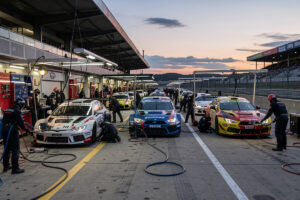
Pit strategy in endurance sim racing comes down to three decisions made on the timing screen — how much fuel to take, whether to change tires, and when to box relative to your rivals — and a single skipped stop is worth more than any line through a corner. The fastest car rarely wins a long race; the best-strategized one does. Pit calls are where a midfield pace can finish on the podium and a winning pace can finish nowhere.
I plan fuel off telemetry, not feel, because a guessed fuel number in a long race is how teams run dry on track and lose everything. This guide is the decision framework — fuel windows, the undercut, tire calls, and fuel-saving — that the wider endurance and team sim racing guide points to whenever strategy comes up.
Fuel Windows Are the Backbone
Everything in pit strategy starts from the fuel window: how many laps a tank gives at race pace, and therefore where your stops have to fall. Once you know your fuel-per-lap, the number of stops is fixed arithmetic — total race laps divided by laps-per-tank, rounded up. From there, strategy is about shifting those stops to your advantage rather than changing how many you make.
You derive the fuel-per-lap number from your own running, not a generic figure, because it shifts with the car, the track, and how hard you’re pushing. I read mine straight off the telemetry overlay and confirm it across a full stint before I trust it, and the deeper analysis lives in the MoTeC telemetry guide, built around MoTeC’s i2 analysis software that iRacing exports straight into. Get this number wrong and every downstream call is built on sand.
Fuel Saving Changes the Whole Race
Lifting and coasting — easing off the throttle before the braking zone and letting the car roll — can stretch a stint enough to drop an entire pit stop, and that is the single biggest lever in endurance strategy. A few percent of fuel saved per lap, sustained over a stint, can turn a four-stop race into a three-stop race, which is worth far more time than you could ever find by driving harder.
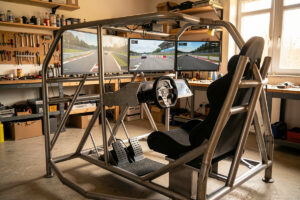
The skill is saving fuel without bleeding lap time, which is a coached, measured technique rather than just lifting randomly. You learn where on the lap a lift costs the least time per liter saved, and you hit that same lift every lap. This is where consistency pays — the same repeatable discipline that a rigid rig and a load-cell brake deliver helps you hit a precise fuel-saving target lap after lap. The strategist calls the save number, the driver executes it, as covered in the team strategy guide.
Tires: Change or Stay Out
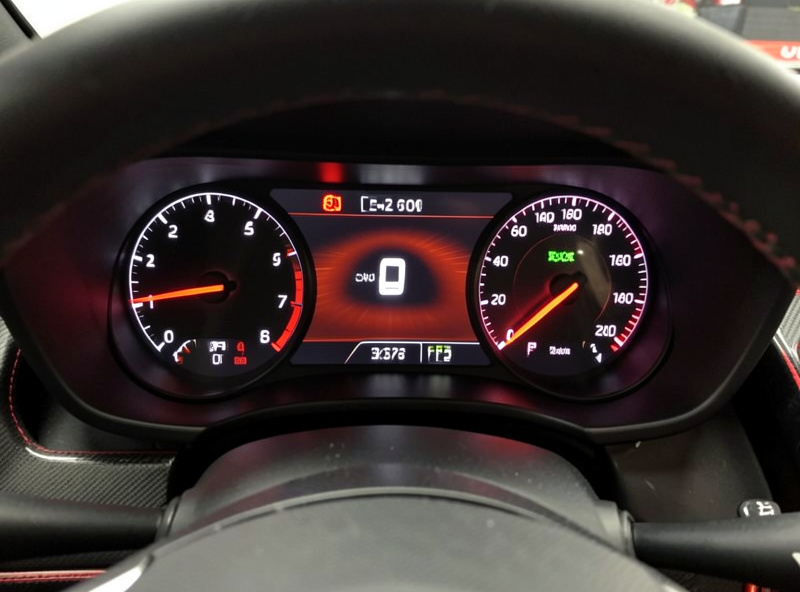
The tire decision is the other half of every stop — fresh rubber costs service time but gives grip, while staying out saves time but leaves you on worn tires. On many GT3 endurance cars you can double-stint tires, running two fuel stints on one set, which trades a little grip late in the second stint for a faster stop. Whether that pays depends on how much the tire drops off and how much track position is worth.
The call hinges on tire degradation, which again you read off data rather than guess. A tire that fades badly makes a change worth the time; a tire that holds rewards staying out. The table below lays out the common pit-stop types and when each makes sense. Setting the car up to be kind to its tires is its own lever — covered in the complete car setup guide — because a setup that doesn’t overload one corner can make a double-stint viable that otherwise wouldn’t be.
| Stop Type | What You Do | Time Cost | When It Wins |
|---|---|---|---|
| Full service | Fuel + 4 tires | Highest | Long stints, big tire drop-off |
| Fuel-only | Fuel, no tires | Lower | Tires still good, track position matters |
| Double-stint tires | Two fuel runs, one tire set | Saves a tire stop | Low degradation cars/tracks |
| Splash-and-dash | Tiny fuel top-up near the end | Minimal | Just short on fuel to the flag |
The Undercut and the Overcut
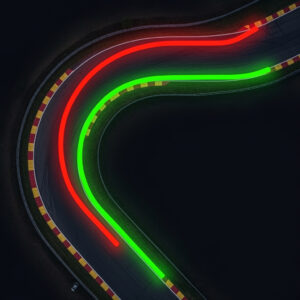
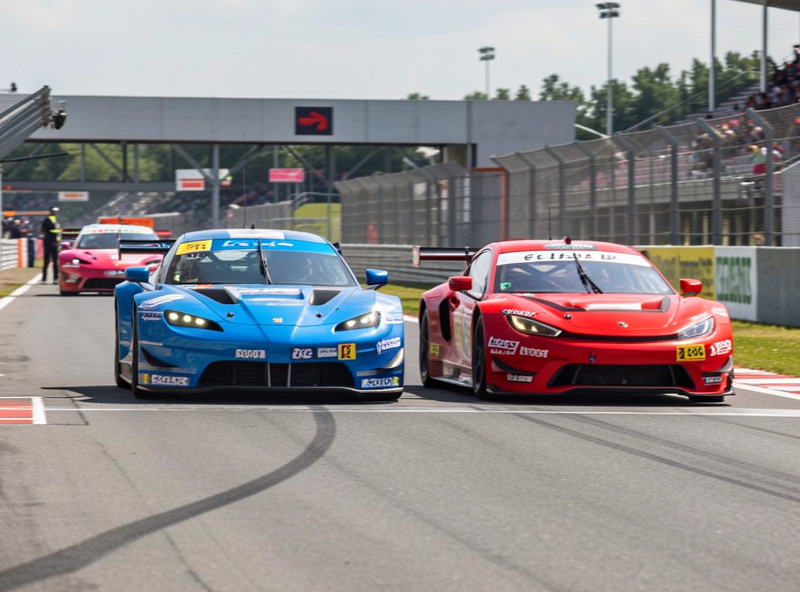
The undercut is pitting before a rival so your fresh tires gain time while they’re still on old ones, and it is the most powerful position-swapping tool in endurance. You box a lap or two earlier, put in fast laps on new rubber, and emerge ahead when they finally stop. The overcut is the opposite — staying out longer on tires that are still working while a rival struggles on fresh-but-cold rubber or hits traffic.
Whether an undercut works depends on the time gap, the pace difference fresh tires give, and traffic — which is why you plan it off deltas on the timing screen, not instinct. A strategist watching the gaps calls the undercut when the math closes; a driver guessing usually mistimes it. Traffic can make or break the move, which ties directly into reading a multiclass field, covered in the multiclass racing guide.
Timing the Stop and Pit Loss
Every pit stop costs you the pit lane — the time lost driving through the limited-speed pit relative to a flying lap — and that pit-loss number frames every strategic call. Knowing your pit loss tells you exactly how much an extra stop costs, which is what makes dropping a stop so valuable and what tells you whether an undercut’s time gain can overcome the loss of boxing early.
You also time stops around the race situation: a full-course yellow or safety car can let you pit at a steep discount because the field has slowed, so a team watching for it can gain a near-free stop. The drivers who react fastest to a caution gain the most. All of this is the strategist’s job to track while the driver focuses on driving, which is exactly why endurance teams split those roles — see the team strategy guide. The stint lengths these stops bracket are planned in the driver swaps and stints guide.
Frequently Asked Questions
What is the most important decision in pit strategy?
The number of pit stops, which is set by your fuel window. Once you know how many laps a tank gives at race pace, the stop count is fixed arithmetic. Everything else, including tires and timing, is about shifting those stops to your advantage rather than changing their number.
How does fuel saving help in endurance racing?
Lifting and coasting to save a few percent of fuel per lap can stretch a stint enough to drop an entire pit stop, which is the single biggest lever in endurance strategy. Dropping one stop saves far more time than you could ever find by driving harder.
What is an undercut?
An undercut is pitting before a rival so your fresh tires gain time while they are still on worn ones, letting you emerge ahead after they stop. Whether it works depends on the time gap, the pace gain from fresh tires, and traffic, so it is planned off timing-screen deltas.
Should you change tires at every stop?
Not always. Fresh tires cost service time but give grip, while staying out saves time on worn rubber. On low-degradation cars and tracks you can double-stint tires, running two fuel stints on one set, trading a little late grip for a faster stop and track position.
What is pit loss and why does it matter?
Pit loss is the time lost driving through the speed-limited pit lane relative to a flying lap. It frames every strategic call because it tells you exactly how much an extra stop costs and whether an undercut’s time gain can overcome the cost of boxing early.
How do safety cars affect pit strategy?
A full-course yellow or safety car slows the field, so pitting under caution costs less time than pitting at racing speed, effectively a discounted stop. Teams that watch for cautions and react fastest can gain a near-free pit stop, which can swing the race.