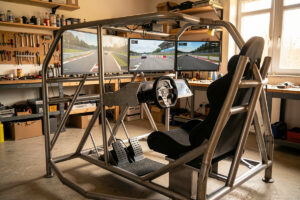
The honest truth behind any sim racing consistency training guide is that consistency, not a single fast lap, is what wins races. One heroic lap is worthless if the next five are a second slower and one of them ends in the wall. The skill you are training is a tighter lap-time spread — running within a couple of tenths of your pace every lap — and on a stopwatch that is worth more championship points than chasing one quicker lap.
I have watched plenty of drivers with more raw speed than me lose races because their laps scattered, and I have banked results by simply being the metronome who hits the same marks every time. Consistency is trained, not gifted, and it is one of the few racecraft skills where my own telemetry gives me clean, undeniable proof of progress. This guide lays out how to measure consistency, how to build it through deliberate practice, and how to keep it under pressure. It expands the consistency section of the complete racecraft guide.
Why Consistency Beats One Fast Lap
A race is dozens of laps, and your result is decided by your average, not your best. A driver who can reliably lap within two tenths of their pace beats a faster but scattered driver almost every time, because the scattered driver throws away more time in their bad laps than they gain in their good ones — and eventually one of those bad laps becomes a crash. Reliability compounds over a race distance the way mistakes do.
There is a strategic angle too. A consistent driver is predictable to themselves, which makes everything else easier: tyre management, fuel saving, and racecraft decisions all depend on knowing exactly what the car and your inputs will do. When your laps are repeatable, you have spare attention to spend on traffic and strategy instead of wrestling a result you cannot predict. Consistency is the platform the rest of your racecraft stands on.

Measure It: Your Lap-Time Spread
You cannot improve consistency without measuring it, and the measurement is your lap-time spread across a stint — how tightly your laps cluster around your average. A driver whose laps swing a full second is wildly inconsistent; one whose laps sit within two or three tenths is genuinely consistent. Tightening that distribution is the entire goal, and it is a number you can track session to session to prove you are improving.
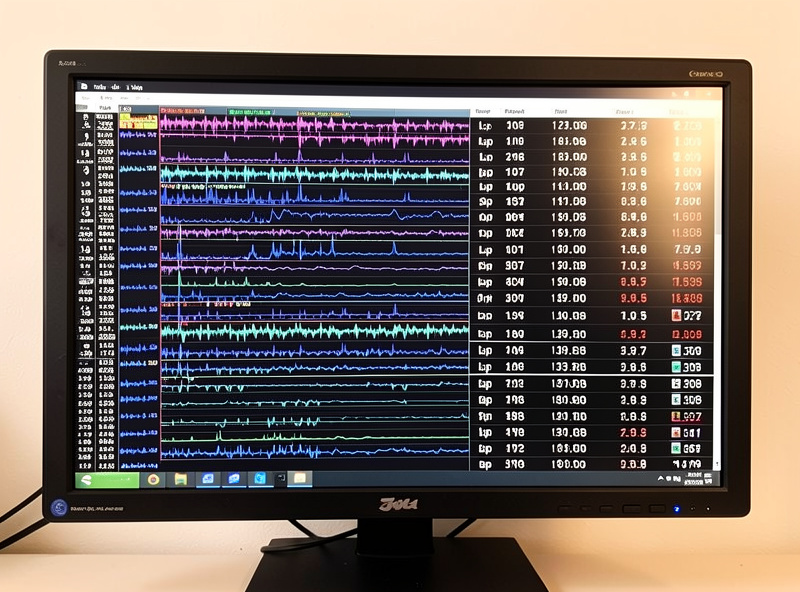
The practical method is to run a stint of ten or more laps and look at the spread of your times, ignoring obvious mistakes. If your good laps and your typical laps are far apart, the problem is not pace — it is repeatability. Most sims and telemetry tools show your lap history, and watching that spread shrink over weeks is far more motivating than chasing a personal best that you can only hit once in fifty laps. The reading telemetry data guide shows how to pull lap history and traces for this.
The Foundation: Fixed Reference Points
Consistency is built on references, because you cannot repeat a lap you are improvising. The single biggest driver of inconsistency is approaching corners differently each lap — braking at a slightly different point, turning in at a different moment, aiming at a different apex. Fix those points and the scatter collapses almost immediately.
For every corner, lock in a braking marker, a turn-in reference, and an apex reference, and use the same three every single lap. Use things that do not move: distance boards, kerbs, cracks, marshal posts, changes in the trackside scenery. Once your references are fixed, your laps have a skeleton to hang on, and the natural variation between laps shrinks to the small input differences rather than wholesale different corners. This is the same reference discipline that underpins corner entry and apex technique — consistency and good cornering are built from the same blocks.
Deliberate Practice: One Variable at a Time
The fastest way to build consistency is deliberate practice, which means changing one thing at a time and proving it on the data rather than driving aimless laps. Aimless repetition just reinforces whatever you already do, mistakes included. Structured practice isolates a single corner or a single skill, works it until it is repeatable, then moves on — the same way you would learn any precise physical skill.
A practical session structure: pick one corner you are inconsistent in, run ten laps focusing only on that corner against your fixed references, and watch the spread of your times and traces through it. Change one variable — turn in a fraction later, carry slightly more minimum speed — and confirm whether it helps on the telemetry before keeping it. This disciplined, measured approach is exactly what the coaching and improvement guide is built around, and it is the difference between practising and just driving.
Smooth Inputs Are Repeatable Inputs
Smoothness and consistency are the same habit, because smooth inputs are inherently more repeatable than violent ones. A driver who stabs the brake and snatches the wheel is relying on perfect timing every lap to get away with it, and perfect timing is not repeatable. A driver who applies inputs progressively has far more margin — small timing errors produce small results instead of spins. The smoother you are, the more forgiving every lap becomes.
This is why the fundamentals keep coming back. Smooth braking technique, progressive throttle, and minimal steering corrections all reduce the lap-to-lap variation that shows up as scatter. Early on I chased consistency with the brake pressure cranked right up on my load-cell pedal set, and my spread stayed stubbornly wide because I was relying on hitting the exact same pedal force every single lap. Once I backed the load-cell calibration down and learned to build the pressure progressively, my lap-time spread on the telemetry overlay tightened from over half a second to inside two tenths. The base I run is a mid-torque direct-drive, and a calmer FFB profile on it punishes a mistimed input far less than a peaky high-torque setting does. There is a happy side effect: the smooth inputs that make you consistent are also the ones that make you fast and save your tyres. Consistency, pace, and tyre life are not three separate goals — they are three views of the same clean driving, which is why working on one tends to lift the others.
The Mental Side: Focus, Fatigue, and Routine
Consistency is as much mental as physical, because a wandering mind produces wandering laps. The classic failure is the lapse in concentration — a few laps where you are thinking about your time, your rival, or nothing in particular, and the inputs drift. Sustained focus across a full race distance is a trainable skill, and it is what separates drivers who hold their pace from those who fade in the final third.
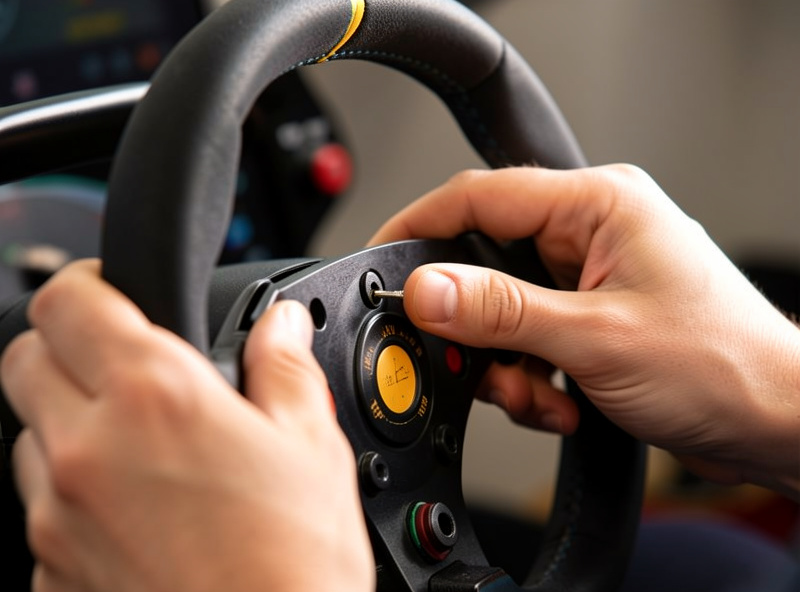
Fatigue is the quiet enemy — physical and mental tiredness degrades your inputs and your judgement long before you notice, which is one more reason a comfortable, rigid rig matters for performance and not just comfort. Build practice routines that train focus over realistic stint lengths rather than always doing short bursts. The drivers who stay smooth and patient while a car fills their mirrors are the ones who keep banking laps within two tenths of their pace, and that calm comes from exposure — more clean races, more long stints, more time spent practising the boring, repeatable version of fast.
Building Consistency Over Time
Consistency is a slow-burn skill, and that is worth knowing so you do not get discouraged. Unlike a setup change that gives an instant result, repeatability is built over weeks of structured laps, and the gains arrive quietly — your lap-time spread tightens a little each session until one day you realise you are hitting your pace lap after lap without thinking about it. Treat it like training a physical skill, because that is essentially what it is.
The trap is impatience: drivers do a few clean laps, then immediately reach for more pace and lose the repeatability they just built. Resist that. Bank consistency at one pace level first, make it automatic, then raise the target slightly and rebuild it at the new level. A reliable pace you can hit every lap is a far better foundation to push from than a fast lap you can only fluke occasionally. Over a season, the metronomic driver who keeps tightening their spread overtakes the flashy one whose results swing wildly — consistency is the skill that compounds, and it is the one that quietly decides championships.
Frequently Asked Questions
Why is consistency more important than a fast lap?
A race is decided by your average, not your best lap. A driver who reliably laps within a couple of tenths of their pace beats a faster but scattered driver, because the scattered driver loses more time in their bad laps than they gain in good ones, and eventually one bad lap becomes a crash.
How do I measure my consistency in sim racing?
Run a stint of ten or more laps and look at your lap-time spread — how tightly your times cluster around your average, ignoring obvious mistakes. A swing of a full second is inconsistent; laps within two or three tenths are genuinely consistent. Track that spread shrinking over time.
What is the biggest cause of inconsistent laps?
Improvising corners instead of repeating fixed references. If you brake at a slightly different point, turn in at a different moment, or aim at a different apex each lap, your times scatter. Locking in a braking marker, turn-in point, and apex for every corner collapses most of that variation.
How should I practise to get more consistent?
Use deliberate practice: change one variable at a time and confirm it on telemetry rather than driving aimless laps. Pick one corner, run ten laps focused only on it against fixed references, and watch the spread of your times through it before changing anything.
Does smooth driving really make me more consistent?
Yes. Smooth, progressive inputs are far more repeatable than violent ones because small timing errors produce small results instead of spins. The same smoothness that makes you consistent also makes you faster and saves your tyres, so they are really the same clean-driving habit.