Sim racing racecraft for beginners starts with one uncomfortable truth: your first goal is not to be fast, it is to be clean and repeatable. New drivers chase lap time and crash; the ones who improve fastest learn to complete consistent, controlled laps first. Build that foundation and pace follows — usually within a few weeks, and without a single hardware upgrade.
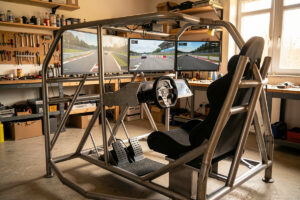
I run a welded steel rig with direct drive and a load-cell brake, and I spend more time in the telemetry app than most people would believe. But none of that is where a beginner should start. When I coach someone through their first month, we ignore the gear entirely and work on a short list of skills in a deliberate order. This guide is that list — the racecraft basics that take a brand-new sim racer from spinning out to finishing clean races, explained without the jargon wall. It is the on-ramp to the full sim racing racecraft guide.
Clean Laps Before Fast Laps
Your first target is ten laps in a row without an incident, not a personal best. This sounds slow and it is the single fastest way to improve, because you cannot build any skill on top of a car you keep crashing. Drop your pace by ten percent, leave margin everywhere, and just finish laps. Once the car stops surprising you, speed is something you add a little at a time — not something you reach for and pray.
The reason this works is that racecraft is a stack of habits, and habits only form through repetition. Every clean lap reinforces the right reference points and the right inputs; every crash teaches you nothing except frustration. I would rather a beginner run a boring, controlled 2:05 ten times than a wild 2:01 followed by a wall. The 2:01 is a fluke; the controlled lap is a skill you can build on. I know that the hard way. My own first month was a parade of optimistic late-braking lunges into the wall, and my quickest laps were always the ones I could not repeat the next time around. The week I stopped chasing the stopwatch and just banked clean laps was the week I actually started getting faster.
The Skill Priority for Your First Month
Beginners waste time spreading their attention across everything at once. Focus beats breadth: pick one skill at a time, get it to “good enough,” then move on. Here is the order I would work in, with what to actually do for each and why it sits where it does.
| Week-by-week focus | What to practise | Why it comes first |
|---|---|---|
| 1. Clean laps | Ten incident-free laps at 90% pace | Nothing else works on a car you keep crashing |
| 2. Braking | Brake earlier, harder, release smoothly | The biggest single source of lost time |
| 3. Reference points | One brake marker and one apex per corner | Makes every lap repeatable instead of improvised |
| 4. Throttle control | Squeeze, do not stab, on exit | Stops the spins that end most beginner races |
| 5. Racing clean | Leave room, survive contact, pass later | Keeps your rating and lobby quality climbing |
Do not skip ahead. The temptation is to jump straight to overtaking because that is the exciting part, but a beginner who cannot brake consistently has no business diving up the inside of anyone. Get the first four right and the fifth becomes almost easy, because you will have the car control to race wheel-to-wheel without panicking.
Braking Is Your First Real Homework
If you only drill one thing this month, drill braking, because it is where beginners lose the most time and cause the most crashes. The instinct is to brake as late as possible and stamp the pedal; the skill is to brake a touch earlier, hit the pressure firmly, then release it smoothly as you turn in. That smooth release is what keeps the front tyres working and the car pointed at the apex instead of plowing wide.
This is exactly why a load-cell brake is the upgrade I tell beginners to prioritise over almost anything else — you brake with pressure, and a potentiometer pedal you press by distance makes consistent braking genuinely harder. Practise threshold braking in a quiet session: find the point where the tyres are right on the edge of locking, and learn what that feels like through the pedal and the FFB. The full progression lives in the braking technique guide, and getting your pedal position and bracing right makes all of it more controllable.
One Reference Point Per Corner
Repeatability comes from references, and the single biggest beginner upgrade is picking a fixed braking marker for every corner. Use a distance board, a kerb, a crack in the tarmac — anything that does not move — and brake at the same point every lap. Without a reference you are guessing the corner fresh each time, which is exactly why your laps scatter by a second or more.
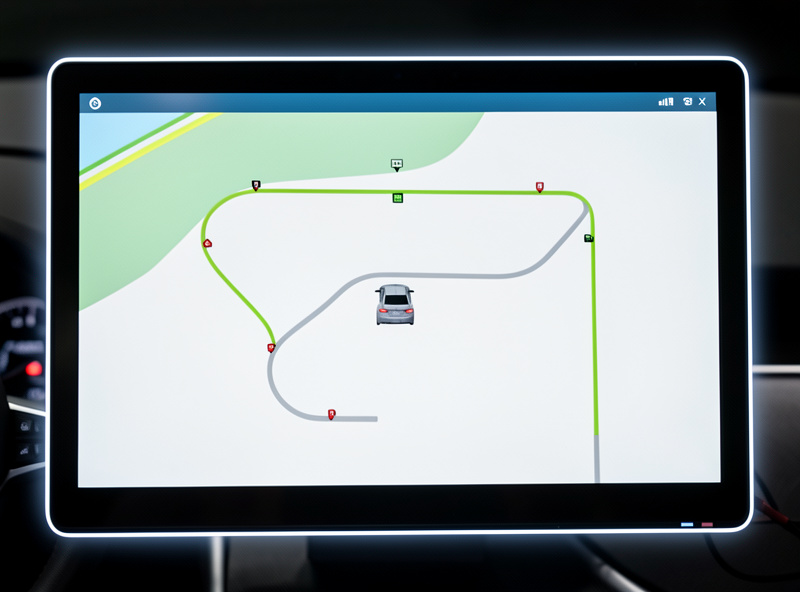
Add a turn-in reference and an apex reference per corner and your consistency jumps immediately. Once you have three fixed points for a corner, improving it becomes a controlled experiment: brake five metres later at the same marker, see if the corner still works, keep it if it does. That is how you find time deliberately instead of by accident, and it is the seed of the consistency training that wins races later.
Slow In, Fast Out
The most counterintuitive lesson for a beginner is that carrying less speed into a corner usually makes you faster, because it lets you get on the throttle earlier on the way out. Exit speed carries all the way down the following straight, so a clean, early-throttle exit beats a heroic entry that leaves you fighting the car and waiting to accelerate. Prioritise the exit and the lap times come down.
In practice this means resisting the urge to brake too little. Get the car slowed and rotated so that at the apex it is already pointed down the next straight, then unwind the wheel and feed the throttle in progressively. Stab the throttle with the wheel still turned and you spin — that single mistake ends more beginner races than anything else. The smooth version feels unspectacular and is reliably quicker, a pattern that holds right up through the corner entry and apex work.
Racing Other Cars: Survive First, Pass Later
Your first races should have one goal — finish without causing a crash — and that is a real racecraft skill, not a consolation prize. Leave a car’s width of room, expect the driver next to you to make mistakes, and accept that defending a position is not worth crashing both of you. Most positions in a beginner race are gained by other people making errors, so the patient driver who is still on track at the end climbs without doing anything dramatic.
Clean racing also protects your safety rating, which decides the quality of the lobbies you get into. Race dirty and you spend your career in chaotic, crash-filled servers; race clean and you graduate into fields where the racing is actually fun. The unwritten rules — one move to defend, give space on exit, do not dive into a gap that is closing — are worth learning before you need them, and the clean racing etiquette guide covers them properly. The overtaking mechanics come later, in the overtaking guide.
Use Replays and Telemetry From Day One
The habit that separates fast learners from stuck ones is reviewing their own driving instead of just feeling it. You do not need a degree in data — even watching a replay and comparing your line to a faster driver’s tells you most of what you need in your first month. Feel is unreliable: the inputs that feel fast are often slow, and an honest external readout cuts through that.
Start simple with the telemetry guide and a basic brake-and-throttle overlay, then fix one thing at a time. Find your single biggest time loss — almost always a brake zone — correct it, confirm it on the trace, and move to the next. Trying to fix everything at once fixes nothing, which is the same discipline the coaching and improvement guide is built around. Build this review habit early and you will keep improving long after the obvious gains are gone.
Frequently Asked Questions
What should a sim racing beginner learn first?
Clean, repeatable laps before fast ones. Aim for ten incident-free laps at about 90 percent pace, then add braking, fixed reference points, and throttle control in that order. You cannot build any skill on a car you keep crashing.
Why do I keep spinning out on corner exit?
You are getting to full throttle while the wheel is still turned. The grip available for acceleration shrinks the more the car is turning, so squeeze the throttle in progressively as you unwind the steering instead of stabbing it. This single fix ends most beginner spins.
Do I need expensive gear to learn racecraft?
No. Past a stable rig and ideally a load-cell brake, racecraft is a skill problem, not a hardware one. A load-cell brake is the one upgrade that genuinely helps a beginner because consistent braking is built on pressure, not pedal travel.
How do I stop my lap times from being so inconsistent?
Pick fixed reference points — a braking marker, a turn-in point, and an apex — for every corner and use the same ones every lap. Inconsistent laps almost always come from improvising each corner instead of repeating known references.
Should I focus on lap time or finishing races as a beginner?
Finishing clean races. Most positions in beginner races are gained when other drivers make mistakes, so being patient and still on track at the end climbs you up the order while protecting your safety rating and lobby quality.
How important is reviewing replays or telemetry early on?
Very. Reviewing your own driving instead of just feeling it is the habit that separates fast learners from stuck ones. Even comparing your replay line to a faster driver’s, or reading a simple brake-and-throttle overlay, reveals your biggest time losses.