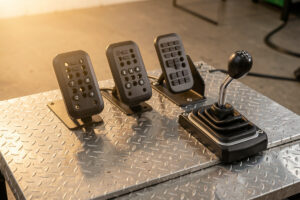
Throttle and clutch tuning is the pedal work almost everyone skips, and it quietly costs corner-exit speed and clean starts. The throttle needs a linear, well-calibrated response and enough resistance to modulate finely; the clutch needs an accurate bite-point calibration so launches are repeatable. Neither uses a load cell, but both reward the same careful setup you give the brake — and it’s the easiest lap time most people are leaving on the table.
People pour hours into brake tuning and then leave the throttle at whatever the software shipped with. I did too, for a long time. Then I realized a chunk of my corner-exit wheelspin wasn’t a car-setup problem at all — it was throttle modulation, and my pedal gave my ankle nothing to push against. Fixing that was almost free. Here’s the throttle and clutch work that actually moves the needle.
Why Does Throttle Tuning Matter for Corner Exit?
Throttle tuning matters because corner exit is won by feeding power precisely to the edge of traction, and a poorly set throttle makes that guesswork. If the pedal is too light, too short, or has a non-linear response, your foot can’t meter the last few percent of throttle where wheelspin lives. Good throttle setup turns exit from a gamble into a controllable input.
The mistake is treating the throttle as an on/off pedal. It isn’t — the difference between a clean exit and lighting up the rears is often a few percent of pedal, applied smoothly. On a light, travel-limited stock throttle, my foot had no fine control in that zone, so I’d either short-shift the power or spin up. The car-setup menu got blamed for a pedal problem. Once I could actually modulate the throttle, a lot of “the car won’t put power down” complaints simply evaporated.
This is why I treat the throttle as part of the whole pedal tuning system, not an afterthought. You’ve dialed the brake to hold threshold; give the throttle the same respect and your corner exits get just as repeatable.
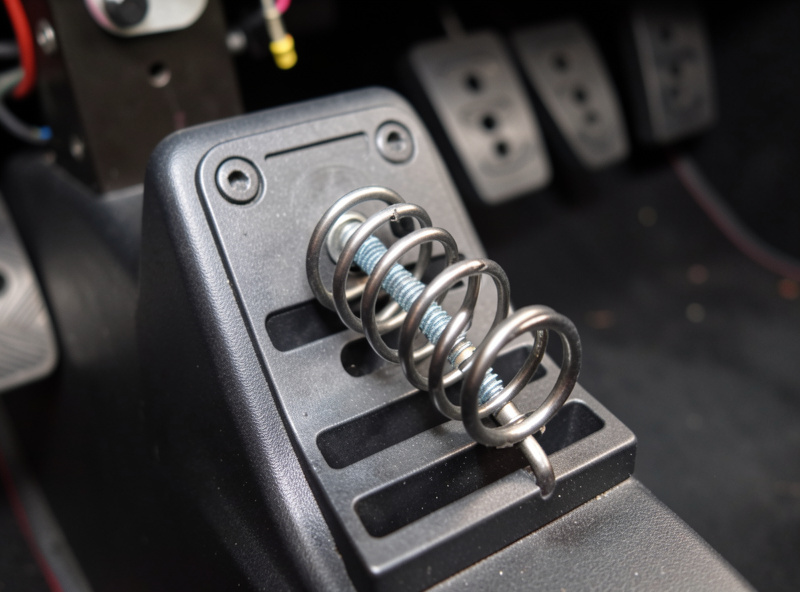
Should I Add a Spring to My Throttle Pedal?
Yes, for most people — adding resistance to the throttle gives your ankle something to push against, which makes fine modulation dramatically more consistent. A light throttle with almost no resistance floats, and your foot can’t feel small movements; a firmer spring or elastomer gives a reference so you can hold a precise partial throttle on corner exit.
I added a spring to my throttle specifically for this, and it was one of those changes that felt small and mattered a lot. With resistance, my foot has a proportional sense of how far I’m in — more force means more throttle, the same way the brake works. Holding 80% cleanly on exit stopped being a balancing act. The sensation is subtle but real: the pedal now pushes back in proportion to input, so my ankle can meter it instead of hunting.
You don’t need much — a modest spring or a soft elastomer is enough to kill the float. Overdo it and the pedal gets tiring over a stint, so tune the resistance to something you can hold comfortably all race. It’s a cheap, quick mod in the same spirit as the DIY brake pedal mods.
What Should My Throttle Curve Be?
Keep the throttle curve linear as your default, exactly like the brake. A linear throttle means what your foot does is what the car gets, which is the most predictable and easiest to learn. Only add a curve to solve a specific problem — for example, softening the bottom slightly on a very high-powered car where the first bit of throttle is too aggressive for traction.
The temptation to curve the throttle usually comes from the same place as curving the brake: masking a hardware or technique issue. If your exits are spinny, first check that you have enough pedal resistance to modulate, before you reach for a software curve. In most cars, linear plus a decent spring solves it. When I have curved a throttle, it’s been a gentle softening of the initial 10% on a monster-power car to make the traction limit easier to feel — small, deliberate, and per-car.
The same per-title logic from the brake curve tuning applies: different sims and cars can want slightly different throttle response, so save profiles rather than fighting one global setting.
How Do I Calibrate a Clutch Bite Point?
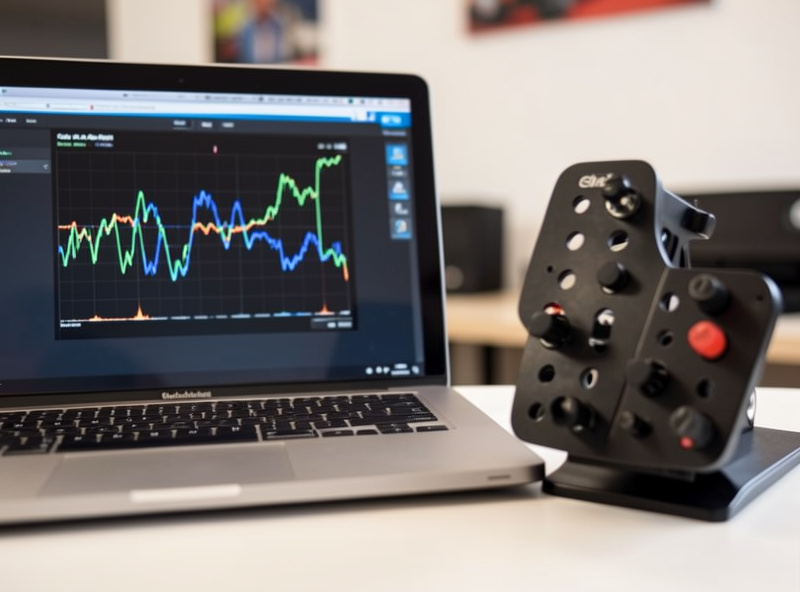
Calibrate the clutch bite point by finding the exact pedal position where the clutch starts to engage and setting your launch technique around it — many sims and dual-clutch setups let you define that point so your standing starts are repeatable. A well-calibrated bite point turns race starts from a lottery into something you can nail consistently.
Standing starts used to be my weak spot — sometimes a rocket, sometimes bogged, with no idea why. The fix was calibrating the bite point precisely and then practising the same launch against it. If you run dual-clutch paddles, you set the bite so releasing one paddle to a known point puts the car right on the edge of grip. Once that point is dialed and consistent, launching becomes muscle memory instead of a guess. It’s the single biggest thing you can do for your starts.
The calibration lives in your pedal or sim software depending on setup, and it’s worth an afternoon of practice starts to lock in. Repeatable hardware plus a repeatable technique is the whole recipe — the same principle that makes brake threshold consistent makes launches consistent.
Do I Even Need a Clutch Pedal?
For most sim racing, you don’t strictly need a clutch pedal — paddle upshifts and auto-clutch launches cover the majority of racing. But if you run an H-pattern shifter for older cars, do manual standing starts, or want dual-clutch launch control, a clutch pedal is genuinely worth having. It’s a firsthand “depends on how you race” answer, not a universal must-buy.
I own and use a clutch pedal alongside my H-pattern and sequential shifters, so I can speak to it directly: for the historic and road cars I enjoy, heel-and-toe and proper clutch work are part of the fun and the immersion. For pure modern GT and formula racing with paddles, I could live without it. So the honest verdict is that the clutch pedal earns its place if your driving includes manual gearboxes or you care about optimal launches — otherwise it’s optional.
Here’s how I think about tuning goals for the two pedals people neglect:
| Pedal | Main tuning goal | Key adjustment | Pays off in |
|---|---|---|---|
| Throttle | Fine modulation on exit | Add resistance; keep curve linear | Corner-exit traction |
| Clutch | Repeatable launches | Calibrate the bite point | Standing starts |
How Does Pedal Spacing Affect Heel-and-Toe?
If you run an H-pattern shifter and want to heel-and-toe, the horizontal spacing and height offset between the brake and throttle decide whether it’s even possible. The throttle needs to sit close enough, and at a height where rolling the side of your foot onto it while braking is natural — get the spacing wrong and heel-and-toe becomes a contortion instead of a rhythm.
On my rig I nudged the throttle inboard and matched the pedal faces so that blipping the throttle mid-braking is a smooth roll of the foot, not a lunge. Most pedal sets let you move pedals horizontally on the base plate; a printed spacer can fine-tune the height offset if the stock adjustment isn’t enough. It took a few sessions of trial to find the spacing that felt right, but once it clicked, downshifts got smoother and my braking stayed stable because my foot wasn’t leaving the brake to reach.
Should I add a spring to my sim throttle pedal?
For most people, yes. Adding resistance gives your ankle something to push against, which makes fine throttle modulation on corner exit far more consistent. A light throttle with almost no resistance floats and hides small movements. Use a modest spring or soft elastomer, tuned to something you can hold comfortably for a full stint.
Should my throttle curve be linear?
Keep it linear as the default, like the brake, so what your foot does is what the car gets. Only add a curve to solve a specific problem, such as gently softening the first ten percent on a very high-powered car where initial throttle overwhelms traction. Check that you have enough pedal resistance before reaching for a curve.
How do I calibrate a clutch bite point for launches?
Find the exact pedal position where the clutch starts to engage and set your launch technique around it. Many sims and dual-clutch setups let you define that point so releasing a paddle to a known position puts the car on the edge of grip. Calibrate it precisely, then practise the same launch until it becomes muscle memory.
Do I need a clutch pedal for sim racing?
Not strictly. Paddle upshifts and auto-clutch launches cover most racing. But a clutch pedal is worth having if you run an H-pattern shifter for older cars, do manual standing starts, or want dual-clutch launch control. It earns its place if your driving includes manual gearboxes or you care about optimal launches; otherwise it is optional.
What I’d Do Starting Today
Give your throttle five minutes of the attention you give the brake. Add a little resistance so your ankle has something to meter against, keep the curve linear, and go feel how much cleaner your corner exits get. If you run a clutch, calibrate the bite point and drill a dozen standing starts — you’ll find easy time and clean getaways you were leaving on the table.
The throttle and clutch are the last pieces of the pedal-box picture. With the brake dialed — force ceiling, elastomer stack, and solid bracing — and the throttle and clutch set up too, you’ve got a complete, consistent pedal box. See how it all fits together in the brake pedal tuning hub.
Related: