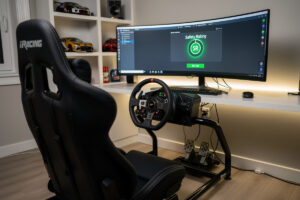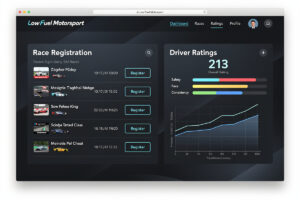
Low Fuel Motorsport (LFM) is a free third-party platform that gives Assetto Corsa Competizione iRacing-style competitive matchmaking — ELO ratings, safety scores, structured seasonal championships, and hourly races across multiple skill splits. I’ve spent three seasons in their GT3 series running mid-splits on my direct-drive rig, and the racing quality holds up against iRacing’s official series at zero subscription cost.

ACC’s built-in multiplayer is a free-for-all — public servers have no structure, no matchmaking, and no consequences for the guy who divebombs turn one and disappears. LFM fills that gap completely. The platform runs entirely through a lightweight companion app that handles server connections, race registrations, and rating tracking. You register once, link your Steam account, and you’re racing in organized splits within the hour. LFM isn’t a small side project anymore either — the platform passed 200,000 registered users across the sims it supports, and on ACC alone the European evening splits regularly fill four or five grids. On my welded rig with a direct-drive base and load-cell pedals, the difference between a random public lobby and an LFM split-one grid is night and day — the field stays cleaner, the FFB tells a more honest story because drivers actually hold their lines, and you can trust the braking zone enough to lean on the equipment.
Setting Up Your LFM Account
Registration at lowfuelmotorsport.com requires a Steam account linked to your ACC installation. Visit the site, click Register, and authorize the Steam connection — the system detects your ACC installation automatically and builds your driver profile. The whole process takes about five minutes.
Next you download the LFM app, a lightweight client that runs alongside ACC. It handles server connections, race registrations, and rating tracking without chewing CPU cycles that should be pushing frames to your monitors. After installing it, launch ACC through the app at least once so the client verifies your game installation and syncs your driver data with the LFM servers. Set your preferred car class — GT3 or GT4 — select your time zone, and configure notification preferences for upcoming race sessions.
Your initial ELO rating starts at 1,500 and adjusts across your first ten placement races. The algorithm uses a modified Elo system that weights the strength of your opposition — beating higher-rated drivers earns more points than beating lower-rated ones. I treat placement races like a practice session: I’m not hunting for wins, I’m focused on clean laps and finishing position. A safe P8 in your first five races lands you in a higher split than a DNF from an ambitious overtake on lap one. The mechanics are familiar if you’ve run iRacing — the same basic logic, just free — but the ACC-specific detail is how tightly the GT3 field packs up. The pace gaps are smaller than on iRacing’s GT3 side, so qualifying consistency matters more. I run my ACC car choice locked in before placement week — swapping cars mid-placement just scatters your pace data.
How LFM Ratings Work
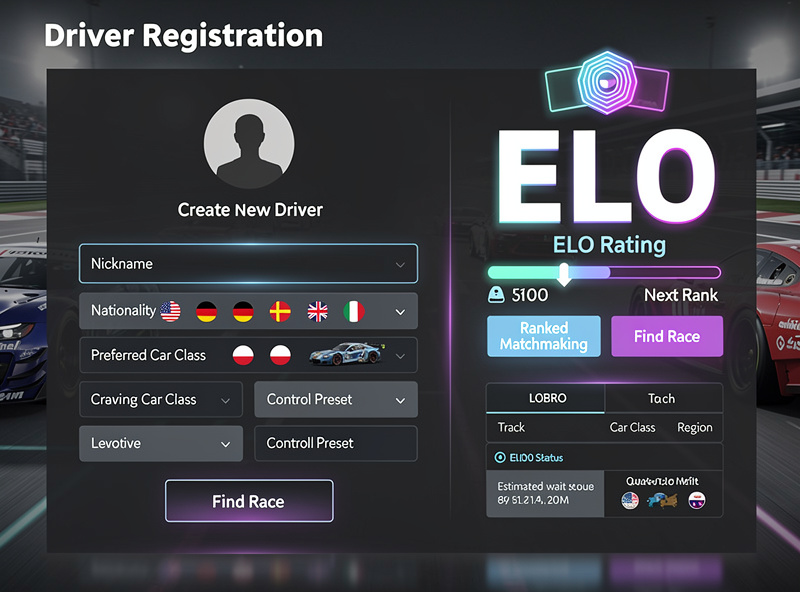
LFM uses two separate ratings that update after every official race: ELO for competitive performance and a Safety Score for clean driving. The ELO rating works like a traditional chess rating — you gain points for finishing ahead of higher-rated opponents and lose points for finishing behind lower-rated ones. A typical race awards or deducts 15 to 30 ELO points depending on the strength of the field. On my direct-drive base, I feel the ELO pressure physically: higher-split races reward you with a cleaner field that actually respects the braking zone, which means the FFB through the wheel stays consistent corner to corner instead of spiking every time someone uses you as a bumper.
The Safety Score tracks your incident rate across races. Clean races with minimal off-tracks and contacts raise it; races with frequent incidents drop it. The Safety Score determines eligibility for certain series and affects split placement when multiple splits share similar ELO ranges. A high Safety Score gates you into cleaner racing environments with more experienced drivers — this is the real currency on LFM, more than ELO. I’ve watched drivers with middle-pack pace but a 7.0+ safety rating get into grids where the racing is genuinely respectful, while 1,600-ELO drivers with a 3.5 safety score fight for survival every lap.
Casual races and practice sessions do not affect your ratings — so you can experiment with new cars, test setups, and learn tracks in non-ranked environments without risking your competitive standing. This freedom to practice without consequences is one of the platform’s best features. The separation between competitive and safety ratings also means you can be fast but aggressive (high ELO, low Safety) or slow but clean (low ELO, high Safety), and the system matches you with appropriate opponents based on both metrics. Over a full season, most drivers find both numbers settle at a level that reflects their actual pace and racecraft — not their best single lap, but their average race execution.
Racing in LFM Seasons
LFM seasons run for six weeks with races scheduled multiple times per week at different tracks. Each season features a specific car class — GT3 and GT4 run separate seasons with independent championship standings. Races are 20 to 45 minutes long with optional mandatory pit stops depending on the event format. The six-week cadence is shorter than iRacing’s 12-week seasons, which means the championship resets faster and you’re never stuck in a dying season for two months.
Championship points accumulate across all races, not just your best results. This rewards consistent participation over occasional strong finishes, and missing a race means zero points for that round — which can wreck your championship standing in a six-week sprint. I plan my season schedule in advance and commit to racing at least four of the six weeks. The rig stays dialed in for whichever car I’m running that season, because swapping between a GT3 Bentley and a GT4 Porsche mid-season means you’re chasing two different FFB profiles and two different brake curves.
Each race session has a practice window, a qualifying session, and the main race. Practice typically opens 15 to 30 minutes before qualifying, and your qualifying time determines grid position. Consistent qualifying is important because starting from the front reduces first-lap incidents and gives you clean air to establish your pace. On my rig, I use the practice window differently from how I practice offline — I’m checking tire pressures against the track temperature that session, not grinding laps. The track-specific knowledge should already be banked before race day.
How the Rig Setup Matters for LFM Racing

LFM racing demands more from your equipment than hot-lapping offline. In a 20-minute race with 25 cars on track, your rig needs to communicate what the rear tires are doing at turn exit while there’s a car half a second behind you. A wobbly desk mount or a gear-driven wheelbase that masks fine slip-angle detail is a genuine competitive disadvantage in a split where half the field is on direct-drive and load-cell hardware.
The welded steel rig I built — the same MIG welder that built the boat trailer — is torsionally rigid under heavy braking, which means the load-cell pedal set reads brake pressure consistently lap after lap. Frame flex under a 60 kg brake press doesn’t just feel bad; it introduces inconsistency into your trail-braking that compounds across a full race distance. On my rig, the brake curve stays predictable from lap one to lap 20 because the pedal box doesn’t move. That predictability is worth more tenths than any car setup tweak.
The wired low-latency link from my sim PC through the OPNsense router is another piece of the puzzle. LFM races run on European servers, and any packet loss or jitter in your connection translates directly to cars warping in braking zones — which destroys the trust you need to race wheel to wheel. Wi-Fi has no place in a competitive sim racing setup. A stable wired connection with sub-30 ms ping to the LFM servers is baseline equipment, not a luxury, and I treat it the same way I treat tire pressures: checked and confirmed before every session.
LFM vs iRacing: Direct Comparison
I run both platforms, so this comparison isn’t theoretical — it’s what actually shows up on my rig week to week. iRacing’s official annual membership runs $110/yr before content, against LFM’s zero-dollar entry fee on top of the ACC purchase you’ve probably already made.
| Feature | Low Fuel Motorsport | iRacing |
|---|---|---|
| Cost | Free (ACC base game only) | $110/yr subscription plus content |
| Matchmaking System | ELO + Safety Score | iRating + Safety Rating |
| Season Length | 6 weeks | 12 weeks |
| Race Frequency | Every hour during peak times | Every hour |
| Car Selection | GT3 and GT4 | 100+ across all disciplines |
| Track Roster | 25 circuits from ACC (base + DLC) | 100+ tracks |
| Player Base | 200,000+ registered (LFM, all sims) | 100,000+ active subscribers |
| GT3 Physics Quality | Superior — ACC’s tire and aero model | Good, continually improving |
| FFB Detail | Higher per-title fidelity on direct-drive | Consistent across all content |
| Report System | Community stewards, 24-48h review | Automated + human protest system |
Tips for Success on LFM
Focus on finishing races cleanly during your first season. Your ELO and Safety Score stabilize at your true level after 15 to 20 races, and aggressive driving in early races creates a low Safety Score that takes many clean races to recover — I’ve been through that cycle and the climb back is slow. Prioritize survival over results in your first ten races, and let the ratings find you rather than hunting them.
Use the practice session before each race to dial in your setup and find a consistent pace. The practice window opens well before qualifying, giving you time to adjust tire pressures, brake bias, and traction control settings for the specific track and conditions. I don’t chase hot laps during practice — I find a sustainable pace I can hold for the full race distance, because LFM results are decided by race execution, not qualifying glory. The driver who turns consistent 1:48.2s for 25 minutes beats the one who can hit a 1:47.5 once and then bleeds time everywhere else.
Practice each track before the scheduled race day. LFM publishes the season calendar in advance so you know which circuits are coming. I spend at least one hour practicing each track before race day, focusing on consistent lap times rather than peak speed — the same approach I take when building a track-by-track ACC practice routine. Consistency over 20 to 45 minutes of racing produces better results than occasional fast laps mixed with mistakes. On a circuit like Spa or Monza where the draft pulls cars together, your race pace matters far more than your qualifying lap.
Join the LFM Discord for community interaction, setup sharing, and post-race discussion. The Discord is active and welcoming to new drivers, with channels for each car class, track-specific tips, and general sim racing conversation. Many LFM regulars share car setups that are faster than the default aggressive preset, and the community helps with technical issues. The report system is community-stewarded — if someone ruins your race with intentional contact, you can file a report with replay evidence and the stewards review it within 24 to 48 hours. I’ve filed two reports across three seasons and both were resolved fairly, which is a better hit rate than most public-server moderation.
Frequently Asked Questions
Is Low Fuel Motorsport free?
Yes. LFM is completely free. You need only the base Assetto Corsa Competizione game (typically $40 on Steam) and a free LFM account. There are no subscription fees, content purchases, or hidden costs — zero recurring spend.
How do I join LFM races?
Register at lowfuelmotorsport.com, download the LFM app, link your ACC profile, and register for races through the app. Races appear in the server browser 15-30 minutes before the scheduled start time.
What skill level do I need for LFM?
LFM welcomes all skill levels. The ELO system matches you with similarly skilled drivers — beginners race beginners, experts race experts. Your placement races determine your starting split, and both ratings adjust after every official race.
Can I race LFM with any car?
LFM seasons specify a car class (GT3 or GT4). You can use any car within the allowed class. Check the season rules in the LFM app for specific car eligibility — some seasons restrict certain DLC cars.
How many splits does LFM run?
During peak European evening hours (6-10 PM CET), LFM typically runs 3 to 5 splits per race with 20 to 30 drivers each. Off-peak hours may have 1 to 2 splits with wider skill ranges. Weekend evening slots are the most populated.
Does LFM have a protest and report system?
Yes. LFM uses community stewards who review incident reports with replay evidence. Reports are typically resolved within 24 to 48 hours. Penalties range from Safety Score deductions to temporary bans for repeated intentional contact.
Related Articles
- Assetto Corsa Competizione: The Complete GT3 Guide — full platform overview and setup
- ACC Multiplayer Guide: Public, LFM, and Private Servers — all multiplayer options compared
- Best Cars in ACC for Beginners: GT3 and GT4 Picks — choose the right car for LFM seasons
- ACC Track Guide: Every Circuit Ranked by Difficulty — learn the tracks before race day
- iRacing vs ACC: Which Sim Is Right for You? — compare LFM with iRacing’s built-in system