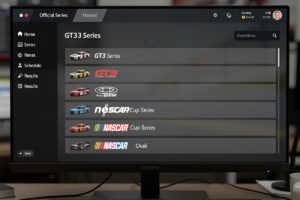
ACC multiplayer gives you three real options: public servers for drop-in racing, Low Fuel Motorsport (LFM) for structured matchmaking with ELO ratings, and private leagues for organized community seasons. LFM is the one I spend the most time in — it delivers iRacing-style competitive splits at zero subscription cost, and the racing quality holds up even on nights when the public lobbies turn into bumper cars. If you want to know which ACC multiplayer path fits your schedule and skill level, here is exactly how each one works on the rig I run.
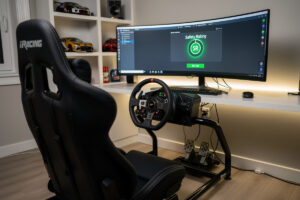
I race ACC on a DIY welded-steel rig with a direct-drive base and load-cell pedals, and the multiplayer experience varies enormously depending on which platform you use. Public servers are accessible but unpredictable — race quality depends entirely on who joins your session, and there is no skill matching to protect a clean qualifier from a first-corner divebomb. LFM delivers consistently competitive racing with skill-based splits, safety ratings, and six-week championship seasons that give you a reason to keep logging laps. Private leagues offer the most organized experience with custom rules, stewarding, and dedicated community interaction. Understanding each option helps you find the racing that matches your commitment level and your hardware — because how your rig connects to the server matters as much as which server you pick.
Public Servers: The Drop-In Option and What to Expect

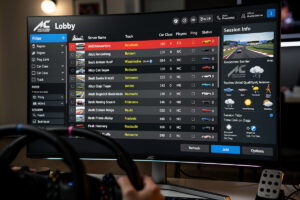
ACC’s built-in public server browser lists hundreds of active sessions at any time. Servers are organized by car class (GT3, GT4, mixed), track, and session type (sprint, endurance, hotlap). Most public servers run 15 to 20-minute sprint races that start every hour on the hour. Joining a session is as simple as selecting a server and clicking join — no registration, rating, or commitment required.
The quality of public server racing varies enormously. Look for servers that display safety rating requirements or show active admin status in the server description. These indicators suggest a moderated environment with consequences for reckless driving. Some servers attract experienced drivers who race cleanly and competitively, while others devolve into first-lap chaos with reckless driving and intentional contact. The absence of skill matching means you might race alongside someone with 10,000 hours of experience and someone who bought the game yesterday. This unpredictability is the main limitation of public servers.
Several community-moderated public servers maintain higher racing standards through kick and ban systems for reckless driving. These servers typically require a minimum safety rating or have active admins who monitor race behavior. Finding and bookmarking these quality servers is the best way to enjoy ACC’s public multiplayer without the frustration of unmoderated chaos. I keep a shortlist of three or four ACC community servers that reliably attract clean drivers, and I default to those when I only have 30 minutes and want a quick race without the chaos.
Low Fuel Motorsport (LFM): Competitive Racing That Actually Matches Your Skill

Low Fuel Motorsport (LFM) is the largest third-party competitive platform for ACC, and it is not a niche add-on anymore — the platform passed 200,000 registered racers across all the titles it supports, with structured seasons, ELO ratings, and safety scores. LFM is completely free — you need only a Steam account and the base ACC game. Registration at lowfuelmotorsport.com takes five minutes and immediately grants access to ranked races that run every hour across multiple skill splits. For a driver like me who splits time between ACC and iRacing, LFM is the reason ACC multiplayer stays competitive on nights when I want structured racing without opening the iRacing launcher.
LFM’s matchmaking system groups registered drivers into splits based on their ELO rating. Higher-rated drivers race against each other in the top split, while beginners compete in lower splits with similarly skilled opponents. This produces racing quality comparable to iRacing’s official series without the subscription fee. The safety score tracks clean driving behavior separately from competitive performance, rewarding drivers who avoid incidents. On my direct-drive base, the FFB through LFM races feels identical to offline practice — I have never felt a netcode-induced clipping event that I could pin on the platform, and the connection quality stays consistent across splits.
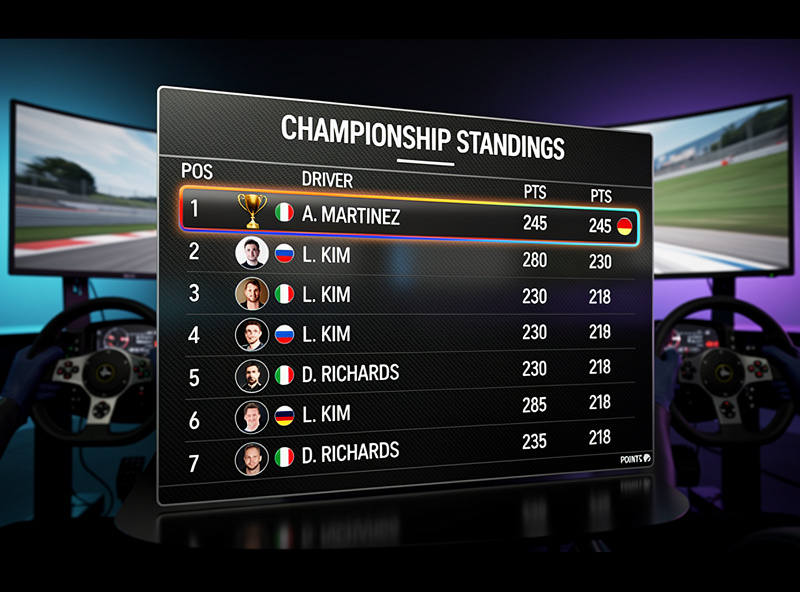
Seasons on LFM run for six weeks with multiple races per week at different tracks. Each race awards points based on finishing position, and the cumulative championship standings create ongoing rivalries and competition that individual public server races cannot provide. The seasonal format encourages consistent participation and rewards drivers who improve steadily across the championship. Championship standings track cumulative points across the season, and the top finishers in each split earn recognition on the LFM leaderboard. For a deeper dive into LFM registration, split strategy, and how to climb the ELO ladder efficiently, the full ACC LFM guide walks through every step.
Private Leagues and Community Racing
Private leagues offer the most organized ACC racing experience outside of professional esports. Platforms like The Sim Grid, Apex Online Racing, and dozens of community Discords run structured championships with custom rules, mandatory pit stops, weather settings, and stewarding. Most leagues welcome drivers of all skill levels and organize multiple splits to ensure competitive racing for everyone. I have raced a few private league seasons, and the difference between a stewarded league race and even a clean LFM sprint is the post-race incident review — knowing someone actually reviews the contact changes how people drive into turn one.
League racing differs from public and LFM racing in several important ways. Leagues typically require registration and commitment to a full season schedule, with penalties for missing races. Many leagues use custom BoP (Balance of Performance) settings, mandatory driver briefings, and post-race stewarding to resolve incidents. The higher level of organization produces cleaner and more consistent racing than any public platform. If you want the most structured experience without the iRacing subscription model, a well-run sim racing league is the right answer — the commitment is real, but so is the racing quality.
Finding the right league is essential for long-term enjoyment. Check the league’s schedule to ensure it fits your time zone and availability. Review their rules and penalty system to ensure they match your racing philosophy. Most importantly, join their Discord and participate in community events before committing to a full season — the social atmosphere of a league matters as much as the racing itself.
Your Network Matters: Latency and Wired Connectivity for ACC Multiplayer
The fastest lap time means nothing if your connection drops mid-race or your inputs lag behind the server. ACC’s netcode is sensitive to latency spikes, and the single biggest improvement you can make to your online racing experience — before touching a single car setup — is running a wired Ethernet connection to your sim PC. I run an OPNsense router with a dedicated wired link to the rig, and the difference between that and Wi-Fi is measurable in the telemetry overlay. The same wired setup that segments my IoT VLAN puts the sim PC on a low-latency path — Wi-Fi is for laptops, not for racing.
Packet loss and jitter affect ACC multiplayer more than raw bandwidth. A stable 10 Mbps wired connection produces cleaner racing than a 500 Mbps Wi-Fi connection with intermittent spikes. If you see cars warping or feel input delay that does not appear in offline practice, your connection is the first thing to check. ACC’s server browser displays ping to each server — anything under 50 ms is excellent, 50 to 100 ms is playable, and above 150 ms starts producing visible netcode artifacts. The sim racing internet setup guide covers the full latency stack, from router QoS to ISP selection, but the short version is: wire the rig, close background downloads, and pick servers within your geographic region.
Tips for Better Online Racing
Choose your server based on your experience level and available time. If you have 30 minutes, join a sprint server with short races. If you have two hours, look for endurance servers or LFM scheduled events. Matching your available time to the session length prevents you from disconnecting mid-race, which affects your safety rating on competitive platforms and disrupts other drivers’ experiences.
Practice a track thoroughly before entering an online race. Being consistently fast is less important than being consistently predictable. Drivers who follow the same racing line lap after lap are safer to race alongside than fast drivers who brake at different points each lap. Spend at least 30 minutes in practice mode learning the track, curbing, and braking zones before joining a competitive session. The sim racing racecraft guide covers the full skillset, but the principle is simple: predictability earns you cleaner racing than raw pace.
Use the radar and HUD elements to track cars around you. ACC’s radar display shows vehicles in your immediate vicinity, helping with spatial awareness during close racing. The relative timing gap display shows how far ahead and behind nearby cars are, which helps with planning passes and defending. These tools are essential for avoiding contact in tight racing, and I keep my radar in the same screen position across both ACC and iRacing so the visual scan becomes automatic.
Qualify well to avoid first-lap incidents. A good qualifying lap puts you at the front of the grid where the first corner is less chaotic. Starting from the front of the grid reduces the chaos of pack racing and gives you clear track to establish your pace. If you qualify poorly, drive conservatively on the first lap and let the aggressive drivers eliminate themselves. Surviving the first lap cleanly is worth more than gaining two positions through risky moves. This is the single most important clean racing etiquette habit that separates drivers who finish seasons from those who spend them in the pits.
Treat your safety rating as a resource, not a score. On both LFM and ACC’s built-in rating system, a higher SR unlocks better servers with cleaner racing. The fastest way to build safety rating is finishing races cleanly, not winning them. Drive within your limits, leave space, and let the divebombers pass — your SR compounds across races and opens doors that raw pace alone cannot unlock.
Review your own replays after a messy race instead of just blaming the other driver. ACC saves session replays automatically, and I run mine back at half-speed through the incident before deciding whose fault it actually was — more often than I would like to admit, I was carrying too much speed into a braking zone I had no business attacking three-wide. The same telemetry overlay I use to catch FFB clipping in practice also shows brake trace and throttle input frame by frame, which makes it obvious whether a contact was a defending move gone wrong or genuinely someone else diving in from nowhere. Do this consistently and your own racecraft improves faster than any amount of watching pro onboards.
Frequently Asked Questions
Is ACC multiplayer free?
Yes. ACC multiplayer is free with the base game purchase. Public servers, Low Fuel Motorsport, and most private leagues are free. There is no subscription fee for online racing in ACC.
How do I join Low Fuel Motorsport in ACC?
Register at lowfuelmotorsport.com with your Steam account. Download their app, link your ACC profile, and join ranked races through their server browser. Registration takes under 5 minutes and is completely free.
How many people play ACC online?
ACC typically has 2,000 to 5,000 concurrent players on Steam. Low Fuel Motorsport (the platform ACC racers use most) has passed 200,000 registered racers across all the sims it supports. Peak times are European evenings (6 to 10 PM CET) when multiple LFM splits run simultaneously.
Can you race ACC online with friends?
Yes. You can create private lobbies for friend-only racing, join the same public server, or register together on LFM or a league. Most platforms allow team registrations for endurance events where friends share the same car.
Does ACC multiplayer require a wired internet connection?
A wired Ethernet connection is strongly recommended. ACC’s netcode is sensitive to latency spikes and packet loss. Wi-Fi introduces jitter that causes visible car warping and input lag even on fast connections. A stable wired link produces consistently cleaner racing.
Is ACC or iRacing better for online racing?
iRacing has better built-in competitive infrastructure with official series and automatic matchmaking. ACC requires third-party platforms like LFM for similar competition. However, ACC’s LFM provides comparable racing quality at zero ongoing cost versus iRacing’s subscription expense.
Keep Reading: More ACC and Online Racing Guides
- Assetto Corsa Competizione: The Complete GT3 Guide — full platform overview
- ACC LFM Guide: Competitive Racing on Low Fuel Motorsport — detailed LFM setup and strategy
- Best Cars in ACC for Beginners: GT3 and GT4 Picks — choose the right car for online racing
- Best Sim Racing Leagues and Series — find the right community
- Sim Racing Racecraft Guide — skills for cleaner, faster online racing