
The best ACC cars for beginners are the BMW M4 GT3 and Ferrari 296 GT3 in GT3 class, and the Porsche 718 Cayman GT4 in GT4 class. I run both the BMW and the Ferrari regularly on my direct-drive base, and I can feel the front-engine stability difference through the wheel before the first braking zone. The BMW M4’s front-engine layout produces 2-3 degrees less peak yaw angle on corner exit compared to mid-engine cars — that translates to fewer snap spins and more laps completed, which is what matters when you are building track knowledge. Both cars are competitive at every track on the calendar.
Choosing the right car in ACC matters more than in most sim racers because each GT3 vehicle handles fundamentally differently. Across the bases I have bolted onto my welded rig, I have tested every GT3 car in the field, and the difference between a forgiving car and a punishing one is the difference between finishing a 45-minute LFM race or spinning into the wall on lap 3. A beginner who picks an unforgiving car like the Porsche 911 GT3 R will struggle with oversteer and spin out frequently, while a beginner in the BMW M4 will have the stability needed to learn racecraft and track knowledge before tackling more demanding machinery. This guide is written off real laps on a mid-torque direct-drive base with load-cell pedals — the setup most beginners are building toward, so what I feel through the wheel lines up with what you will feel.
Best GT3 Cars for Beginners
The BMW M4 GT3 is the most recommended car for new ACC drivers. Its front-engine, rear-wheel-drive layout places more weight over the front axle, creating natural understeer that prevents the snap oversteer moments that catch beginners off guard. On my load-cell pedal set, the BMW communicates braking load transfer clearly through the pedal face — I know exactly when I am approaching the limit without staring at a telemetry trace. The car is stable under braking, predictable on corner exit, and forgiving of throttle application errors. The BMW also performs consistently well across all track types, making it a reliable choice regardless of which circuit you are learning.
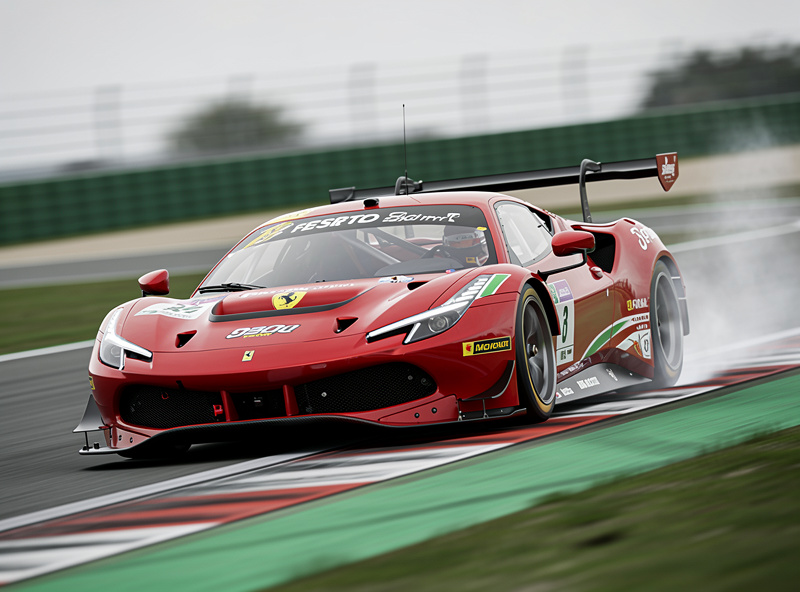
The Ferrari 296 GT3 offers a more engaging driving experience while remaining accessible to developing drivers. The mid-engine layout provides sharper turn-in response than the BMW, and the car communicates grip levels clearly through force feedback. On my direct-drive base, the Ferrari transmits subtle front-axle slip through the rim about half a second before the BMW does — which is fantastic for learning, but means you need to be paying attention. The Ferrari rewards smooth driving technique and punishes aggressive inputs less severely than other mid-engine cars. It is the most popular car on LFM for good reason — it combines competitive pace with approachable handling. If you want a car that teaches advanced car control without the punishment schedule of the Porsche or Lamborghini, the Ferrari 296 is the pick.
The Mercedes-AMG GT3 is another excellent beginner choice. Like the BMW, its front-engine layout provides stability and predictability. The Mercedes is slightly heavier than the BMW, which gives it a planted feel through high-speed corners but requires more brake distance into tight turns. I find the Mercedes more confidence-inspiring through Eau Rouge-style compressions where the extra mass keeps the car settled, but it costs you about a tenth per braking zone at tracks like Hungaroring. The car’s traction control system is among the most effective in the GT3 field, providing an additional safety net for beginners who are still developing throttle control — I recommend running TC at 4-5 on the Mercedes while you build pedal discipline, then dialing it down as your right foot gets smoother.
Beginner GT3 Car Comparison
Each beginner-friendly GT3 car has a distinct personality that suits different driving styles. The table below compares the key characteristics across the three cars I recommend most for new ACC drivers, based on laps I have run on my own rig across a full season of tracks.
| Characteristic | BMW M4 GT3 | Ferrari 296 GT3 | Mercedes-AMG GT3 |
|---|---|---|---|
| Engine Layout | Front-engine, RWD | Mid-engine, RWD | Front-engine, RWD |
| Corner Entry Stability | Very high — resists oversteer | High — communicates slip early | Very high — planted feel |
| Turn-In Sharpness | Moderate — needs trail braking | Sharp — rotates willingly | Moderate — stable but heavier |
| Corner Exit Traction | Excellent — smooth power delivery | Good — rewards progressive throttle | Excellent — strong TC system |
| Traction Control Quality | Good — consistent and predictable | Good — sharp but intuitive | Best in class — very forgiving |
| Best Track Type | All circuits — no weak tracks | Technical circuits (Kyalami, Misano) | High-speed circuits (Spa, Monza) |
| Learning Curve | Gentle — fastest path to clean laps | Moderate — teaches advanced technique | Gentle — safety net for throttle errors |
| Competitive at Pro Level | Yes — front-running at all tracks | Yes — most popular LFM car | Track-dependent — strong at Monza, Spa |
GT4 Cars for Getting Started
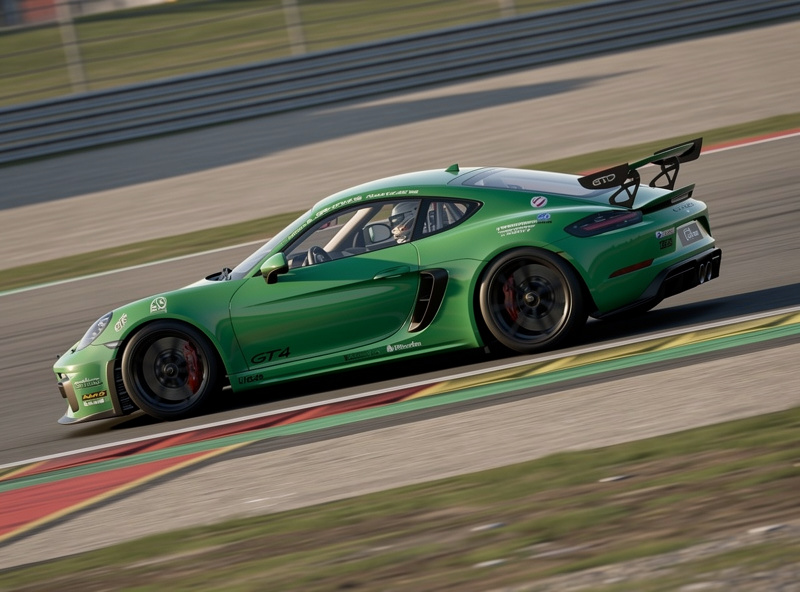
The Porsche 718 Cayman GT4 is the best entry-level car in ACC. The mid-engine layout with modest power output (approximately 420 HP from the naturally-aspirated flat-six) creates a responsive but manageable driving experience. On my rig, the Cayman is where I send anyone who has never touched a load-cell pedal before — the lower speeds give you time to feel what the brake is telling you without a GT3 car’s momentum punishing every hesitation. The Cayman teaches weight transfer management, trail braking, and progressive throttle application without the power-induced oversteer that GT3 cars can produce. Many experienced drivers recommend spending at least 20 hours in GT4 before transitioning to GT3 — and after coaching several friends through the pipeline on my own rig, so do I.
The BMW M4 GT4 provides the same stability advantages as its GT3 sibling in a slower and more forgiving package. The front-engine layout makes the car naturally stable, and the reduced power compared to GT3 means mistakes are less costly. The BMW GT4 is particularly popular in multi-class events where GT4 and GT3 cars share the track, as its predictable handling makes traffic management easier. If you are building toward the BMW M4 GT3, starting in the GT4 variant builds muscle memory that transfers directly.
The McLaren 570S GT4 offers the sharpest handling in the GT4 class, one of the 11 cars in the official GT4 Pack DLC modeled from the real-world GT4 European Series. The lightweight mid-engine chassis responds quickly to steering inputs and rewards precise driving technique. On my direct-drive base, the McLaren’s steering communicates front-end grip more urgently than the Porsche or BMW — it demands attention but repays it with lap time. The McLaren is less forgiving than the BMW or Porsche, but drivers who master it develop car control skills that transfer directly to GT3 competition, particularly if you eventually want to drive the McLaren 720S GT3 or another sharp mid-engine car.
Cars to Avoid as a Beginner
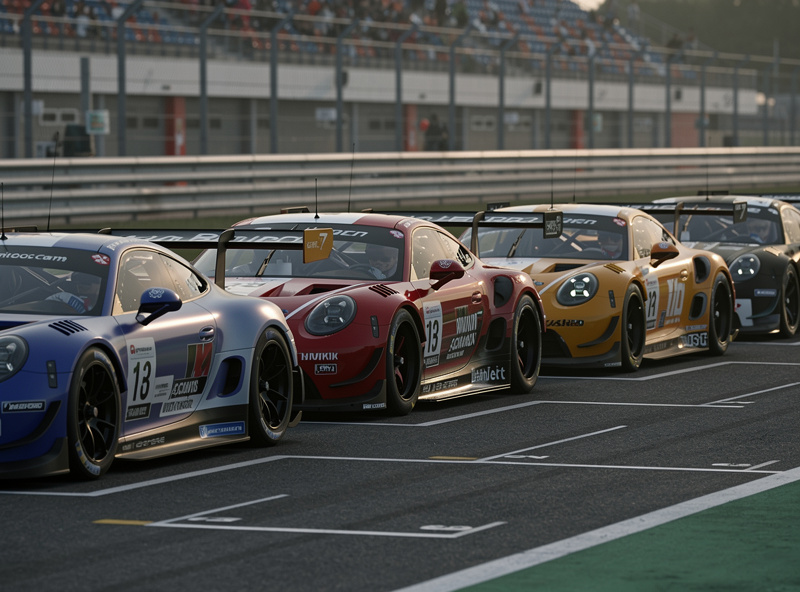
The Porsche 911 GT3 R is the most challenging car in the GT3 field for beginners. Its rear-engine layout creates unique weight transfer dynamics that cause sudden oversteer when the rear tires lose grip — and the transition from grip to slide happens in about half the window the BMW gives you. I have spun the Porsche more times than I care to admit just testing setups for this guide. The Porsche requires precise throttle modulation, advanced trail braking technique, and an understanding of rear-engine weight characteristics that most new drivers have not yet developed. Experienced drivers love the Porsche for its responsiveness, but beginners will spin frequently.
The Lamborghini Huracan GT3 Evo is another car that beginners should approach with caution. The mid-engine layout combined with aggressive power delivery makes the car prone to snap oversteer on corner exit — the kind where the rear steps out before the FFB has even communicated the limit. The Lamborghini rewards commitment and punishes hesitation, which creates a frustrating learning curve for drivers who are still building confidence. Park it until you have a full season under your belt.
The Aston Martin V8 Vantage GT3 is a capable car that lacks the consistent performance of the BMW, Ferrari, and Mercedes across different track types. The car excels at high-speed circuits but struggles at technical layouts where its weight distribution creates handling compromises. Beginners benefit more from choosing a car that performs well everywhere — the Aston Martin is a specialist tool, not a learning platform.
How to Test Cars Before Committing
ACC’s practice mode is the best environment for car evaluation because it provides real-time telemetry data showing tire temperatures, brake temperatures, and fuel consumption. ACC allows you to test any car on any track in practice mode without restrictions. Before committing to a car for competitive racing, spend at least 30 minutes at your preferred track with each candidate car. Focus on how the car feels under braking, through mid-corner, and on corner exit rather than chasing lap times. The car that feels most natural and predictable is usually the best choice for your current skill level.
When I evaluate a car on my rig, I run a simple drill: five laps at Barcelona, five at Monza, and five at a tight circuit like Misano or Brands Hatch. Barcelona exposes mid-corner balance, Monza exposes straight-line stability and braking zone behavior under high speed, and the tight track exposes how the car handles rapid direction changes and low-speed traction. If a car feels unsettled at any of the three, it is not the car for a beginner. The BMW M4 passes all three. The Ferrari 296 passes with slightly more driver attention required. The Mercedes passes at Spa and Monza but needs more work at twisty circuits. Run this three-track test yourself — it reveals more in 30 minutes than reading spec sheets all afternoon.
Compare tire temperature data across cars using the in-game HUD. The ideal tire pressure in ACC is 27.0 to 28.0 psi when hot, and each car achieves this target with different setup adjustments. Cars that naturally sit in this window with default pressures are easier to set up and more consistent across varying conditions. A car that produces even tire temperatures front-to-rear and left-to-right is easier to drive than one that overheats specific tires. Beginners should look for cars that maintain consistent tire temperatures across multiple laps, as this indicates a stable and forgiving platform — I check the MFD tire page after every three-lap stint and note which cars drift out of the pressure window fastest.
Watch onboard videos from fast drivers in each car to understand the driving style required. Some cars demand a smooth, flowing technique while others respond better to aggressive trail braking and late apex approaches. Matching your natural driving style to the car’s characteristics accelerates your development and produces faster improvement than forcing an incompatible technique. If you naturally trail-brake deep and rotate the car on the pedal, pick the Ferrari. If you prefer a stable platform and carrying momentum, the BMW will reward your style from lap one.
Frequently Asked Questions
What is the easiest GT3 car to drive in ACC?
The BMW M4 GT3 is the easiest GT3 car for beginners. Its front-engine layout creates natural stability and understeer that prevents spins. The car is competitive at every track and forgiving of throttle and braking errors.
Should I start with GT4 or GT3 in ACC?
Start with GT4. The slower cars teach fundamentals like trail braking, weight transfer, and tire management without the power-induced oversteer of GT3. Spend at least 20 hours in GT4 before transitioning to GT3 for the best learning progression.
Is the Ferrari 296 GT3 good for beginners?
Yes. The Ferrari 296 is the second-best beginner GT3 car after the BMW M4. It offers sharper handling than the BMW while remaining forgiving enough for developing drivers. It is the most popular car on LFM competitive racing.
Which ACC car has the best traction control?
The Mercedes-AMG GT3 has the most effective traction control system in the GT3 field. The system provides smooth power delivery on corner exit and catches slides before they develop into spins. It is an excellent safety net for beginners.
Can you switch cars mid-season in ACC?
In most competitive platforms including LFM, you can switch cars between seasons but not during an active championship. In public servers and practice sessions, you can change cars at any time. Pick a car and commit to it for a full season to maximize your development.
Related Articles
- Assetto Corsa Competizione: The Complete GT3 Guide — the full ACC platform overview
- ACC Track Guide: Every Circuit Ranked by Difficulty — which tracks suit which cars
- ACC Setup Guide: Cars, Tracks, and Tuning — optimize your car setup
- ACC LFM Guide: Competitive Racing on Low Fuel Motorsport — join the competitive community
- iRacing vs ACC: Which Sim Is Right for You? — compare both platforms