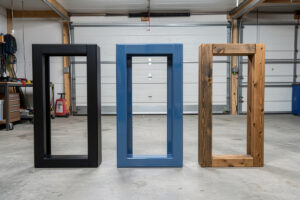
Raw mild steel surface-rusts within weeks in a humid room, so a steel sim rig has to be finished — and the choice comes down to three routes: rattle-can paint over etch primer (cheap, do it tonight, easy to touch up), professional powder coat (toughest and best-looking, but costs more and fights future modifications), or bare steel sealed with oil or wax (an industrial look that demands upkeep). I’ve run all three on rigs in my garage. Here’s how to pick.
The decision isn’t really about looks — any of the three can look good — it’s about durability versus reversibility versus cost, and how much you plan to modify the rig later. Powder coat is the most durable finish by a mile, but it’s also the one that punishes you when you want to drill a new hole or weld on a brace a year later. Paint is endlessly forgiving and touch-up-able but less tough. Raw is the cheapest and most honest but never stops needing attention. Whichever you choose, surface prep decides 90% of the result, and that’s the part everyone rushes. Let me break down all three.
Do You Have to Finish a Steel Rig at All?
Yes. Bare mild steel oxidizes fast — you’ll see orange surface rust within a couple of weeks in any room with normal humidity, and worse near a garage floor or a window. Left unchecked it flakes, stains your carpet and your hands, and eats into the surface over time. Even a minimal finish stops this, so “leave it raw and untreated” isn’t really an option unless you enjoy rust on your forearms.
I found this out with a test frame I left bare “just for a few weeks” while I decided on a finish. Within ten days it had a light orange bloom all over, and every time I moved it I got rust-colored hands and a metallic smell off my palms. Bare steel wants to return to iron oxide and it doesn’t wait for your decision. So the real question isn’t whether to finish it, but which finish matches how you’ll use and modify the rig. The good news is that even the cheapest finish — a couple of rattle cans — completely solves the rust problem if you prep properly. This is the last step of the welded steel rig build, and it’s worth not rushing after all the fabrication work.
Paint, Powder Coat, or Raw: Which Should You Choose?
Choose rattle-can paint if you want cheap, fast, and easy to modify later; choose powder coat if you want maximum durability and a factory finish and won’t be changing the frame; choose sealed raw steel if you like the industrial look and don’t mind re-oiling it. Here’s the honest side-by-side from finishing rigs all three ways.
| Finish | Cost | Durability | Modify later? | Effort | Best for |
|---|---|---|---|---|---|
| Rattle-can + etch primer | $15–$40 | Good | Easy (touch up) | Low, DIY | Most builders, tinkerers |
| Brush/roll enamel | $15–$30 | Good | Easy | Low, messy | Budget, don’t mind brush marks |
| Professional powder coat | $80–$200 | Excellent | Hard (must strip) | Drop-off, wait | Finished designs, best looks |
| Raw + oil/wax seal | $5–$15 | Fair | Very easy | Low, ongoing | Industrial look, accept upkeep |
| Bare, no finish | $0 | None (rusts) | n/a | None | Nothing — it will rust |
For most people building their first rig, rattle-can over self-etching primer is the right answer: it’s cheap, you can do it in an afternoon, and when you inevitably want to add a brace or drill a mount later — which after reading how to eliminate frame flex you probably will — you just grind the spot, weld or drill, and touch up the paint. Powder coat is genuinely better looking and tougher, but it’s a commitment to a finished design.
How Do You Prep Steel So the Finish Lasts?
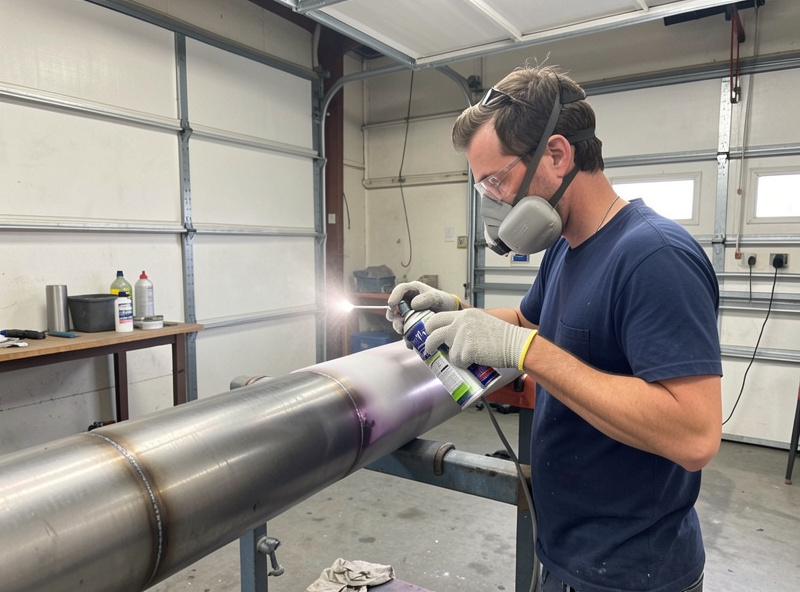
Prep is 90% of the result: degrease every surface, then scuff or grind off mill scale and rust to bare metal, then wipe clean and prime immediately. Paint over mill scale, oil, or rust and it will flake off in months no matter how good the paint is. Paint over clean, scuffed, degreased steel and even cheap rattle can lasts for years.
My routine: wipe the whole frame with a degreaser or acetone to strip cutting oil and handling grease, because oil is the number-one cause of finish failure and it’s invisible. Then knock the mill scale and any weld discoloration back with a flap disc or scuff pad until the surface is uniformly dull bare steel — paint needs a slightly rough surface to key into, and glossy mill scale gives it nothing to grip. Wipe again with a clean cloth to remove dust, and prime within the hour before fresh rust can form. I use a self-etching primer because it chemically bonds to bare steel far better than standard primer, then two or three light enamel topcoats rather than one heavy coat that runs. The difference prep makes is night and day: my daily rig is two years old on rattle-can paint and still looks fine because I degreased and scuffed properly; a rushed job I did on a bracket flaked within a season because I painted over scale.
Is Powder Coat Worth the Extra Cost and Hassle?
Powder coat is the most durable, best-looking finish you can put on a rig — a hard, even, chip-resistant coating that no rattle can matches. But it costs $80–$200 to have done, you have to transport the frame to a coater and wait, and crucially, you can’t easily modify a powder-coated frame afterward without stripping the coating in that area. It’s the right choice for a design you’re certain is final.
I powder-coated my second frame because I wanted it to survive being moved between rooms without chipping, and it’s genuinely tougher and looks factory-made. The Powder Coating Institute explains why: the coating is electrostatically applied and oven-cured into a continuous hard shell, far more durable than air-dried paint. But I learned the downside the hard way when I wanted to add a monitor mount six months later — I had to grind the powder coat off the mounting area to weld, which left a patch I then had to repaint to match, and matching a powder-coat finish with a rattle can is a losing battle. So the rule I follow now: powder coat only a frame whose design I’ve fully committed to, and rattle-can any rig I expect to keep tinkering with. Since I’m always tinkering, most of my rigs end up painted. The upgrade path in bolt-on vs welded joints helps here too: if your wear items and mounts all bolt on, you can powder-coat the permanent frame and never need to modify it.
Can You Leave the Steel Raw for the Industrial Look?
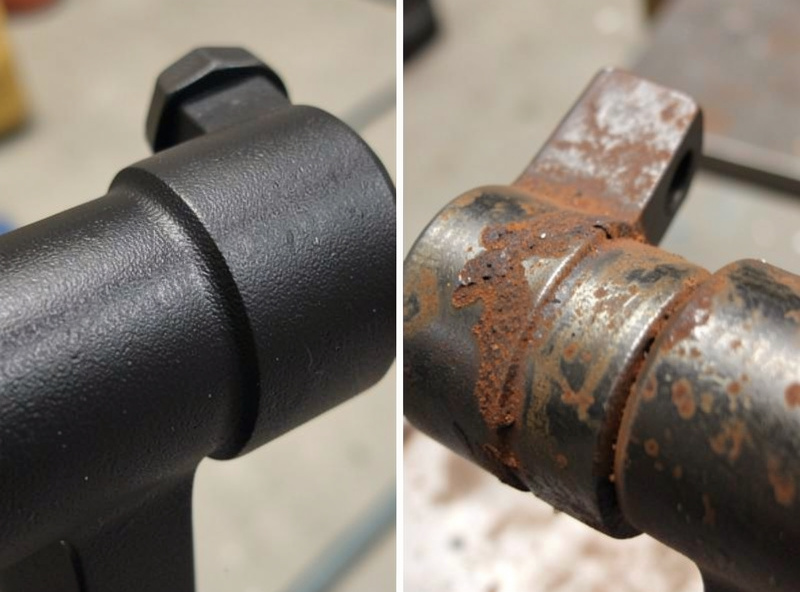
You can, if you seal it and accept ongoing upkeep. Bare steel wiped with oil, paste wax, or a clear matte lacquer keeps a raw industrial appearance while slowing the rust. But none of these fully stop oxidation the way paint or powder does, so you’ll re-oil periodically, and you can’t rest bare skin on the metal without leaving marks and picking up a faint metallic residue.
I ran one frame this way for a while because I liked the honest look of bare welded steel — the weld beads visible, the raw grey of the tube. Sealed with a wipe-on paste wax it held off serious rust, but I had to re-wax every couple of months, and any spot I touched a lot, like where my forearm rested, would start to darken and spot despite the wax. It’s a legitimate aesthetic choice with a real maintenance cost. If you go raw, avoid it entirely in a damp basement or an unheated garage where humidity swings will rust it faster than you can wax it. For most people in a normal room who want the look, a satin clear coat over degreased bare steel splits the difference — you keep the raw appearance and get better protection than oil alone.
As an Amazon Associate I earn from qualifying purchases. The one product that makes the paint route work is the primer — you can compare self-etching primer sprays to get a finish that actually bonds to bare steel.
Frequently Asked Questions
Do I have to finish a steel sim rig?
Yes. Bare mild steel surface-rusts within a couple of weeks in a normal-humidity room, flaking and staining your hands and floor. Even a minimal finish stops this. The cheapest option, a self-etching primer plus enamel rattle can, completely solves the rust problem if you prep the steel properly first, so leaving it bare and untreated is not really an option.
Is powder coat better than paint for a sim rig?
Powder coat is more durable and better looking, an oven-cured hard shell that no rattle can matches, but it costs 80 to 200 dollars, requires transporting the frame to a coater, and cannot be modified afterward without stripping the coating. Paint is cheaper, DIY, and easy to touch up, so choose powder coat only for a design you are certain is final.
What primer should I use on a steel sim rig?
A self-etching primer, because it chemically bonds to bare steel far better than standard primer. Degrease and scuff the steel to bare, dull metal first, wipe it clean, then prime within the hour before fresh rust forms. Follow with two or three light enamel topcoats rather than one heavy coat that runs.
Why is my rig paint flaking off?
Almost always because it was painted over mill scale, oil, or rust instead of clean bare steel. Paint needs a degreased, scuffed surface to key into. Wipe the frame with degreaser or acetone to remove invisible oil, grind off the glossy mill scale to dull bare metal, wipe clean, and prime immediately, and even cheap paint will last years.
Can I leave a steel sim rig raw?
Only if you seal it and accept upkeep. Bare steel wiped with oil, paste wax, or a satin clear coat keeps an industrial look while slowing rust, but none fully stop oxidation like paint or powder. You will re-treat it periodically, cannot rest bare skin on it without marking it, and should avoid raw steel entirely in a damp basement or unheated garage.
Further Reading
- Welded Steel Sim Racing Rig: The Complete Build Guide
- MIG Welding a Sim Rig Frame: A Builder’s Walkthrough
- How to Eliminate Frame Flex in a Sim Rig
- Bolt-On vs Welded Sim Rig Joints: Which Is Stiffer?