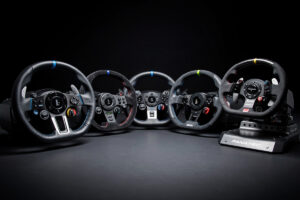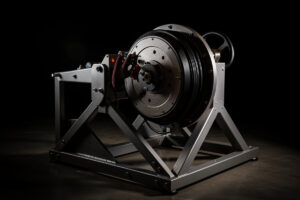
For most home racers, a high-torque direct-drive base is not worth it over a good mid-torque one. The extra 4–7 Nm buys headroom you’ll cap rather than use, it demands a stiffer rig to express, and it tires your arms over long stints — while doing nothing for the force-feedback detail that actually makes you faster. Spend the difference on pedals and rigidity, and a mid-torque base will feel better than a flagship on a worse foundation.
This is the question I get asked more than any other, usually by someone staring at a 15 Nm base wondering if it’s the secret to the lap times they’re chasing. It isn’t, and I want to explain why carefully, because the marketing makes the opposite case loudly. I’ve run mid-torque and high-torque bases back to back on the same welded steel rig with the same pedals and a telemetry overlay open, and the conclusion has been the same every time.
Torque is a ceiling, not a quality
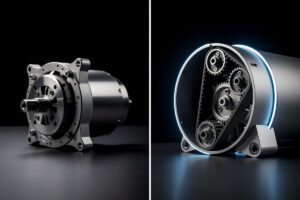
The first thing to understand is what the extra torque actually is. A high-torque base raises the maximum force the wheel can push back — that’s it. It doesn’t make the force feedback more detailed, more accurate, or more informative. Detail comes from the motor, the encoder resolution, and how well you’ve tuned the force feedback, none of which improve just because the peak number is bigger. You’re buying a higher ceiling on wheel weight, not a better signal.
And here’s the catch: almost nobody runs near that ceiling. I keep my mid-torque bases somewhere around 60–70% of maximum in most cars, because full force is exhausting and tends to clip. If I then put a high-torque base in and run it to produce the same comfortable force, I’ve gained nothing — same force in my hands, just from a more expensive box. The extra Nm only matters if you genuinely run it, and most people, once they’ve raced for a few hours, quietly turn it down.
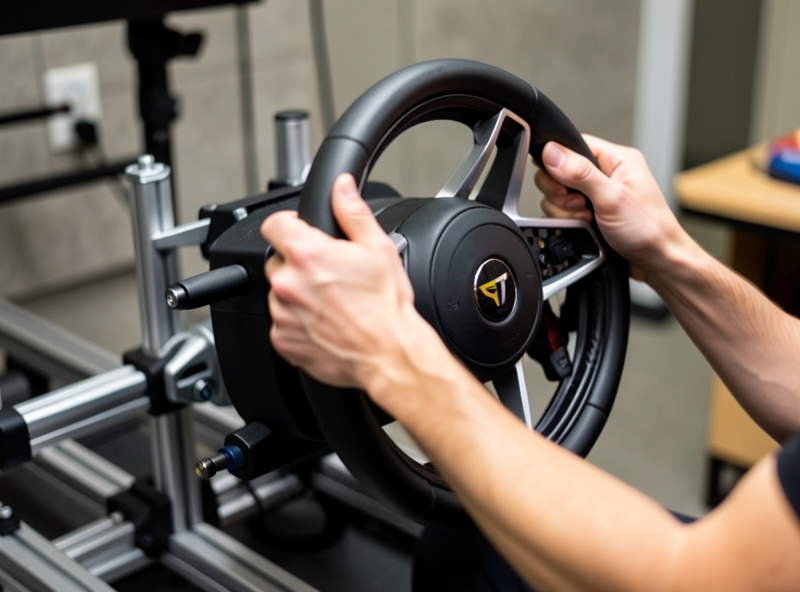
Maxed-out force feels less realistic, not more
The intuition that more torque equals more realism is backwards. Real race cars overwhelmingly have power steering, and real drivers are braced by a fixed seat and a harness that let them apply force with their whole body. At home, you’re sitting in a chair using mostly your arms. Run a base at full 15 Nm and you’re not simulating a race car — you’re simulating wrestling a car that has no power steering, which is a different and far more tiring thing.
There’s a measurable cost too. To feel that big peak force, people push the gain up, and on my overlay the force trace starts flat-topping — clipping — on every kerb and brake lock-up. Once you’re clipping, the fine detail disappears into a wall of maximum force, so the very thing you wanted (feeling the car) gets worse, not better. The honest setup runs less force than the base can produce, keeps the signal clean, and lets you feel the small inputs. A mid-torque base makes that easy; a high-torque base tempts you into the opposite.
High torque writes a cheque your rig has to cash
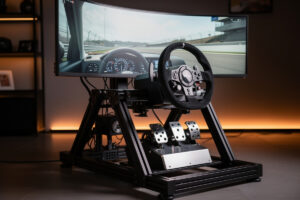
Even if you do want big force, the base can only deliver it cleanly if the rig can hold it. Bolt a 15 Nm base to a folding stand or a desk clamp and the force twists the frame instead of your hands — you feel flex and mush, not detail. The stiffer the cockpit, the more torque it can express. This is exactly why I built my frame from welded steel tube: a high-torque base needs something genuinely rigid to push against, or its advantage simply leaks away into frame flex.
So a high-torque base often comes with a hidden tax: a rig upgrade to make it worth having. If you’re on anything less than a stiff aluminium-profile or welded frame, a chunk of that 15 Nm is being absorbed by the structure before it ever reaches you. A mid-torque base, by contrast, is far more forgiving of a so-so mount — it asks less of your rig and rewards you more readily. For most home setups, that forgiveness is worth more than the headroom.
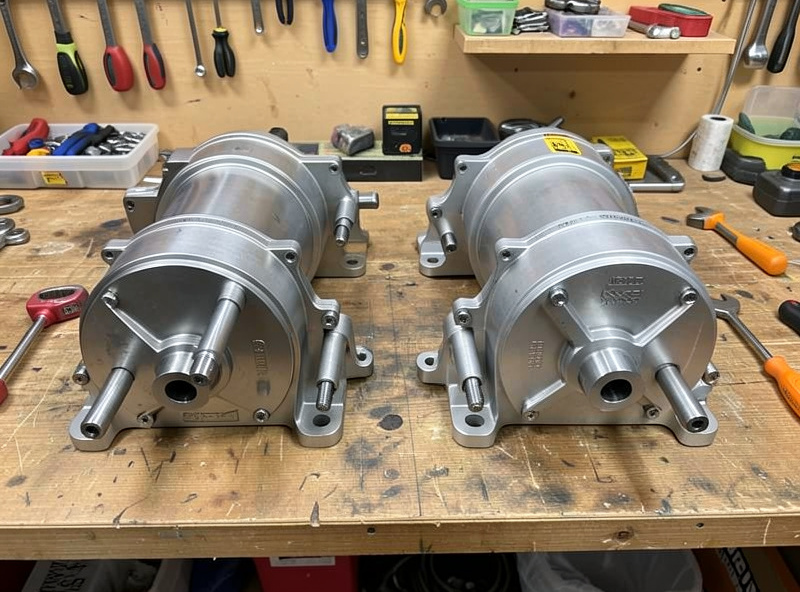
The money is better spent elsewhere
This is the part that actually matters for your lap times. The price gap between a mid-torque and a high-torque base is real money, and there’s a far better home for it: pedals. A load-cell brake lets you brake by pressure instead of travel, and consistent braking is where lap time and confidence genuinely come from. I’ve watched a mid-torque base with a load-cell brake comfortably out-drive a high-torque base braking through a flexy potentiometer pedal. It’s not close.
The upgrade order I always come back to — rig, pedals, wheelbase, rim — exists precisely because that’s the sequence that makes you faster. Torque sits third, and the gap between mid and high torque is the least valuable upgrade in the whole chain for most people. If you have the money burning a hole, a stiffer rig and a better brake will transform your driving in a way the extra Nm simply won’t. The base matters; the marginal torque above mid does not.
As an Amazon Associate I earn from qualifying purchases. If you’re weighing the tiers, you can compare mid-torque direct-drive bases against the high-torque options and see how the price gap could instead buy you a load-cell pedal set.
The diminishing-returns curve, in plain terms
If you plotted “how much better the wheel feels” against torque, the curve climbs steeply at first and then flattens hard. Going from a belt or gear wheel to a 5 Nm direct-drive base is a night-and-day jump — suddenly the wheel is telling you the truth. Going from 5 Nm to 8 Nm is a real, noticeable improvement in how heavy cars load up. Going from 8 Nm to 12 Nm is a modest gain you’ll appreciate in a few specific cars. Going from 12 Nm to 18 Nm is, for nearly everyone at home, a rounding error you’ll never run.
That shape is why I keep steering people toward the mid-torque band. It sits right at the top of the steep part of the curve, where almost all the benefit has already been delivered, just before the line goes flat. Paying flagship money to climb the flat part is the definition of diminishing returns. The smart buyer gets onto the steep part — any honest direct-drive base does that — and then stops spending on torque and starts spending on the parts of the chain that are still steep, like braking precision and rig rigidity.
What I run, and why
My daily base is mid-torque, and I run it deliberately below its ceiling. I’ve had high-torque bases on the rig and enjoyed them in heavy GT3 stints, but for the mix of cars I actually drive — a bit of formula, a lot of GT, the occasional road car across iRacing and ACC — the mid-torque base is simply the more comfortable, more honest tool over a two-hour session. My arms aren’t fried at the end, the signal stays clean on my overlay, and I’m not fighting the wheel when I should be reading it.
The upgrades that genuinely moved my driving forward weren’t torque steps. They were the move to a load-cell brake, which let me brake by pressure and stop locking up under stress, and the move to a properly rigid welded frame, which made every base I bolted on feel sharper. Torque was never the thing holding me back, and on my telemetry it never showed up as the limiting factor. That’s the lived version of the advice: I had the option to chase Nm and chose, repeatedly, to spend elsewhere — because that’s what actually made me faster.
When high torque genuinely is worth it
I’m not anti-torque — there are real cases for it. If you race heavy GT3 and prototype cars almost exclusively and you specifically enjoy the steering loading up hard and fighting you mid-corner, high torque delivers that sensation in a way mid-torque can’t. If you already have a rigid, well-sorted rig and good pedals, so the base really is the next link to upgrade, the extra headroom lets you run a more linear force curve with less clipping risk. And if you’re an experienced racer who knows you’ll use it, by all means buy it.
But those are the exceptions, and notice they all assume the rest of the chain is already sorted. High torque is the last upgrade for someone who has everything else, not the first upgrade for someone chasing speed. If you’re still on a flexing stand or two-spring pedals, a high-torque base is solving a problem you don’t have while ignoring the ones you do. Get the foundation right, race for a while, and you’ll know honestly whether you want more torque — and most people find they don’t. If you want to dig into exactly which tier suits your cars, my guide on how much torque you actually need breaks it down by discipline, and the brand showdown covers which mid-torque bases I’d buy first.