For the vast majority of sim racers, a hydraulic brake is not worth the money over a well-tuned load cell. Hydraulics deliver a genuinely more progressive, more real-car feel, but a good load cell with a proper elastomer stack gets you most of the way there for a fraction of the cost and none of the maintenance. The gap is real; it’s just small, and it lives in feel, not lap time.
I ran a hydraulic set bolted onto the rig alongside my load-cell daily for months, specifically to settle this argument instead of parroting a spec sheet. The short version: the hydraulic pedal is nicer. But when I put my brake traces side by side, the consistency difference sat inside my normal noise. What was actually holding me back wasn’t the sensor — it was tuning and seat time, the same as always. Here’s the honest breakdown.
What’s the Real Difference Between Hydraulic and Load Cell?
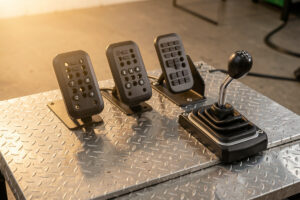
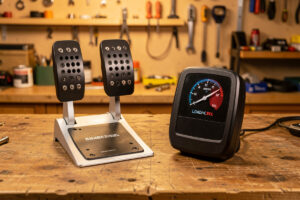
A load-cell brake senses the force you apply against an elastomer stack and reports it electronically; a hydraulic brake builds real fluid pressure in a small master cylinder, and that pressure is what’s measured. The hydraulic system reproduces a genuine car brake’s progressive pressure build, while a load cell approximates it with rubber. Same goal — sense force — different physics.
Here’s how they stack up across what actually matters:
| Factor | Load cell | Hydraulic + load cell |
|---|---|---|
| Feel | Very good with a tuned stack | Best — true progressive pressure |
| Consistency | High | Very high |
| Cost | Mid ($200–$400 sets) | Premium ($500–$1,000+) |
| Maintenance | None to speak of | Fluid, bleeding, occasional weeps |
| Bracing demand | High | Higher — forces are bigger |
| Tuning burden | Stack + force ceiling | Stack, fluid, ceiling — more knobs |
The table tells the story: hydraulic wins feel and edges consistency, but loses on cost, maintenance, and simplicity. For where load cells sit in the overall brake pedal tuning picture, they’re the 95% sweet spot — which is exactly why manufacturers put them on mid-tier bundled sets now.
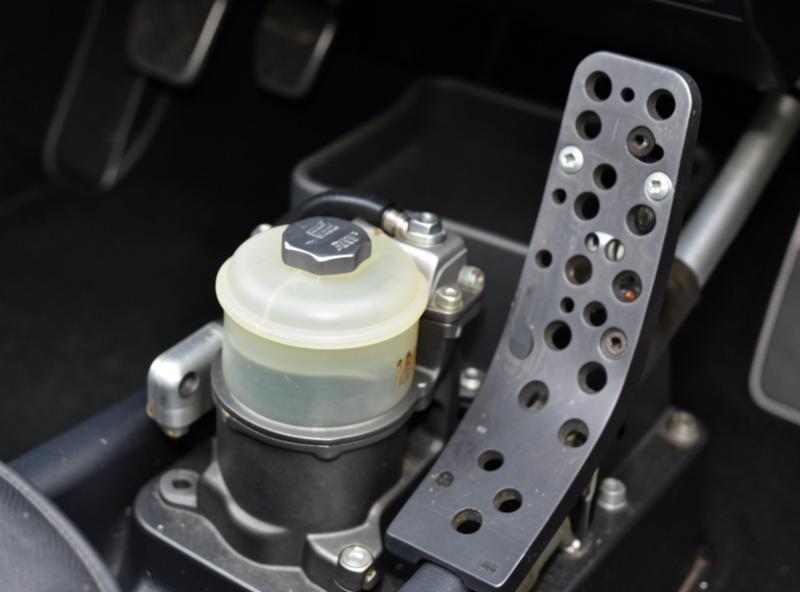
Does a Hydraulic Brake Actually Feel Better?
Yes — a hydraulic brake genuinely feels better, with a fluid, progressive pressure build that a rubber elastomer stack can only approximate. As you push, real fluid pressure rises the way a car’s master cylinder does, giving a smooth, continuous firming rather than the stepped feel of stacked elastomers. If feel alone were the metric, hydraulic wins.
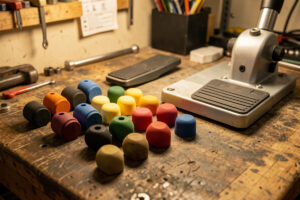
I won’t pretend otherwise: the first few stops on the hydraulic set, I grinned. The pressure builds like a real brake — there’s a seamless progression from initial bite to firm wall with no discernible transition between elastomer pieces. My load cell with a well-ordered stack comes close, and on a blind test I’d hesitate on some cars, but the hydraulic is smoother at the very top of the range where you’re holding threshold. You can feel the difference; the question is whether you can use it.
That’s the catch. A better feel only matters if it translates into something measurable, and for most of us it doesn’t — because a tuned load cell already gives your foot everything it needs to be consistent. The feel upgrade is real and also, for lap time, mostly cosmetic.
Does Hydraulic Make You Faster?
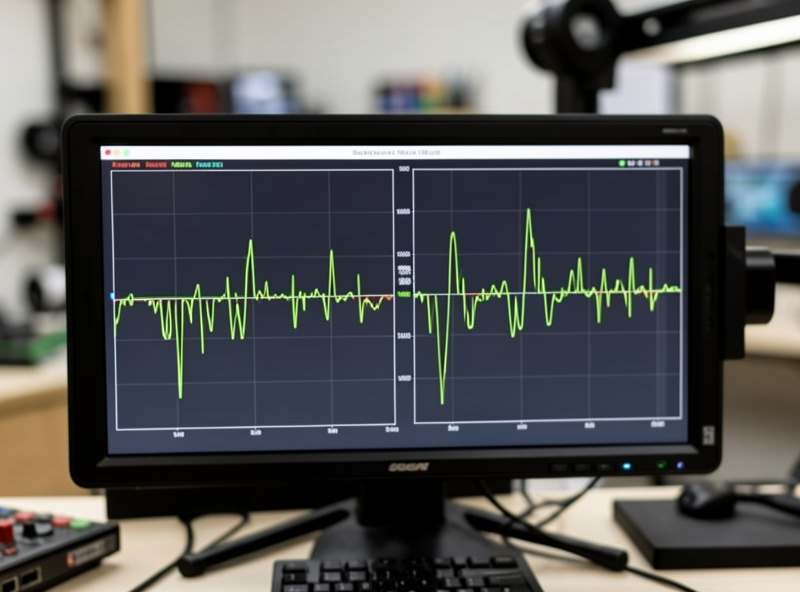
For nearly everyone, no — hydraulic brakes don’t make you meaningfully faster than a well-tuned load cell. When I compared my brake-trace consistency and lap times across months on both, the difference was within my normal lap-to-lap noise. The load cell wasn’t the ceiling on my pace; tuning and practice were, as they almost always are.
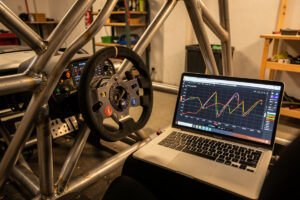
This is the part the marketing skips. I looked at repeatability into the same braking zones on my telemetry overlay — how tightly my peak pressures stacked lap after lap — and the hydraulic set didn’t produce a cleaner, more repeatable pattern than my dialed-in load cell. Both were consistent because both let me target a pressure. The sensor technology stopped mattering once the feel was good enough to meter against, and a tuned load cell clears that bar easily.
If you’re not already extracting everything from a properly set-up load cell — correct force ceiling, a tuned elastomer stack, solid bracing — then buying hydraulic is spending money to skip the free work that would have gotten you there anyway.
What Does Hydraulic Cost You Beyond the Price Tag?
Beyond the higher price, hydraulic brakes add maintenance and demand better bracing. There’s fluid to top up, the occasional bleed, and the small chance of a weep or leak — and because the pedal generates higher forces, it will expose any flex in your deck faster than a load cell will. It’s more system to own and more that can go wrong.
None of this is dramatic, but it’s real. My hydraulic set needed a bleed when the pedal started feeling slightly spongy, and I keep an eye on the reservoir. A load cell, by contrast, is fit-and-forget on the maintenance front — the only upkeep is re-checking calibration as the elastomers take a compression set. The hydraulic also punished my rig’s weaker spots: on a less-braced test frame, the higher pedal forces made flex obvious, which sent me back to reinforce the deck. If your pedals aren’t rock-solid, hydraulic will find out. That’s covered in bracing your pedals.
So factor in the whole cost: money, maintenance minutes, and the bracing upgrade you may need to feed it. For a lot of people that total tips the scales firmly back toward a load cell.
Who Should Actually Buy a Hydraulic Brake?
Buy hydraulic if you’ve already maxed your load-cell tuning, your rig is genuinely rigid, you value feel for its own sake, and you have money to spend on diminishing returns. It’s a legitimate choice for the enthusiast who wants the best possible pedal and enjoys the hardware — just don’t buy it expecting lap time you couldn’t have found for free.
There’s nothing wrong with buying the nicer thing because it’s nicer. I keep my hydraulic set around because I genuinely enjoy how it feels, and if you race a lot and the feel brings you satisfaction, that’s a real reason. The mistake is buying it as a shortcut to speed while your load-cell setup is untuned — that’s spending premium money to skip free work. Sort the load cell first; if you’ve truly exhausted it and still want more, hydraulic is a reasonable indulgence.
For everyone else — which is most people — the honest verdict stands: a tuned load cell is the smart money, and the difference buys you seat time you’ll benefit from far more.
Does the Car or Discipline Change the Verdict?
Slightly, but not enough to flip it. Heavy-braking disciplines — high-downforce formula cars, prototypes — are where a hydraulic’s progressive top-end feel is most noticeable, because you’re living at high pressure into every big stop. Lighter GT and road cars ask less of the pedal, so the load cell’s approximation feels even closer to hydraulic there.
Across the titles I run, I notice the hydraulic’s edge most in the heaviest braking zones — the ones where I’m standing on the pedal from very high speed and holding threshold for a long beat. That’s where the smooth continuous pressure build is most satisfying. But “most satisfying” still isn’t “faster,” and even in those cars my dialed-in load cell kept pace on the trace. In lighter cars the two are nearly indistinguishable to me.
So if you race heavy-braking cars almost exclusively and you’re a feel-driven enthusiast, that nudges the case for hydraulic a little. For a mixed diet of GT, road, and open-wheel — which is most people — the load cell covers all of it beautifully, and the verdict holds.
Is a hydraulic sim brake worth it over a load cell?
For most sim racers, no. A hydraulic brake feels more progressive and more like a real master cylinder, but a well-tuned load cell with a proper elastomer stack gets you most of the way there for a fraction of the cost and with no fluid maintenance. The feel gap is real but small, and it does not translate into meaningful lap time for most drivers.
Does a hydraulic brake make you faster?
For nearly everyone, no. Comparing brake-trace consistency and lap times across months on both, the difference sits within normal lap-to-lap noise. A tuned load cell already lets you target a pressure consistently, so the sensor technology stops mattering. Tuning and seat time, not the pedal type, set your pace.
What maintenance does a hydraulic sim brake need?
Hydraulic brakes need occasional fluid top-ups and bleeding, and there is a small chance of a weep or leak over time. They also generate higher pedal forces, so they demand more rigid bracing than a load cell. A load cell, by contrast, needs essentially no maintenance beyond re-checking calibration as the elastomer stack settles.
Who should buy a hydraulic brake pedal?
Buy hydraulic if you have already maxed your load-cell tuning, your rig is genuinely rigid, you value feel for its own sake, and you have money for diminishing returns. It is a fair indulgence for an enthusiast who wants the best possible pedal, but a poor shortcut to speed if your load-cell setup is still untuned.
What I’d Do Starting Today
Before you even think about hydraulic, exhaust your load cell: set the force ceiling correctly, tune the elastomer stack, and brace the deck until nothing moves. Do all that and I’ll bet the itch to upgrade fades — because a dialed-in load cell is a genuinely excellent brake. If the itch survives and you have the budget, buy hydraulic for the feel, eyes open, not for a lap time it won’t deliver.
The smart-money path runs through free tuning first. Start with your force setting and elastomer stack, and see the whole system in the brake pedal tuning hub.
Related: