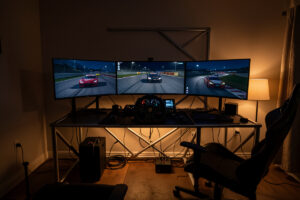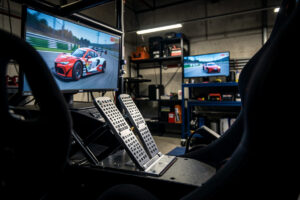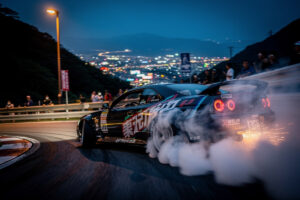
Sim racing drifting is about sustained sideways control — maintaining a slide through corners at maximum angle while hitting clipping points with precision. Unlike every other discipline in sim racing where the fastest line wins, drifting is judged on angle, speed, style, and line proximity. Assetto Corsa is the dominant drifting sim thanks to its realistic weight transfer physics and massive modding community with thousands of drift cars and tracks. On my welded rig, drifting is the discipline that puts the most demand on the handbrake I bolted on and the direct-drive wheelbase I run — the snap-countersteer feel is immediate and violent in a way that a belt-driven base cannot reproduce.
Drifting is the most creative discipline in sim racing. There is no fastest lap to chase — instead, you develop a personal style through car setup choices, angle preferences, and transition techniques. Two drifters can run the same corner at the same speed with completely different techniques, and both can score equally well. This artistic dimension attracts drivers who find lap time optimization repetitive. Across the bases I’ve bolted to my rig, drifting rewards total system setup more than any other discipline: a rigid cockpit, a quick-release rim that won’t flex, and a handbrake mounted exactly where you reach for it instinctively.
Learning to Drift
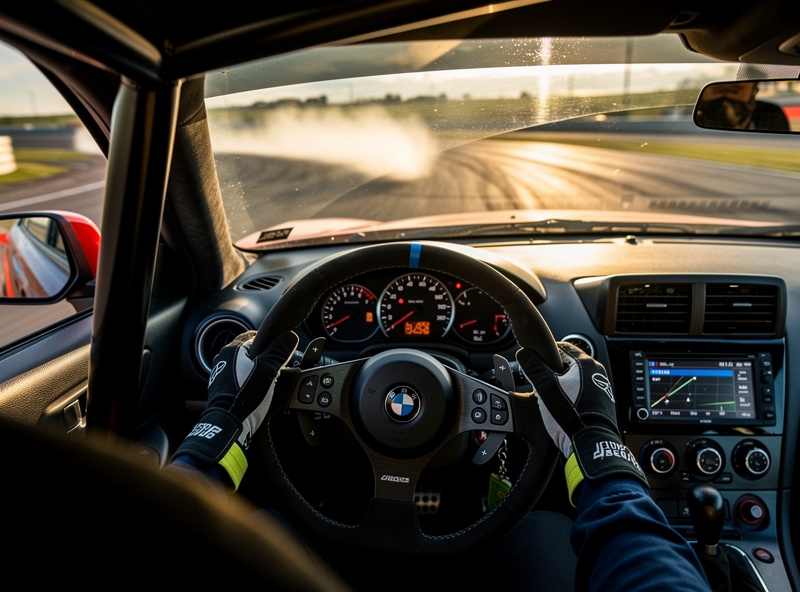
The core drifting inputs are counterintuitive for road racers — I spent my first 10 hours spinning constantly because my hands refused to turn the wheel away from the corner. Initiate the slide with a clutch kick (rapid clutch engagement while on throttle), handbrake pull, or lift-off oversteer. Once sliding, modulate throttle to maintain angle and use opposite-lock steering to control direction. The wheel is turned away from the corner for most of the drift — the opposite of what every other driving technique teaches. On my rig, the handbrake initiation is the most consistent method for tight entries because it unloads the rear predictably without upsetting the front end.
The learning curve is the steepest of any discipline. Expect 20-30 hours before you can link two corners smoothly. Expect 50-100 hours before you can run a full drift track without spinning. The early hours are frustrating because the car feels completely uncontrollable — you initiate a slide and immediately spin. This is normal. The breakthrough comes when your hands learn to counter-steer instinctively, which happens gradually between hours 10-30. On my direct-drive base, the FFB snap during a drift transition is violent enough to rip the wheel through your fingers if you are not gripping it, and learning to let that rotation happen without fighting it is the single hardest adaptation for road racers.
Start with the BMW E30 or Nissan 240SX in Assetto Corsa with a drift-friendly setup (soft rear springs, high rear tire pressure, welded differential). These cars are forgiving — they slide predictably and recover easily. Avoid high-power drift cars (1,000+ hp Formula Drift builds) until you can consistently link corners at lower power. More power makes drifting harder to learn, not easier. I learned on the E30 because its shorter wheelbase and lower power let me focus on throttle modulation without the car snapping around faster than I could react.
Drift Car Setup
Drift car setup differs fundamentally from racing setup. The goal is to make the rear of the car slide easily while keeping the front end responsive for angle control. Key settings: rear spring rate 20-30% softer than front, rear anti-roll bar stiff, front anti-roll bar soft, rear tire pressure 10-15 PSI higher than front, and aggressive front camber (-3 to -5 degrees) for steering response during counter-steer. These are the baseline numbers I start from on every drift car I tune, and I adjust from there based on how the car transitions. The principles are the same as any sim racing car setup, but the targets are inverted — you want the rear to let go, not grip.
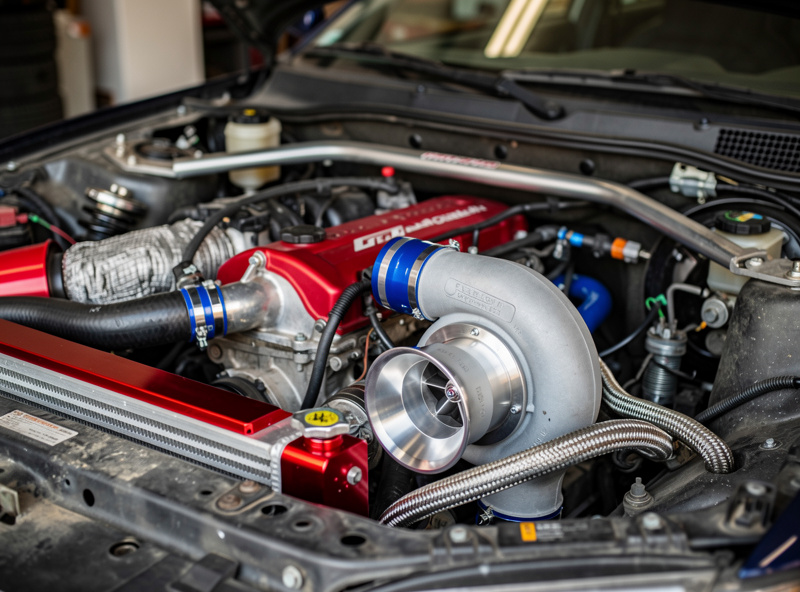
The differential is the most important component. A welded or locked differential (100% lock) ensures both rear wheels spin at the same speed, which is essential for maintaining a consistent slide. A limited-slip differential with high lock percentage (60-80%) works but requires more throttle modulation to maintain angle. Open differentials are nearly impossible to drift with because the inside wheel loses all traction during a slide. In Assetto Corsa, the diff lock setting is in the Drivetrain tab, and I set it to 100% on every drift car I build — anything less introduces an unpredictable variable mid-slide.
Steering angle is the second most important factor. Real drift cars use 60-70 degrees of steering lock. In sim racing, your wheel’s rotation range affects available angle — a 900-degree wheel provides 45 degrees per side, which is adequate for learning but limiting for advanced drifting. Some sim racers reduce wheel rotation to 540 degrees for drifting, which increases steering angle per degree of wheel rotation at the cost of precision. I run 540 degrees on my direct-drive base for drifting specifically, which matches the steering lock I need for tight transitions on tracks like Meihan where you are flicking the car from full lock to full lock constantly.
Tandem Drifting
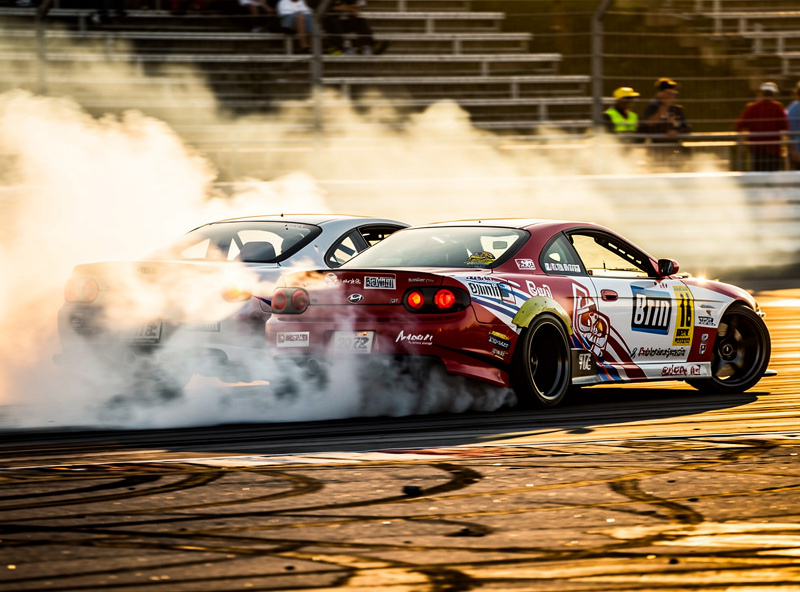
Tandem drifting — two cars drifting in close proximity through the same corner — is the ultimate expression of sim drifting skill. The lead car sets the pace and line; the chase car follows within 1-2 car lengths, matching angle and speed while reacting to the lead car’s transitions. Tandem requires trust between both drivers and produces the most spectacular visual moments in sim racing. On a rigid sim rig, the frame does not twist under the violent steering inputs that tandem transitions demand, which means the FFB signal reaches your hands cleanly instead of being absorbed by cockpit flex.
In competitive drifting, the chase run is judged on proximity (how close the chase car stays), angle matching (how closely the chase car mirrors the lead car’s angle), and line accuracy (how well the chase car follows the lead car’s path). A perfect chase run looks like the two cars are magnetically linked — identical slides, identical transitions, identical speed. This is where the split-second corrections matter, and why a responsive direct drive wheelbase with no belt-lag makes the difference between maintaining a tandem gap and tapping the lead car’s door.
Drift Servers and Tracks
Public drift servers in Assetto Corsa are the social hub of sim drifting. Popular servers run custom drift tracks with 10-25 drivers practicing tandem in real-time. Joining a drift server, spectating for 10 minutes, and then requesting a tandem run is the standard way to meet other drifters and improve through observation and imitation. The most active servers run on the Assetto Corsa Content Manager platform, and you need the same track and car mods installed as the server to join — mismatched content is the most common reason new drifters get connection errors.
Server etiquette matters more in drifting than any other sim racing discipline. Do not join a tandem session and immediately start driving a reverse layout or cutting across the lead car’s line — drift servers have an unwritten flow where drivers queue behind the lead car and wait for a gap. Most servers use a “donut box” or staging area where cars park before joining the drift line. Watch this pattern for 10 minutes before pulling onto the track.
Drift track mods are essential content for the Assetto Corsa drifting experience, and the Assetto Corsa modding community has built an enormous library of real and fictional drift circuits. The most popular tracks include Ebisu (the legendary Japanese drift complex with multiple courses including Minami, Kita, and the school course), Touge (mountain pass roads inspired by Initial D with tight hairpins and guardrail-lined descents), Meihan Sportsland (the tight technical circuit where Japanese professional drifting was born, with walls close enough to punish every mistake), and custom parking lot layouts for practicing clutch kicks and donuts. Track quality varies wildly — the best mods include full 3D objects, realistic curbing, and proper run-off areas, while low-quality mods have flat textures and invisible walls that ruin immersion.
Drifting Hardware
A handbrake is essential for competitive drifting — it is used for initiation on tight corners and angle correction during transitions. Budget $50-150 for a USB handbrake that connects directly to your PC. On my rig, I run a USB handbrake mounted to the shifter arm of the welded frame — reach it with my right hand without looking, and the analog throw lets me modulate how abruptly the rear breaks loose. Some wheel bases (Fanatec, Thrustmaster) offer handbrake accessories that connect through the wheel base, but USB handbrakes work with any wheel and are usually cheaper. The shifter and handbrake setup on a drift rig is the most physically active control layout in sim racing — you are working the handbrake, clutch, and shifter constantly during a run.
A direct drive wheel provides the most realistic counter-steering feel. During a drift, the wheel rapidly rotates as the front tires catch the slide — a direct drive motor replicates this snap accurately with near-instant slew rate, while belt-driven wheels lag by a detectable margin. The difference between direct drive and belt drive matters most for advanced tandem drifting where split-second corrections determine whether you maintain the slide or spin. On my mid-torque direct-drive base, I run the drift FFB profile with no damping and no friction — just raw wheel speed so the rim follows the front tires exactly where they point.
Rig rigidity is a factor most drifting guides ignore, but it directly affects your ability to catch slides. When you transition a drift at speed, the steering workload spikes — you are snapping the wheel from one lock to the other while modulating throttle and handbrake simultaneously. A cockpit with frame flex absorbs some of that steering input instead of transmitting it to the sim, which creates a lag between what your hands do and what the car does. My welded steel-tube rig has zero torsional flex, and that rigidity is the reason I can trust the FFB signal during a tandem chase run. A wobbly desk mount or a light-duty wheel stand cannot give you that confidence.
Drift Car Comparison
| Car | Power Range | Handling Character | Best For | Difficulty |
|---|---|---|---|---|
| BMW E30 | 250-350 hp | Predictable, forgiving, short wheelbase | Learning basics, low-speed control | Easy |
| Nissan 240SX (S13) | 250-400 hp | Balanced, controllable, wide tuning window | Progression, all-around practice | Easy-Moderate |
| Toyota AE86 | 200-300 hp | Light, nimble, rapid direction changes | Tight technical courses, Touge | Moderate |
| Nissan Silvia S15 | 400-600 hp | Fast transitions, high-angle capable | Tandem competition, fast tracks | Hard |
| Formula Drift builds | 800-1,200 hp | Extremely aggressive, massive angle | Expert-level competition only | Very Hard |
Frequently Asked Questions
Can you drift with a sim racing wheel?
Yes. A force feedback wheel provides realistic counter-steering feedback during slides. Direct drive wheels are the most responsive for drifting, but belt-driven wheels like the Thrustmaster T300 work well for learning. Assetto Corsa is the best sim for drifting with thousands of modded drift cars and tracks.
How long does it take to learn sim drifting?
Expect 20-30 hours to link two corners smoothly and 50-100 hours to run a full drift track consistently. The steep initial learning curve is the main barrier — most beginners spin constantly for the first 10-20 hours before counter-steering becomes instinctive.
What is the best car for learning to drift in Assetto Corsa?
The BMW E30 or Nissan 240SX with a drift setup (soft rear springs, welded diff, high rear tire pressure) are the most forgiving learning cars. They slide predictably and recover easily. Avoid high-power builds until you can link corners at lower power.
Do you need a handbrake for sim drifting?
A handbrake is essential for competitive drifting. It is used to initiate slides on tight corners and correct angle during transitions. Budget $50-150 for a USB handbrake. Without one, you must use a button or paddle, which lacks the analog modulation needed for precise initiation.
What is tandem drifting?
Tandem drifting is two cars drifting in close proximity through the same corner. The lead car sets the pace and line; the chase car follows within 1-2 car lengths matching angle and speed. It is the most skill-intensive form of drifting and the competitive format used in judged drift events.