Richard Burns Rally remains the most realistic rally simulator available 20 years after its 2004 release. The RSF (RallySimFans) mod adds 200+ stages, VR support, online leaderboards, and modern graphics. Its physics engine still outperforms Dirt Rally 2.0 and EA Sports WRC.
I’ve run RBR back-to-back with Dirt Rally 2.0 and EA Sports WRC on the same direct-drive wheelbase. The difference is not subtle. RBR’s tire model runs at a much higher simulation frequency than either modern title, and it communicates surface grip changes through the wheel that modern titles bury under simplified compound layers. This guide covers RSF mod installation, physics comparisons, the massive stage library, VR setup, community competition, and the technical reasons a 2004 game still dominates.
RSF Mod Installation: From Abandonware to Modern Sim
The RSF (RallySimFans) mod transforms Richard Burns Rally from abandonware into a fully modernized rally simulator. I’ve run it on a wired sim PC with a direct-drive base, and the installation is cleaner than most modern games — download the RSF installer from rallysimfans.hu, point it to a clean RBR directory, and the installer handles everything: physics updates, graphics patches, stage installations, car packs, and online leaderboard integration. For the full rally sim landscape, including how RBR fits alongside WRC and Dirt Rally, see our Rally Sim Racing Guide.
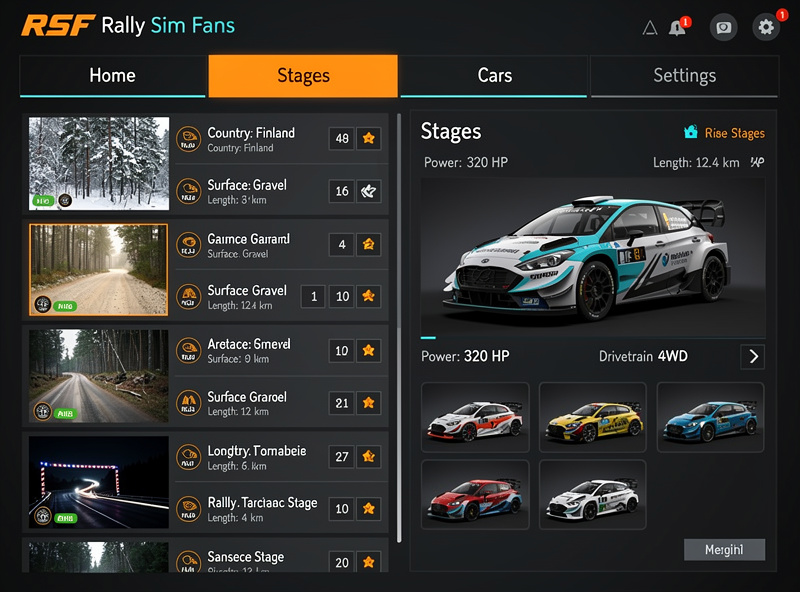
Installation steps: (1) Obtain Richard Burns Rally — the game is abandonware and available from archive.org or rallysimfans.hu. (2) Install RBR to a folder outside Program Files (e.g., C:GamesRBR). (3) Download the RSF installer from rallysimfans.hu. (4) Run the installer and select your RBR directory. (5) Choose the “Full Install” option for 200+ stages and 100+ cars. (6) Launch through the RSF launcher, not the original RBR executable.
The RSF installer is approximately 15GB for a full installation. Download time depends on connection speed but typically takes 30–60 minutes. After installation, the RSF launcher manages updates, stage downloads, car selections, and online time trial submissions automatically. The launcher requires an internet connection for leaderboard features but works offline for single-player. Windows 10 and 11 are fully supported; no compatibility mode or workarounds are needed with the RSF mod.
Physics Comparison: RBR vs Dirt Rally 2.0 vs EA Sports WRC
RBR’s tire model simulates individual tire deformation, surface grip variance, and temperature effects with more granularity than any modern rally game. RBR has a long-standing reputation among rally sim veterans as the closest simulation to real-world rally driving.
| Feature | Richard Burns Rally (RSF) | Dirt Rally 2.0 | EA Sports WRC |
|---|---|---|---|
| Tire Model | Per-tire deformation, thermal | Simplified compound model | Improved over DR2.0 |
| Suspension | Multi-link simulation | Simplified spring/damper | Codemasters physics base |
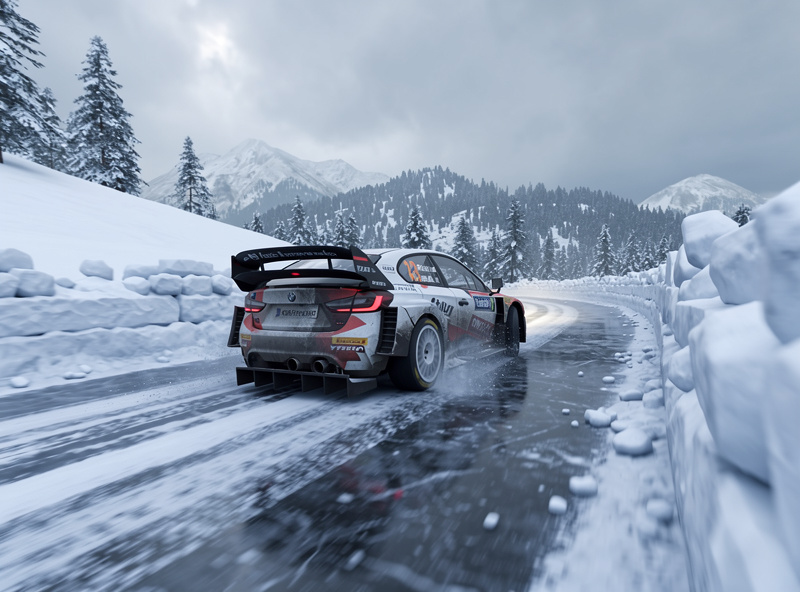
| Surface Types | Gravel, tarmac, snow, mud, ice | Gravel, tarmac, snow, mud | Gravel, tarmac, snow, mud |
| Damage Model | Mechanical + cosmetic | Cosmetic + performance | Cosmetic + performance |
| Pace Notes | Moddable, custom co-drivers | Fixed voice, limited mods | Fixed voice, some customization |
| Force Feedback | Exceptional detail | Good | Good |
| Stage Count | 200+ (RSF mod) | 12 locations | 20+ locations |
RBR’s suspension model simulates multi-link geometry with individual spring rates, damper settings, and anti-roll bar adjustments that affect handling differently on each surface type. The gravel stages feel fundamentally different from tarmac — not just through grip levels, but through how the car slides, recovers, and transfers weight. Dirt Rally 2.0 and EA Sports WRC use simplified physics where surface changes produce predictable grip differences but lack RBR’s granular feedback about individual wheel behavior.
RBR’s pace note system is widely regarded in the rally sim community as the closest to how a real co-driver call actually sounds and lands relative to the corner. The moddable pace note system allows custom co-driver voices in multiple languages, adjustable call timing, and user-defined corner severity ratings — features absent from every modern rally game. The force feedback difference is equally stark. On my direct-drive base, RBR’s FFB communicates individual wheel slip in a way Dirt Rally 2.0’s simplified model cannot. Getting this dialed in properly takes work — see our Force Feedback Configuration Guide for per-title profiles.
The 200+ Stage Library
RSF includes stages from real WRC events, national rally championships, and fictional rally locations spanning every surface type and climate. The stage library is organized by country and surface, with individual stages ranging from 2km sprints to 15km endurance tests.
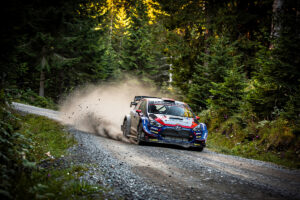
Notable stage packs include: Rally Finland (fast gravel with blind crests and jumps), Monte Carlo (mixed tarmac and ice with elevation changes), Rally GB (wet mud and narrow forest roads), Safari Rally (rough gravel with wildlife and terrain hazards), and Pike’s Hillclimb (tarmac hillclimb with extreme elevation). Each stage features accurate road surface modeling, authentic stage-side vegetation, and weather conditions matching the real-world rally.
The community creates new stages regularly using the RSF stage editor. User-created stages are uploaded to the RSF platform and rated by the community. Top-rated stages rival the quality of bundled content. A Finnish gravel stage at speed — the rapid-fire pace notes, the chassis rocking under braking, the wheel fighting to communicate exactly how much grip is left mid-slide — is an experience no other sim delivers. The 200+ stage count surpasses Dirt Rally 2.0’s 12 locations (each with reverse variants) and EA Sports WRC’s 20+ locations. For rally enthusiasts running a handbrake and H-pattern shifter, the stage variety pairs well with the techniques covered in our Sim Racing Drifting Guide — the rally-to-drift skills pipeline is real.
VR Support in Richard Burns Rally
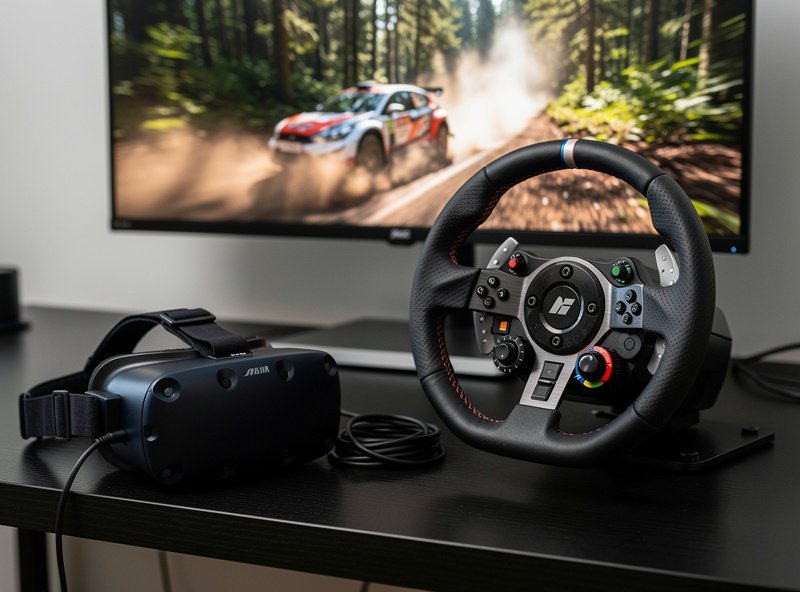
The RSF mod adds OpenVR/SteamVR support to RBR, enabling full VR racing on any compatible headset (Quest 2/3, Valve Index, HP Reverb, Pimax). VR performance is excellent — RBR’s lower polygon count means smooth 90fps on mid-range GPUs.
VR setup: after installing RSF, go to the RSF launcher settings and enable VR mode. The game renders in stereo 3D with proper depth perception for corner judging and crest visibility. Head tracking works through SteamVR — look into corners naturally, check mirrors by turning your head, and gauge distance to trees and barriers through binocular depth cues.
The VR implementation adds significant immersion to rally driving. I’ve run RBR in VR on a Quest 3 and a Vive Pro 2, and the depth perception through blind crests and into hairpins genuinely improves pace — you judge corner approach speed by instinct the way you would in a real car, not by memorizing a braking marker. Dirt Rally 2.0 and EA Sports WRC also support VR, but RBR’s VR performance is noticeably smoother on equivalent hardware. A GTX 1070 achieves locked 90fps in RBR VR, while the same GPU struggles to maintain 45fps with ASW in DR2.0 VR. For a full headset comparison and setup walkthrough, see our VR Sim Racing Guide.
Community Time Trial Competition
The RSF platform maintains global leaderboards for every stage with every car. Drivers submit times automatically after completing a stage, and rankings update in real-time. The competitive community includes several thousand active time trial racers worldwide.
The leaderboard system tracks stage times by car class and surface type. Weekly and monthly competitions feature specific stage and car combinations with prizes for top finishers. The “Daily Challenge” rotates a new stage-car pairing every 24 hours, encouraging regular practice across RBR’s full stage library.
Time trial competition is RBR’s primary online feature — there is no wheel-to-wheel multiplayer. The asynchronous format still creates intense competition. Top times on popular stages are separated by hundredths of seconds. I spent my first three weeks on RBR’s Finland stages burning tenths in the same three corners — downloading leaderboard ghosts showed me I was braking too early and turning in too late. Once I corrected those entries, I dropped 4 seconds across a single stage. The ghost car feature lets you race against your own best time or download ghosts from leaderboard leaders, providing a visual reference for optimal racing lines and braking points. For more on the driving techniques that translate across every simulator, see our Sim Racing Skills Guide.
Why RBR’s Physics Still Haven’t Been Matched
RBR’s physics engine was developed by Warthog Games using proprietary simulation code that models tire carcass deformation, individual suspension geometry, and surface interaction at a level of detail no competitor has replicated. The engine calculates physics at a very high internal update rate — well beyond what most modern games run — which is a large part of why the FFB feels this granular.
The technical reasons for RBR’s superiority: (1) Tire model calculates lateral and longitudinal force through carcass deformation rather than simplified grip circles used by modern games. (2) Suspension simulation accounts for individual damper velocities, spring rates, and geometry changes throughout the full travel range. (3) Surface modeling includes micro-variations in grip across a single stage — not uniform gravel or tarmac but constantly shifting patches of grip. (4) The high internal physics update rate produces smoother force feedback and more responsive handling than games running physics loops at typical 60-100Hz frame-locked rates.
Modern rally games sacrifice physics depth for visual fidelity. RBR prioritizes simulation accuracy — which is why it looks like 2004 but drives like a much newer sim. I run it on a direct-drive wheelbase alongside ACC and iRacing, and RBR’s surface feel through the steering column is simply more nuanced. No commercial rally game since 2004 has invested the same level of engineering in pure physics simulation. Codemasters and EA have prioritized accessibility and licensed content instead of this depth of tire and suspension modeling. Until a developer commits to that level of per-wheel physics detail, RBR will remain the king of rally simulation.
Frequently Asked Questions
Is Richard Burns Rally still worth playing in 2026?
Yes, RBR with the RSF mod remains the most realistic rally simulator available. Its physics engine outperforms Dirt Rally 2.0 and EA Sports WRC in tire modeling, suspension simulation, and force feedback detail, and it has a long-standing reputation among rally sim veterans for that reason.
How do you install the RSF mod for Richard Burns Rally?
Download the RSF installer from rallysimfans.hu, install RBR to a clean directory, run the RSF installer pointing to that directory, and select Full Install for 200+ stages and 100+ cars. The process takes about 30-60 minutes and requires 15GB of storage.
Does Richard Burns Rally support VR?
Yes, the RSF mod adds full OpenVR/SteamVR support for compatible headsets including Quest 2/3, Valve Index, and HP Reverb. VR performance is excellent, achieving smooth 90fps on mid-range GPUs like the GTX 1070.
How many stages does Richard Burns Rally have?
The RSF mod includes over 200 stages from real WRC events, national championships, and community-created locations. Stage lengths range from 2km sprints to 15km endurance tests across gravel, tarmac, snow, mud, and ice surfaces.
Is Richard Burns Rally free?
Yes, Richard Burns Rally is abandonware available for free from archive.org and rallysimfans.hu. The RSF mod is also free. The game was released in 2004 and the original publisher no longer sells or supports it.
Can you race against other players in RBR?
RBR does not have real-time multiplayer. The RSF platform provides asynchronous time trial competition with global leaderboards, ghost cars, weekly challenges, and daily rotating stage-car combinations. The competitive community includes several thousand active racers worldwide.