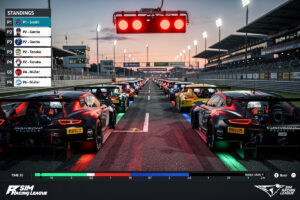
The best sim racing leagues in 2026 range from free hourly platforms like Low Fuel Motorsport to structured seasonal championships on SimGrid and private Discord communities. Low Fuel Motorsport offers the best free option with 200,000+ registered drivers and hourly GT3 splits, while SimGrid excels at multi-week championship formats with broadcast coverage and stewarding, running on a ~$6/month Grid Pass subscription plus a typical $0-15 per season community league entry fee.
I’ve raced in every format on this list across the titles on my rig — LFM hourlies on ACC, iRacing official series, and private Discord leagues — and the right choice depends entirely on your schedule, skill level, and what kind of competition you want. Hourly open platforms suit drivers who want to race on demand without commitment. Weekly championship leagues suit drivers who want meaningful seasons with standings, rivalries, and progression. Professional qualifier series suit drivers aiming for factory team recruitment. Most competitive sim racers, including the league drivers I race against weekly, participate in 1-2 leagues simultaneously alongside official series racing.
Low Fuel Motorsport: Best Free Platform
Low Fuel Motorsport (LFM) is the largest free competitive sim racing league platform with over 200,000 registered drivers racing hourly GT3, GT4, and Porsche Cup events in Assetto Corsa Competizione. I run it most weeks on the rig I welded — when I want a clean GT3 race without committing to a season schedule, LFM delivers. Its ELO-based matchmaking system creates balanced splits, and the Safety Rating system penalizes dirty driving with rating points deducted for contact and off-track violations.

LFM races run every hour on the hour across multiple car classes. GT3 is the most popular with 3-5 splits per race (60-150 drivers per hour). The ELO system matches you with drivers of similar skill after 5-10 calibration races — your first races may feel imbalanced as the system learns your level, but by race 10 you will be competing against drivers within 100 ELO points of your rating.
The license test to join LFM requires completing one clean lap within a target time on a specified track/car combination. The target time is generous — approximately 103-105% of alien pace — meaning any driver who can complete a full lap without crashing qualifies. The test exists to filter out trolls, not to gatekeep speed. Most sim racers pass on their first or second attempt.
LFM also runs seasonal championships within their hourly racing framework. Drivers accumulate points across their races toward a season-long standings board. The top drivers in each ELO tier qualify for LFM’s broadcasted split races with commentary and stewarding. Reaching the top split is competitive — it requires 2,000+ ELO, placing you in the top 5% of all LFM drivers.
SimGrid: Best Championship Format
SimGrid offers structured multi-week championship series with consistent grids of 20-30 drivers racing the same car class on a fixed schedule. The platform itself runs on a Grid Pass subscription (about $6/month for full Seasons access), and individual community leagues hosted on top of that add their own entry fee — typically free to $15 per season — with broadcast coverage on YouTube and Twitch for top divisions. The championship format rewards consistency across 6-8 race weeks more than single-race heroics.
SimGrid championships create rivalries that hourly platforms cannot. Racing the same 25 drivers for 6-8 weeks develops competitive relationships — you learn who defends hard, who makes mistakes under pressure, and who is fast in qualifying versus race pace. These dynamics make championship racing more engaging than anonymous hourly splits where you may never race the same driver twice.
Stewarding is SimGrid’s standout feature. Most SimGrid championships employ volunteer stewards who review incident reports after each race and apply penalties (time penalties, grid drops, or points deductions) for avoidable contact and unsportsmanlike behavior. This creates cleaner racing than open platforms where the only penalty system is automated safety rating deductions. The difference between league stewarding and automated penalties is the same gap you feel between clean racing etiquette and an anything-goes open lobby — human judgment catches context that an algorithm misses.
League entry fees, where a community charges one on top of the Grid Pass subscription, fund the broadcast and stewarding operations. A $10-15 per season entry fee pays for professional broadcast overlays, commentary teams, and steward time. The fee also filters out drivers who are not serious about competitive racing — the no-show rate in paid leagues is 5-10% versus 20-30% in free leagues, meaning more consistent grids week to week.
iRacing Official Series: Best Matchmaking
iRacing’s official series run on fixed hourly schedules with automatic split creation based on iRating — the platform’s skill-based matchmaking number. No registration, no commitment, no entry fee beyond the subscription. Show up 2 minutes before the race starts and you are matched with 15-30 drivers of similar skill. The convenience is unmatched. The way I use iRacing official series is as my daily structured practice — 2-3 races per week in the GT3 Fanatec Challenge slot to keep sharp between league commitments.
The most popular iRacing official series for road racing include the GT3 Fanatec Challenge (sprint format, 15 minutes), the IMSA Michelin Pilot Challenge (multi-class GT4/TCR, 30 minutes), and the IMSA iRacing Series (multi-class GTP/LMP2/GT3, 45 minutes). Each series runs a fixed schedule of tracks that changes weekly, giving you one week to learn each track before the official races begin.
iRating ensures competitive splits. A driver with 2,000 iRating races against other 1,800-2,200 drivers. Reaching 3,000+ places you in the top 5% and opens access to invitation-only events and professional series qualifiers. The iRating system is transparent — you see your rating and your opponents’ ratings — creating clear progression goals.
The downside of official series is the lack of stewarding. Contact penalties are automated based on incident points, which penalize both the aggressor and the victim equally. Intentional wrecking carries protest-based penalties that require filing reports after the race. For cleaner racing with human stewarding, community leagues on iRacing supplement the official series — many iRacing leagues run on the same content with additional stewarding and championship formats.
Private Community Leagues
Private leagues offer the closest racing experience to real-world motorsport. Organized through Discord servers, these leagues run 8-12 week seasons with consistent grids, custom rules, dedicated stewards, and often broadcast coverage. I’ve run two private leagues over the past year on ACC and iRacing — one casual weekly and one competitive championship — and the difference in racing quality between a league grid and an hourly split is night and day. Finding the right private league is the single best step a sim racer can take after mastering the basics.
Grid Finder is the best directory for finding private leagues. It lists 2,000+ active leagues across all major sims, filterable by car class, race day, region, and skill level. Most leagues post their schedule, rules, and application process on their Grid Finder page. Apply to 2-3 leagues that match your schedule and car preference — most accept drivers of all skill levels as long as they commit to showing up regularly.
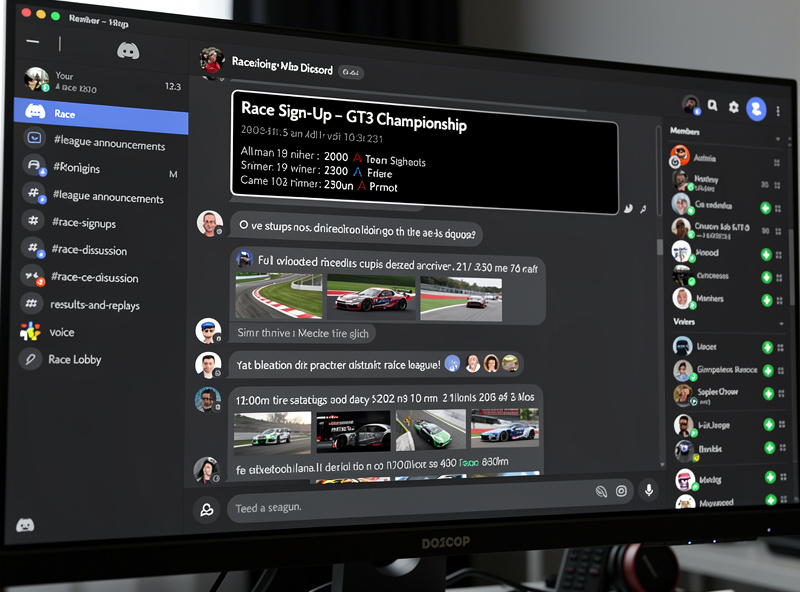
Discord is where private leagues organize. Every serious sim racing league has a Discord server with channels for race signups, post-race discussion, steward inquiries, setup sharing, and general socializing. The social dimension of league racing is what keeps drivers engaged season after season — you develop friendships with opponents, celebrate podiums together, and argue about steward decisions, just like in real motorsport.
League commitment levels vary. Casual leagues run one race per week with no practice requirements — show up and race. Competitive leagues require practice participation, minimum attendance (typically 6 of 8 races per season), and adherence to detailed sporting codes. Choose a league that matches your availability — overcommitting to a demanding league leads to burnout and no-shows that hurt your standing.
Before you apply, read a league’s incident-review process and its car-setup rules, not just its race-day schedule — those two documents tell you more about the actual racing quality than any promo post does. A league that publishes its steward decisions with reasoning attached is signaling it takes fairness seriously; one that only posts final results and penalty totals without explanation is a red flag. On setup rules, fixed-setup leagues (everyone runs an identical car config) reward pure driving skill and racecraft, while open-setup leagues also reward the driver who can engineer a car — I run in one of each on my rig, and they exercise genuinely different muscles. If you’re coming from hourly platforms where setup barely matters, a fixed-setup league is the gentler entry point into league racing.
Professional and Factory Series
The top tier of sim racing competition is factory-backed professional series with real prize money and broadcast production. The Porsche TAG Heuer Esports Supercup runs a $30,000 total prize pool ($10,000 to the winner), the SRO E-Sport GT Series has paid a combined prize pool north of €160,000 across its divisions in recent seasons, and the Gran Turismo World Series does not publish a disclosed cash total — its pathway leans on real-world event travel, factory recognition, and career placement more than a headline prize figure. All three are broadcast to real, if modest by traditional-motorsport standards, online audiences.
Entry pathways to professional series are open but competitive. Porsche Supercup qualification runs through iRacing’s Time Attack series — the fastest 20 drivers from an open qualifying period earn seats in the main series. SRO E-Sport qualification runs through open registration events on ACC. Gran GT World Series uses the in-game Sport mode ranking as a qualifier. Each pathway requires top-0.1% speed and consistency.
Factory team recruitment happens at the semi-professional level. Teams like Verstappen Sim Racing (the sim team formerly known as Team Redline, folded into Max Verstappen’s racing project in 2026) and Coanda Esports scan the top splits of iRacing and ACC for talent. Being visible in top-split broadcasts, winning league championships, and building a social media presence increase recruitment chances. Several current factory drivers were discovered through community league racing before being invited to professional tryouts — the path from sim racing esports to factory seat runs through the leagues covered in this article.
League Comparison
| Platform | Cost | Format | Matchmaking | Stewarding | Best For |
|---|---|---|---|---|---|
| Low Fuel Motorsport | Free | Hourly | ELO splits | Automated | On-demand GT racing |
| SimGrid | $0-15/season | Weekly championship | Division-based | Human stewards | Season-long competition |
| iRacing Official | $13/mo | Hourly official | iRating splits | Protest-based | Convenience and variety |
| Private Discord Leagues | Free | Weekly championship | Application | Human stewards | Community and rivalries |
| Porsche Supercup | Free entry | Season series | Open qualifier | Professional | Professional pathway |
Frequently Asked Questions
What is the best free sim racing league?
Low Fuel Motorsport (LFM) is the best free platform with 200,000+ drivers, hourly GT3/GT4 races, and ELO-based matchmaking. It runs on ACC ($40 game) with no subscription or entry fee. Races run every hour, and the license test is accessible to any driver who can complete a clean lap.
How do I find a sim racing league?
Use Grid Finder to search 2,000+ active leagues by car class, race day, region, and skill level. Join their Discord server, read the rules, and apply. Most leagues accept drivers of all skill levels as long as they commit to regular attendance.
Is iRacing worth the cost for competitive racing?
Yes, if you value convenience and variety. iRacing’s hourly official races with automatic iRating-based matchmaking are unmatched for on-demand competitive racing. The $13/month subscription plus $12-15 per car/track ($250-400/year) is higher than free alternatives but provides structured competition across 100+ car classes.
What is the difference between hourly and championship leagues?
Hourly platforms (LFM, iRacing Official) let you race anytime with automatic matchmaking against different opponents each race. Championship leagues (SimGrid, private Discord) run weekly races with the same 20-30 drivers across 6-8 week seasons, creating standings, rivalries, and more meaningful competition.
Can you make money from sim racing leagues?
Professional series pay real but modest prize money — the Porsche Esports Supercup runs a $30,000 total pool with $10,000 to the winner, and SRO’s E-Sport GT Series has paid a combined pool north of €160,000 across its divisions in recent seasons. Most community leagues offer no prize money — they exist for competition and community. A handful of drivers build real side income streaming league races on YouTube and Twitch, but that comes from audience-building, not the leagues themselves.