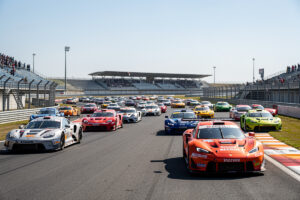
Multiclass racing means fast prototypes sharing a track with slower GT cars, and reading a closing speed of dozens of miles per hour without taking anyone out is the hardest traffic skill in sim racing. iRacing runs the deepest multiclass fields anywhere, and learning to move through them cleanly is what separates drivers who finish endurance races from drivers who collect incidents. The core skill is anticipation, not reaction.
Multiclass is the signature challenge of real endurance, and it’s the part of the endurance and team sim racing guide that catches the most people out. I run iRacing multiclass off my rig and the lesson never changes: the cars that cause incidents are the ones committing late, and the cars that flow through traffic are the ones reading it early. This guide is how to be the second kind.
The Classes and Why Speed Gaps Matter
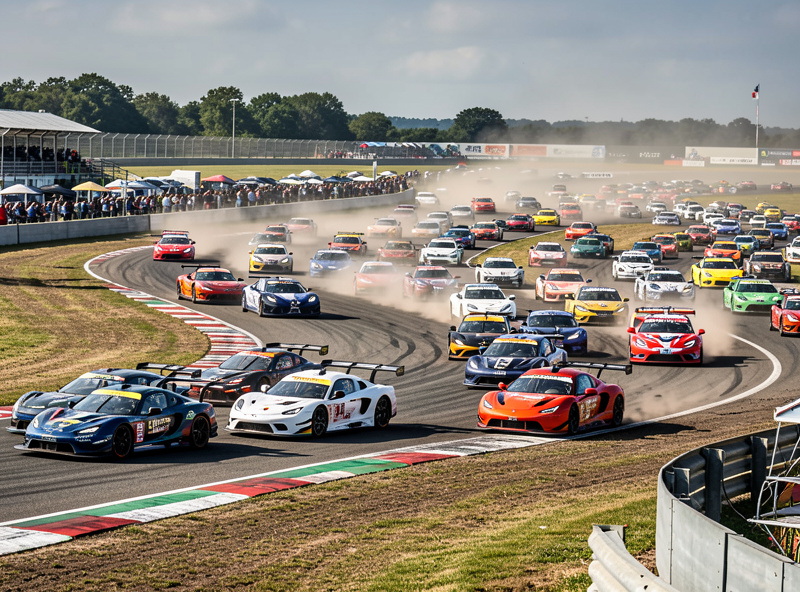
A multiclass field stacks two to four car classes with very different pace on the same track, and the speed gap between the fastest and slowest is what makes traffic so demanding. A prototype closing on a GT car can be carrying tens of miles per hour more on a straight, and that gap collapses the distance between them far faster than your instincts expect the first few times.
Understanding the classes tells you who you’ll be catching and who’ll be catching you. The table below lays out the typical iRacing endurance classes by role and relative pace. The faster you are, the more of the field you have to pass; the slower you are, the more you have to be predictable for the cars coming through. Either way, knowing the pace order is the foundation, and it ties into picking the right car covered in the road racing guide.
| Class | Type | Relative Pace | Role in Traffic |
|---|---|---|---|
| GTP / Hypercar | Top prototype | Fastest | Catches everyone |
| LMP2 | Prototype | Very fast | Catches GT, yields to GTP |
| GTE / GT3 | GT car | Slower | Yields to prototypes |
| GT4 | Entry GT | Slowest | Yields to all faster classes |
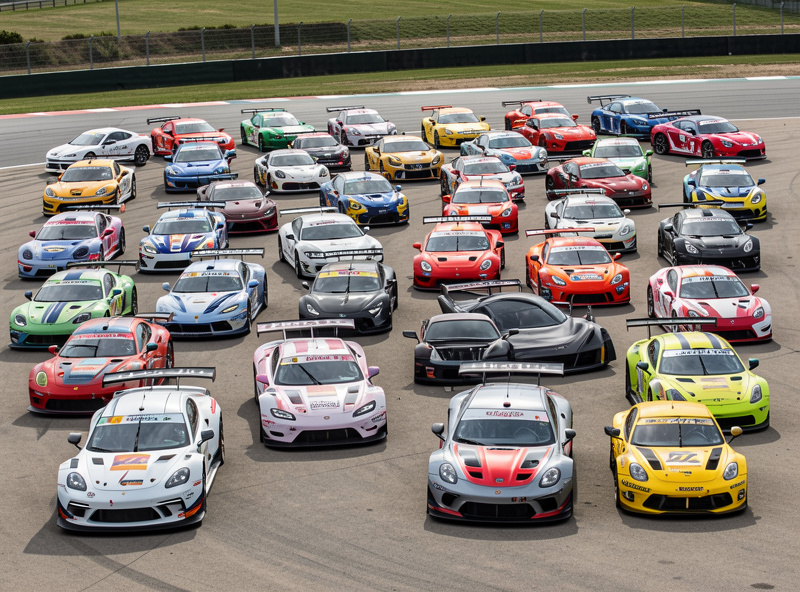
Not every event runs all four classes, but the principle holds for any mix: the faster class makes the pass and the slower class makes itself predictable. The most common pairing in iRacing endurance is prototypes with GT3, which is the dynamic most worth practicing.
Who Yields and Who Decides
The governing convention is simple: the faster car decides where the pass happens, and the slower car holds a predictable line and lets it happen. As the faster car you have the better view of the situation and the responsibility to pick a clean side; as the slower car your job is not to get out of the way dramatically but to stay exactly where the faster driver expects you to be. Predictability is courtesy in traffic.
The classic mistake from the slower car is panic — lifting suddenly or diving off line to be helpful, which puts you somewhere the prototype didn’t plan for and causes the contact you were trying to avoid. Hold your line, stay on your normal racing line through the corner, and let the faster car make its move on the straight. This is the heart of the clean racing etiquette that keeps a long race from falling apart, and getting it wrong is what shows up in the incident review system.
Where to Pass and Where Not To
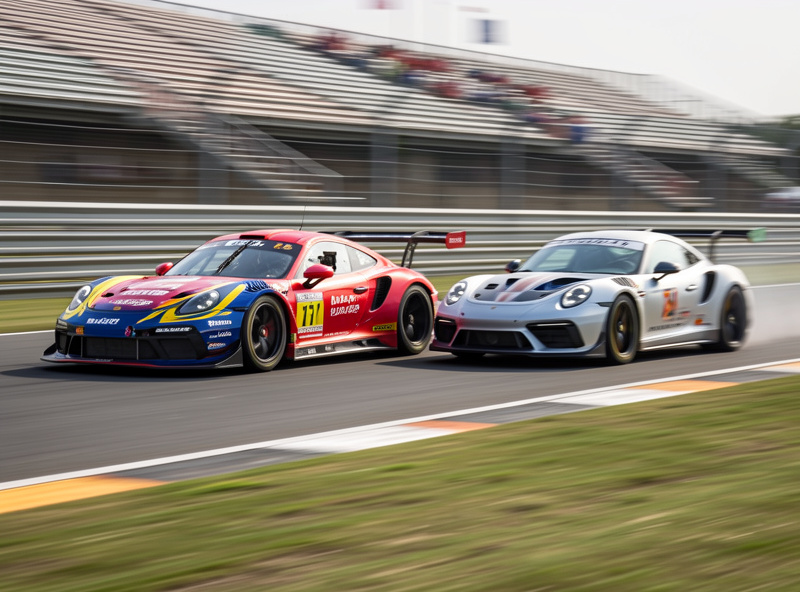
The safe place to complete a multiclass pass is on a straight, using the prototype’s speed advantage, not by diving up the inside of a slow car in a corner. The braking zones and apexes are where closing speeds and committed lines make contact most likely, so the faster car should set up the pass to clear the slower one before the corner rather than trying to outbrake it into the turn.
As the faster driver, that means using your speed early — getting the move done on the straight where there’s room — instead of arriving at a corner still side-by-side with a car that has every right to its line. As the slower driver, it means not suddenly defending or changing your braking point when you see a prototype alongside; brake where you always brake so the faster car can predict you. The anticipation this all requires is a track-knowledge skill, the same one that carries you through night stints when the traffic gets even harder to read.
Use the Tools: Relative Timing and the Spotter
iRacing gives you a relative-timing display that shows the cars immediately around you and how fast they’re closing, and using it is how you turn reaction into anticipation. Glancing at the relative box tells you a faster car is approaching long before it fills your mirror, so you can plan to be predictable through the next corner rather than being surprised by a prototype on your door. The drivers who flow through traffic are the ones reading that box. On my own rig I keep the iRacing relative box pinned top-center where I can flick to it without losing the corner, and the first season I ran multiclass I learned the hard way that ignoring it for three laps is how you end up sideways in front of a closing prototype.
In a team event a spotter adds another layer, calling traffic and gaps so the driver can keep their eyes on the track. That’s one of the roles covered in the team strategy guide, and it’s especially valuable in heavy multiclass traffic where the relative display alone can’t convey everything. Combined with the timing tools you’d use for fuel and strategy in the pit strategy guide, the information is all there — the skill is processing it while driving.
Putting It Together in an Endurance Race
Over a long race, clean multiclass traffic is a compounding advantage — every incident you avoid is time and damage you don’t lose, and over hours those saved seconds and intact bodywork add up to positions. The driver who loses two seconds being patient with a tricky pass beats the one who loses two minutes in the wall trying to force it. Multiclass discipline is endurance discipline.
This is why traffic management runs through every iRacing endurance special, from the GT3-heavy fields to the full prototype-and-GT grids of the marquee 24-hour events covered in the iRacing endurance guide. Master the closing-speed read, commit to being predictable, and use the relative display, and traffic stops being the thing that ends your race and starts being the thing you quietly gain time on while others throw it away.
Frequently Asked Questions
What is multiclass racing in iRacing?
Multiclass racing puts two to four car classes of very different pace on the same track at once, such as fast prototypes sharing the circuit with slower GT cars. iRacing runs the deepest multiclass fields in sim racing, and managing the speed gaps is the core endurance traffic skill.
Who has to yield in multiclass racing?
The faster car decides where the pass happens and the slower car holds a predictable line and lets it happen. The slower driver should not dive off line or lift suddenly to be helpful, because that puts them where the faster car did not plan for and causes contact.
Where is the safe place to make a multiclass pass?
On a straight, using the faster car’s speed advantage, rather than diving up the inside in a corner. Braking zones and apexes are where closing speeds and committed lines make contact most likely, so the faster car should clear the slower one before the corner.
How do you anticipate traffic instead of reacting to it?
Use iRacing’s relative-timing display, which shows the cars around you and how fast they are closing. Glancing at it warns you a faster car is approaching before it fills your mirror, so you can plan to be predictable through the next corner rather than being surprised.
Why does clean traffic matter so much in endurance racing?
Clean multiclass traffic is a compounding advantage, because every incident you avoid is time and damage you do not lose. Over hours, saved seconds and intact bodywork add up to positions, so a patient driver beats one who loses minutes forcing a pass into a wall.