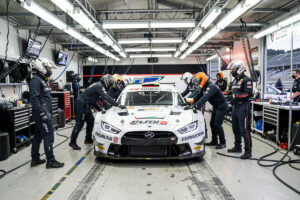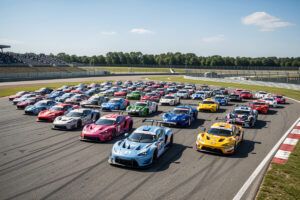
iRacing runs the deepest official endurance calendar in sim racing, with rolling 24-hour specials, a native team-and-driver-swap service, and the strongest multiclass fields anywhere. If you want to race the Daytona 24, the Bathurst 12 Hour, or the Nürburgring with a real shared-driving format, iRacing is where that lives. This is the platform-specific path through endurance — licenses, the specials, fixed versus open setups, and how the team service actually works.
I run iRacing as a daily off my welded rig, and endurance is the part of the service I respect most, because it exposes everything: a flaky connection, a wobbly frame, a brake you can’t hit consistently when tired. For the discipline-wide overview that sits above this, see the endurance and team sim racing guide. This piece is iRacing specifically.
What You Need Before You Can Race Endurance
To enter iRacing endurance events you need the license class the event requires and enough Safety Rating to hold it, plus the relevant car and track content. Most GT3-class endurance racing sits at the C or B license level, and the prototype-heavy specials usually want a higher class. You do not need an alien iRating to start — endurance fields reward consistency, and a clean midfield driver finishes far more endurance races than a fast wrecker.
The license and progression path is the gate. If you are still climbing, the iRacing series and progression guide maps how the license classes work, and the Safety Rating guide covers how to climb without grinding. Content cost matters too — endurance specials often use tracks you may not own yet, and the iRacing cost breakdown and track buying guide help you prioritize which circuits to buy first.
The unglamorous prerequisite is reliability. Before you commit four drivers to a six-hour event, your rig and connection have to be proven over a long run. A disconnect at hour four does not just cost you — it costs your teammates the entire race, and there is no recovering it.
The iRacing Endurance Specials
iRacing‘s endurance calendar is built around special events that mirror real-world classics, run a few times per season as rolling time-zone events so a global field can compete. These are the marquee endurance races on the service, and finishing one cleanly is a genuine achievement regardless of where you place.
| Special Event | Typical Length | Format | Class Focus |
|---|---|---|---|
| Daytona 24 | 24 hours | Multiclass team | GTP/LMP2/GT3 |
| Bathurst 12 Hour | 12 hours | GT3 team | GT3 |
| Nürburgring 24 | 24 hours | Multiclass team | GT3 + lower classes |
| Sebring 12 Hour | 12 hours | Multiclass team | Prototype/GT |
| Petit Le Mans | 10 hours | Multiclass team | GTP/LMP2/GT3 |
| 6 Hours of the Glen | 6 hours | Multiclass team | Prototype/GT |
You can run most of these solo for a shorter stint allocation, but they are designed for teams. The multiclass ones — Daytona, Sebring, Petit — are also the best place to learn traffic management, because you will spend the whole race either catching slower cars or being caught by faster ones. The conventions for that are in the iRacing multiclass racing guide.
The Team Service and Driver Swaps
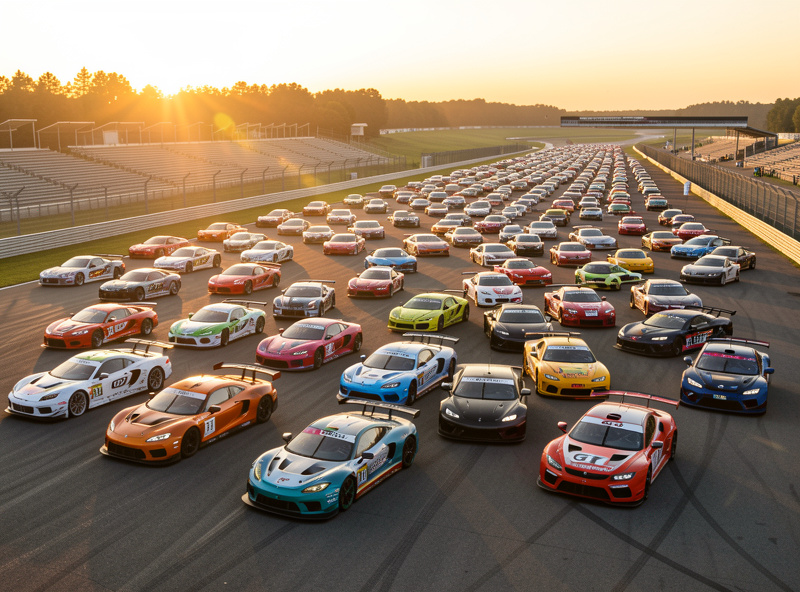
iRacing’s team service lets multiple drivers register to a single car and swap during pit stops, with the in-sim handover done while the car is stationary in the box. This is a native, scored mechanic — the swap happens through the pit service flow, control passes to the incoming driver, and the team’s result is shared. It is the format the major endurance specials are built around, and it is what separates real endurance from a long solo run.
A clean swap is rehearsed. The outgoing driver brings the car in, completes service, and hands over; the incoming driver takes control and gets back out without stalling or speeding in the pit lane. A fumbled swap — a stall, a missed service selection, a pit speed penalty — costs real seconds and sometimes a lap. I treat the swap as a routine to practice, not a thing to wing on race day. The full mechanics, including the common ways a swap goes wrong, are in the driver swaps and stints guide.
Coordinating a team across a long race needs roles and comms — a strategist on the timing screen, a clear voice channel, and an agreed setup every driver can live with. That whole layer is the sim racing team strategy guide, and the entry-level version is the team racing basics guide.
Fixed vs Open Setups
iRacing endurance events come in fixed-setup and open-setup flavors, and the choice changes how you prepare. Fixed setups put every car on the same baseline, so the race is purely about driving and strategy — no setup engineering required, which makes them the better entry point. Open setups let teams build their own car, which rewards setup depth but adds a whole dimension of work.
For your first endurance events, fixed is the honest recommendation: you remove the variable you are least equipped to win on and focus on consistency, fuel saving, and clean traffic. When you move to open events, a long-run setup is its own craft — more tire margin, a softer and more forgiving balance, and a fuel-friendly approach. The fundamentals are in the complete car setup guide, and the long-run philosophy is covered in the endurance hub.
Fuel, Tires, and Pit Windows
Endurance strategy in iRacing comes down to fuel windows and tire decisions, both of which you plan off data rather than feel. You know your fuel-per-lap, you know how many laps a tank gives at race pace, and you build the race as a sequence of stints that fit that number. Fuel saving by lifting and coasting can stretch a stint far enough to drop a stop entirely, which is worth more than any amount of cornering bravery.
I plan fuel off my telemetry overlay — consumption per lap, tire temps across the stint, the deltas I need to judge an undercut. Guessing a fuel number in a 24-hour race is how teams run dry on track and lose everything. If you are not reading your own data yet, start with the telemetry guide. The full strategic decision framework — fuel math, the undercut, tires-or-no-tires under pressure — is in the pit strategy guide.
Surviving the Night and the Long Middle
The hardest part of a 24-hour iRacing race is not the start — it is the night stints and the long, quiet middle where concentration drifts. iRacing’s day-night cycle takes your visual reference points away, and braking off headlight throw at 3 a.m. real-time is a different skill from braking in daylight. The drivers who prepared for night, and who paced their eyes through dusk, are the ones still on the lead lap by morning.
The fixes — display brightness, in-car lighting, FOV that is actually correct so your sense of placement survives the dark — are in the night driving tips. The other survival skill is connection stability: a wired ethernet link to the router, not Wi-Fi, so the race doesn’t end on a dropped packet at hour eighteen. The internet setup guide covers that, and good iRacing FFB settings that don’t fatigue your arms keep you sharp through the long middle.
Frequently Asked Questions
What license do you need for iRacing endurance racing?
Most GT3-class endurance events sit at the C or B license level, while prototype-heavy specials usually require a higher class. You also need enough Safety Rating to hold the license and the relevant car and track content. You do not need a high iRating to start.
Can you race iRacing endurance events solo?
Yes, you can enter most endurance specials solo with a single-driver stint allocation, but they are designed for teams of two to six drivers sharing the car. The team service and native driver swaps are what the major 12 and 24 hour specials are built around.
What are the main iRacing endurance specials?
The marquee events include the Daytona 24, Bathurst 12 Hour, Nürburgring 24, Sebring 12 Hour, Petit Le Mans, and the 6 Hours of the Glen. They run as rolling time-zone events a few times per season so a global field can compete.
Should beginners run fixed or open setups?
Fixed setups are the better entry point because every car runs the same baseline, so the race is purely about driving and strategy with no setup engineering required. Open setups reward setup depth but add a dimension of work that beginners are least equipped to win on.
How do iRacing driver swaps work?
Multiple drivers register to a single car through the team service and swap during pit stops. The handover is a real in-sim mechanic done while the car is stationary in the box, with control passing to the incoming driver through the pit service flow. A fumbled swap costs real seconds.
How important is connection stability for endurance racing?
It is critical. A single disconnect during your stint can end the whole team’s race with no recovery. A wired ethernet link to the router, rather than Wi-Fi, removes the most catastrophic part of the latency stack over a multi-hour event.