When I step from a GT3 car into a Formula 3 car on the same direct-drive base, the first thing I notice is how much less the wheel talks at low speed — then how violently it comes alive past 100 mph. Open wheel sim racing from Formula 4 to Formula 1 demands precision inputs because downforce is binary: you’re either glued to the track or the aero has gone silent and you’re spinning. The sim racing disciplines breakdown I put together covers every format, but open wheel is the one that trained my inputs more than any other — there is no coasting through an open wheel corner.
The margin for error is measured in centimeters. Miss an apex by 20 cm in a GT car and you lose 0.1 seconds. Miss it by 20 cm in a Formula 1 car and the aero stall sends you into a spin before you can correct. After a season focused on F3 in iRacing, my corner entry precision in every other car class improved measurably because open wheel forces you to drive clean every lap. The car will not forgive a lazy input.
The Formula Car Ladder
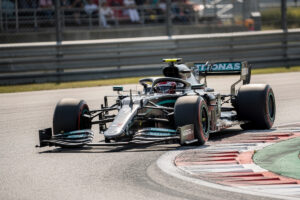
The open wheel ladder mirrors real motorsport progression, and in my experience the best place to start is iRacing. Its structured path from Formula Vee to Grand Prix is the most coherent open wheel progression in sim racing — each class teaches a specific lesson that the next class builds on. Formula Vee (iRacing) is the entry point — 65 hp, no downforce at all, teaches weight transfer and basic racecraft on a car so slow you feel every mistake. Formula 4 adds moderate downforce and a FIA-regulated 160 hp cap, introducing the aero sensitivity that defines higher classes. Formula 3 is the competitive sweet spot: high downforce, 380 hp, and the largest open wheel field in sim racing. iRacing has no licensed Formula 2 car — the real bridge class is Super Formula (the SF23), adding more power and speed before the final step up. Formula 1 (or iRacing’s Grand Prix Series, which runs the Mercedes-AMG W13) is the pinnacle with 1,000+ hp and extreme downforce levels that require a fundamentally different driving approach.
| Class | Power | Downforce | Top Speed | Sim | Teaches |
|---|---|---|---|---|---|
| Formula Vee | 65 hp | None | 120 mph | iRacing | Weight transfer, trail braking, smooth inputs |
| Formula 4 | 160 hp | Low | 145 mph | iRacing, AMS2 | Aero sensitivity introduction |
| Formula 3 | 380 hp | High | 175 mph | iRacing | Competitive open wheel racecraft |
| Super Formula (SF23) | 540-570 hp | High | 195-200 mph | iRacing | Power management, bridging to Grand Prix |
| Formula 1 / GP | 1,000+ hp | Extreme | 220+ mph | iRacing, AMS2 | Maximum aero precision, DRS and ERS strategy |
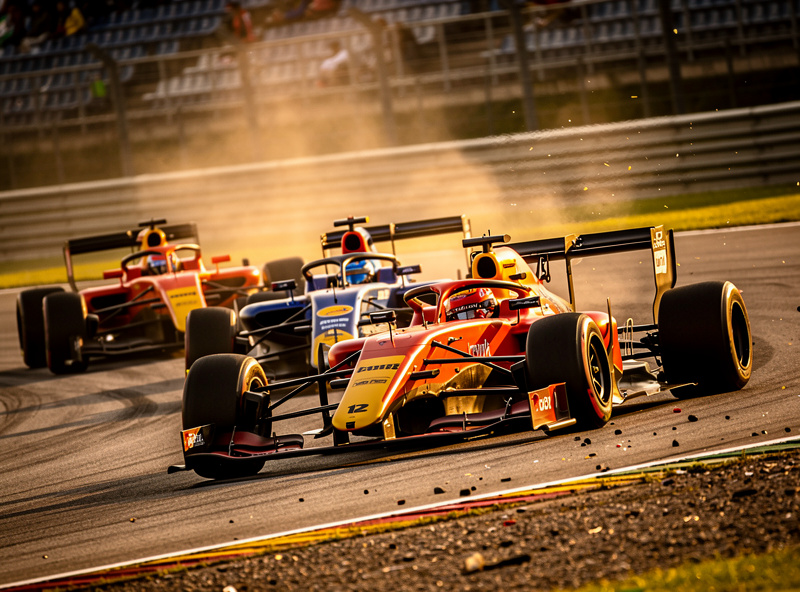
Most sim racers enter open wheel through Formula 3 or Formula 4. These classes are fast enough to feel exciting but forgiving enough that a small mistake does not end your race. The competitive community at the Formula 3 level is the largest in open wheel sim racing — iRacing’s Formula 3 series consistently fills splits with 20+ drivers at most time slots in my experience. After a year on the iRacing ladder, the progression from Vee through F4 to F3 feels natural because each car builds on the muscle memory of the previous one.
Formula Vee is underrated as a learning tool. Despite its low top speed of roughly 120 mph, the complete absence of downforce teaches weight transfer, trail braking, and smooth inputs more effectively than any high-downforce car. On my rig, I still run Formula Vee sessions when I feel my inputs getting sloppy — it exposes every jerky steering correction instantly because there is no aero to hide behind. Many competitive open wheel drivers spend their first month exclusively in Formula Vee to build the foundation that high-downforce cars demand.
Driving High-Downforce Cars
The defining characteristic of high-downforce cars is speed-dependent grip. At 150 mph, a Formula 1 car generates enough downforce to corner at roughly 4G — the tires have 4 times their static weight pressing them into the road. At 50 mph, the same car has almost no downforce and corners at 1.5G. This means you can carry enormous speed through fast corners but must be gentle and precise through slow corners where the aero is not helping. The way I dial in my wheelbase torque for open wheel sessions versus GT sessions is completely different — in a formula car, I want the force feedback tuned to telegraph the moment aero grip begins fading, which happens fast enough that you feel it as a sudden lightness in the wheel about a half-second before the spin.
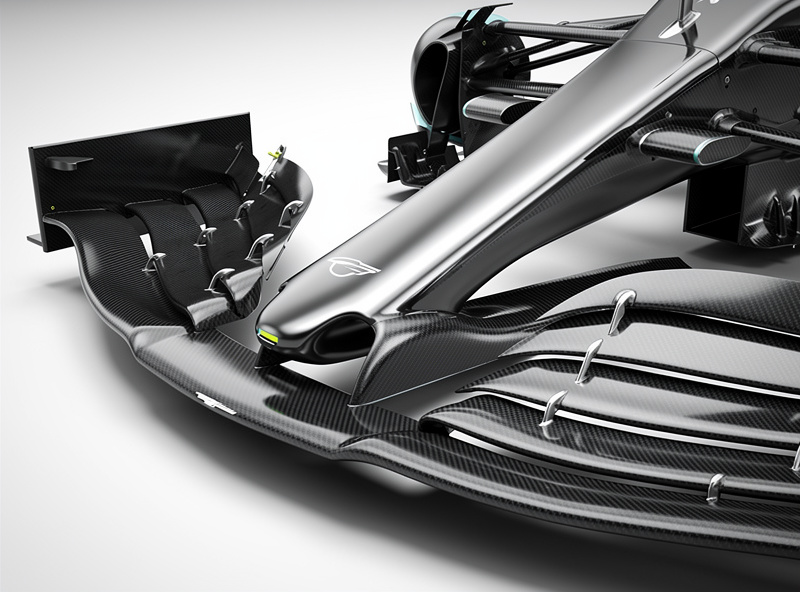
The aero stall is the primary danger. If you enter a fast corner too aggressively and the car begins to slide, the slide angle reduces aerodynamic grip, which causes more sliding, which reduces grip further — a death spiral that ends in a spin within 0.5-1.0 seconds. The cure is prevention: smooth inputs, consistent apex speeds, and never provoking the car beyond its aero window. If the car starts to slide in a high-downforce situation, the correct response is to reduce steering angle — straighten the wheel slightly to regain aero grip — not to counter-steer aggressively as you would in a GT car. This took me months to learn properly because every instinct says to catch the slide, and in an open wheel car that instinct is exactly wrong.
DRS and energy deployment add strategic layers that separate formula racing from GT. In iRacing’s Grand Prix Series, DRS opens a rear wing flap on designated straight zones when you are within 1 second of the car ahead, giving a 10-15 km/h speed boost for overtaking. ERS (Energy Recovery System) deploys stored electrical energy for additional power on key straights. Managing DRS activation zones and ERS deployment strategy across a race adds tactical depth that road racing in GT cars does not have. The DRS zones also create a metagame where defending drivers position their car specifically to deny the attacking car DRS on the following straight.
Open Wheel Racecraft
Racecraft in open wheel racing is different from GT racing because contact is far more destructive. In GT racing, light contact bends bodywork; in open wheel racing, light contact breaks suspension and ends your race immediately. A minor touch that would be a door ding in GT3 finishes your race in Formula 3. This means overtaking requires cleaner execution — you must complete the pass fully before the corner apex, leaving no possibility of wheel-to-wheel contact. My racecraft guide covers the universal principles, but open wheel adds a zero-margin constraint that forces you to be braver on the brakes and cleaner in the execution.
The slipstream is the primary overtaking tool. Open wheel cars punch a large hole in the air, creating a significant draft effect on straights. At Monza, a car in the slipstream of the car ahead gains 10-15 km/h — enough to pull alongside by the braking zone. Overtaking under braking requires later braking than the car ahead, which carries risk because missing the apex in a high-downforce car triggers the aero stall. Unlike oval racing where the draft is a persistent, multi-lap tool, the open wheel slipstream exists in short windows on specific straights and disappears the moment you pull out of the wake.
Defending in open wheel is about positioning, not blocking. The defending car can make one move to cover the inside line but cannot weave or change direction twice. Positioning your car on the inside of a braking zone forces the attacking car to take the outside line, which gives you the apex and the exit advantage. This clean, strategic defending is a learned skill that separates experienced open wheel racers from newcomers who weave erratically. The same discipline applies in sim racing drifting — positioning beats aggression — but in open wheel the rules are enforced by protest systems, not just etiquette.
Setup Differences
Open wheel car setup focuses on aerodynamic balance — front wing angle, rear wing angle, ride height, and rake angle determine how downforce is distributed between front and rear axles. Increasing front wing angle adds front grip and reduces understeer at the cost of drag. Increasing rear wing angle adds rear stability and reduces oversteer at the cost of top speed. The balance between these adjustments is the core of open wheel setup work, and unlike GT cars where mechanical grip dominates, aero changes in formula cars produce immediate and dramatic lap time swings.
Suspension setup is simpler than in GT cars because the aerodynamic load dominates at speed. Spring rates are stiffer to maintain consistent ride height under aero load, and damper settings are tuned to keep the car stable during high-speed weight transfers. Tire pressures are critical — a 1 PSI change in a Formula 3 car affects lap time by 0.1-0.2 seconds because the contact patch sensitivity is extreme at high downforce levels. Across the bases I’ve bolted onto my rig over the years, I’ve found that mid-torque direct-drive wheelbases — the CSL DD and Alpha Mini class — deliver enough force fidelity to feel these tire-pressure differences through the wheel. You don’t need 20 Nm to read the front axle in an open wheel car, but you do need a base fast enough to render the aero-loss moment without smoothing it away.
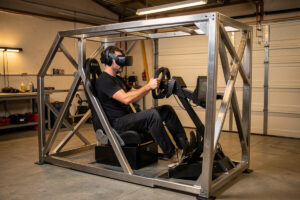
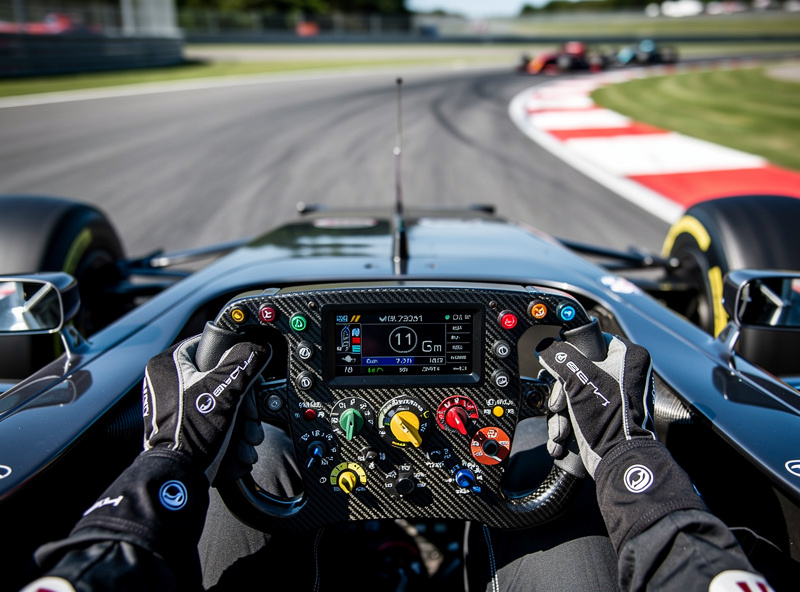
Open wheel hardware preferences differ from GT racing. On my rig, I swap between a round formula rim and a GT-style sculpted rim depending on the season — when I’m deep in an F3 season in iRacing, the formula rim with rotary encoders and a button box stays bolted on because formula cars demand frequent in-car adjustments: brake bias, DRS activation, ERS deployment, front wing angle. A round GT-style wheel works but limits the number of accessible controls during racing. The same welder that builds the boat projects welded my sim-rig frame — both projects are about rigidity under load, and in an open wheel car the rig needs to stay absolutely still under hard braking or the load cell data goes muddy.
Brake Bias and On-the-Fly Adjustments
Every open wheel car in iRacing gives you a brake bias dial mapped to a rotary encoder, and this is the single control I use more than any other outside the wheel and pedals. Brake bias sets the front-to-rear split of braking force — move it forward and the front tires do more of the stopping (safer against rear lock-up but harder on front tire wear and prone to understeer into the apex); move it rearward and the rear tires share more of the load (sharper rotation on turn-in but a hair-trigger snap into oversteer if you overdo it). On my rig, I run the bias dial on the formula rim and adjust it corner-to-corner as fuel burns off and rear grip changes over a stint — a car that felt neutral on lap 3 will need 1-2% more rear bias by lap 20 as the tank empties and rear-end weight drops.
Wet-weather open wheel racing changes the calculus completely. Rain tires generate far less mechanical grip, and because downforce still scales with speed the same way it does in the dry, a wet open wheel car can feel simultaneously grippy at speed and terrifyingly loose in slow corners and under braking, where the tires are doing all the work with no aero assist. I run noticeably more forward brake bias in the wet across every formula class — the rear end steps out the moment trail-braking load shifts too far back on a wet surface — and I lift off the throttle earlier and roll more speed through slow corners rather than trusting the car to hook up on the exit. Wet-weather open wheel sessions are also where the FOV and seating position work pays off most: in low visibility with spray off the car ahead, judging your braking reference points depends entirely on having your eye point calibrated correctly, which is exactly what a properly measured FOV setup gets you.
Frequently Asked Questions
What is the best open wheel sim?
iRacing has the best competitive open wheel ecosystem with official series at every level from Formula Vee to Grand Prix. Automobilista 2 has the best formula car physics variety with classic F1 cars from every era. For competitive racing, choose iRacing. For variety and classic formula cars, choose AMS2.
What formula car should I start with?
Start with Formula Vee (iRacing) or Formula 4 to learn the basics without high-downforce complexity. Progress to Formula 3 once you can complete 20 clean laps. Formula 3 is the most popular competitive open wheel class with large split fields and well-balanced racing.
What is aero stall in open wheel racing?
Aero stall occurs when the car slides beyond the aerodynamic window, losing downforce that causes further sliding. The car spins within 0.5-1.0 seconds with no recovery possible. Prevention is key: smooth inputs, consistent apex speeds, and never provoking the car beyond its aero limit.
How is open wheel racecraft different from GT racing?
Contact breaks suspension in open wheel cars, so overtaking must be fully completed before the apex. Defending is about positioning (covering the inside line) not blocking. The slipstream is larger in open wheel, making draft-passing on straights the primary overtaking method.
Do I need a formula wheel rim for open wheel racing?
Not required but recommended. Formula cars need frequent in-car adjustments (brake bias, DRS, ERS, front wing) that benefit from dedicated buttons and rotary encoders. A formula-style wheel ($150-400 for aftermarket rims) makes these adjustments faster and safer during racing.
Related Articles
- Sim Racing Disciplines: Every Type of Virtual Motorsport
- iRacing Beginner’s Guide
- Sim Racing Driving Techniques — How to Actually Get Faster
- Sim Racing FOV Calculator Guide
- Sim Racing Esports: The Complete Competitive Guide